

Host tree selection
Establish truffle inoculum only near compatible ectomycorrhizal trees such as pine, spruce, fir, or beech, and avoid sites dominated by non-mycorrhizal or heavily fertilized lawn grasses.

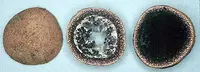
Elaphomyces muricatus, commonly called marbled false truffle, is not a typical leafy plant but a subterranean fungus that develops round, warty fruiting bodies underground. It usually grows in symbiosis with trees, forming mycorrhiza, a mutually beneficial root–fungus partnership that supports forest health.
This species occurs mainly in temperate woodlands of Europe and parts of North America, often in well-drained, humus-rich forest soils. It is challenging to cultivate because it depends on specific tree partners and stable woodland conditions, so attempts to care for marbled false truffle at home are rarely successful.
In nature it favors undisturbed, moist but not waterlogged soils with moderate shade and a consistent organic layer on the forest floor.

Care Difficulty
Hard Care

Light Preference
Shade

Water Requirements
Keep Soil Moist

Temperature Preference
Cool Climate

Hardiness Zone
Unknown

Soil Texture
Loamy, Sandy, Organic-rich

Soil pH
Strongly acidic (4.5–5.5), Acidic (5.5–6.5)

Soil Drainage
Moist but well-drained

Fertilization
Minimal (feed rarely)
Scan your plant to receive care tips personalized for your specific plant
Available on iOS and Android
This underground fungus depends on stable, low-light forest conditions rather than direct sun exposure.
Water management focuses on maintaining evenly moist, well-aerated forest soil rather than direct irrigation of the fungus.
This species is adapted to cool to mild temperate climates with moderate seasonal variation.
Humidity management is not a practical care lever for Elaphomyces muricatus, which lives as an underground truffle-like fungus linked to tree roots.
Soil conditions are critical because Elaphomyces muricatus functions as an ectomycorrhizal truffle-like fungus, not a typical potted plant.
This species is not realistically suitable for container growing because it depends on complex underground associations with living tree roots in natural soil profiles.
Elaphomyces muricatus forms nutrient-sharing partnerships with host tree roots and usually does not need direct fertilization when grown in natural or semi-natural soils.
Pruning is not applicable to Elaphomyces muricatus because it is an underground truffle-forming fungus rather than a conventional above-ground plant with stems or foliage.
This truffle-forming fungus is best established in the ground with suitable host trees, so handling focuses on careful transplanting rather than routine repotting.
Propagation of Elaphomyces muricatus is specialized and typically managed by ecological or forestry projects rather than casual growers.
In its suitable climate range, this underground fungus is inherently cold hardy and generally needs no special winter care beyond maintaining a stable woodland-like environment for the host trees.

Plant Health Check
Not sure what's wrong with your plant? Check your plant's health inside the app.
This species is a hypogeous fungus, forming round, truffle-like fruiting bodies that stay entirely underground rather than emerging above the soil surface.
Mature fruiting bodies develop a thick, warty to spiny outer layer that protects the powdery spore mass inside from mechanical damage and gradual desiccation.
Its spores are dispersed mainly when small mammals dig up and eat the fruiting bodies, then excrete the durable spores in new locations, supporting the long-term spread of the fungus.

Elaphomyces muricatus commonly forms underground ectomycorrhizae with trees such as beech and oak, creating a mutualistic association in which the fungus enhances water and nutrient uptake for the roots while receiving carbohydrates from the host tree.
This species is an underground mycorrhizal fungus that depends on tree roots, so it is not suited to pots or typical home environments. Outdoors in established woodland soil is the only realistic setting for growing marbled false truffle.
Keep your plants happy and healthy with plant identification, disease detection, and easy care guidance.

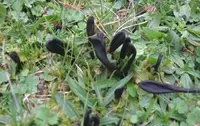
Geoglossum cookeianum
Geoglossum cookeianum
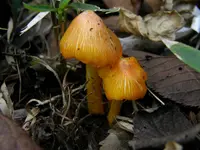
Golden Waxy Cap
Hygrocybe flavescens
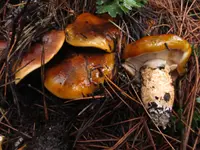
Necklace Tricholoma
Tricholoma focale
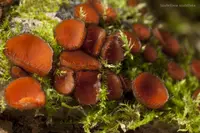
Common Eyelash
Scutellinia scutellata
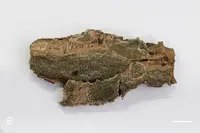
Dentocorticium portoricense
Dentocorticium portoricense
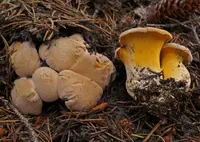
Rainbow Chanterelle
Cantharellus roseocanus
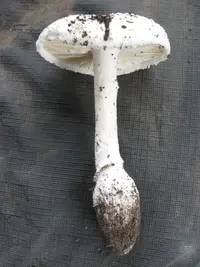
Australian Flour Lepidella
Amanita farinacea
Tricholoma populinum
Tricholoma populinum