

Substrate Surface Refresh
Gently scrape off and replace the top 1–2 cm of substrate if it develops algae crust or becomes compacted, so the delicate fruiting cups can emerge cleanly and are less likely to rot at the base.

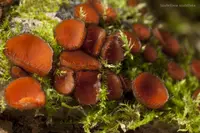
Common eyelash, Scutellinia scutellata, is a small cup fungus rather than a traditional leafy plant. It forms bright orange to red, saucer-shaped discs with fine dark hairs along the rim that resemble eyelashes. These fruiting bodies usually appear in clusters on very damp, decaying wood or soil rich in organic matter.
This species is widespread in temperate forests across North America, Europe, and other cool, moist regions. It depends on consistently high moisture and shaded conditions, so it is difficult to maintain indoors or in dry gardens. For those wanting to care for Common Eyelash in a controlled setting, stable humidity, cool temperatures, and decaying wood substrates are essential.

Care Difficulty
Hard Care

Light Preference
Partial Shade

Water Requirements
Aquatic

Temperature Preference
Cool Climate

Hardiness Zone
3–8

Soil Texture
Loamy, Silty, Organic-rich

Soil pH
Strongly acidic (4.5–5.5), Acidic (5.5–6.5)

Soil Drainage
Waterlogged tolerant

Fertilization
Minimal (feed rarely)
Scan your plant to receive care tips personalized for your specific plant
Available on iOS and Android
This small cup fungus prefers cool, consistently moist sites with soft, filtered light in nature.
This species thrives on continuously moist, not stagnant, substrates such as decaying wood or damp soil.
This fungus prefers cool to mild conditions and declines with prolonged heat or hard frost.
This fungus prefers consistently moist, humid conditions rather than dry household air.
This species grows best on consistently damp, organic-rich substrates rather than standard potting soil.
This species is only moderately suitable for container culture and is best kept in shallow, specialized trays rather than decorative pots.
This tiny cup fungus grows on nutrient-rich wood or soil and usually needs no additional fertilizer in cultivation.
Scutellinia scutellata requires no true pruning, but light hygiene helps keep cultures and displays tidy.
This fungus is rarely grown in pots, but it can be moved by transplanting its colonized substrate rather than handling individual cups.
Propagation focuses on encouraging natural spore production rather than manual techniques.
In climates with natural freezing, this fungus is generally cold hardy and needs little winter care.

Plant Health Check
Not sure what's wrong with your plant? Check your plant's health inside the app.
The fruiting cups have a dense fringe of dark, bristle-like hairs around the rim that resemble eyelashes, a key diagnostic feature distinguishing this species from many other cup fungi found on decaying wood.
This species frequently colonizes charred or fire-damaged wood, where the altered chemistry and reduced competition after a fire create favorable conditions for its growth and reproduction.
The tiny hairs around the cup bear small, shield-like tips that inspired the genus name Scutellinia, from the Latin scutella for little shield, and help mycologists recognize this species under the microscope.

This fungus often appears in dense, bright orange-red patches on damp, decaying wood or soil, making it one of the more visually conspicuous and frequently recorded members of the eyelash cup fungi across temperate regions in the Northern Hemisphere.
This fungus spreads locally where consistently damp, decaying wood or soil is available, forming small clusters or patches rather than large carpets. It is not considered aggressive and usually remains confined to continuously moist microhabitats.
Keep your plants happy and healthy with plant identification, disease detection, and easy care guidance.

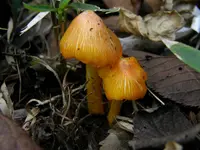
Golden Waxy Cap
Hygrocybe flavescens
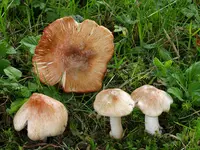
deadly fibrecap
Inosperma erubescens
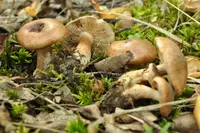
Tricholoma populinum
Tricholoma populinum
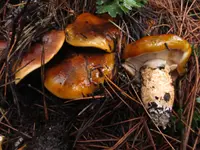
Necklace Tricholoma
Tricholoma focale
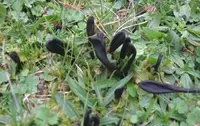
Geoglossum cookeianum
Geoglossum cookeianum
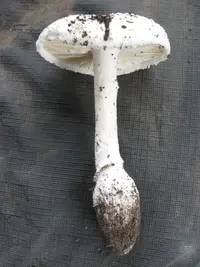
Australian Flour Lepidella
Amanita farinacea

Dentocorticium portoricense
Dentocorticium portoricense
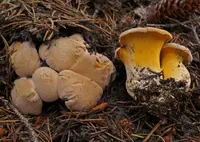
Rainbow Chanterelle
Cantharellus roseocanus