

Maintain moss layer
Apply a thin, loose layer of living moss or well-rinsed, finely shredded sphagnum over the colonized substrate to help retain moisture at the surface where fruiting bodies form without waterlogging deeper layers.

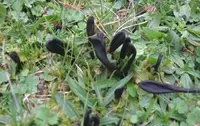
Geoglossum cookeianum is not a leafy plant but a small, club-shaped fungus, often called an earth tongue. It produces slender, dark fruiting bodies that rise slightly above the soil or moss surface.
This species is usually found in damp, mossy grasslands, heaths, or woodland edges, most commonly in cool, temperate regions. It tends to grow in small groups rather than forming large colonies.
Because it is a specialized fungus, it is considered difficult to cultivate and is rarely grown intentionally. Anyone trying to care for Geoglossum cookeianum needs to mimic its cool, moist, low-nutrient grassland habitat as closely as possible.

Care Difficulty
Hard Care

Light Preference
Partial Shade

Water Requirements
Keep Soil Moist

Temperature Preference
Cool Climate

Hardiness Zone
Unknown

Soil Texture
Loamy, Peaty, Organic-rich

Soil pH
Strongly acidic (4.5–5.5), Acidic (5.5–6.5)

Soil Drainage
Moist but well-drained

Fertilization
Minimal (feed rarely)
Scan your plant to receive care tips personalized for your specific plant
Available on iOS and Android
This earth-tongue fungus prefers low, forest-like light rather than direct open sun.
Moist, cool ground conditions are essential for sustaining this fungus in its natural habitat.
This species is adapted to cool, temperate conditions and declines in prolonged heat or hard frost.
This fungus prefers consistently moist, cool air but can tolerate brief drier spells if the substrate stays damp.
In cultivation, Geoglossum cookeianum needs a moist, airy, organic-rich substrate that mimics decaying woodland soil.
This species is difficult but potentially manageable in containers for experimental or educational setups.
This woodland fungus generally grows without added nutrients when established in suitably rich, undisturbed soil.
Pruning is not applicable, as this species is a small, short-lived fruiting fungus rather than a woody or leafy plant.
In cultivation, this species is best left undisturbed, since its underground mycelium forms delicate associations with soil microorganisms.
Propagation of Geoglossum cookeianum is specialized and not recommended for typical home growers, as it depends on complex soil and microbial relationships.
Outdoor colonies are generally cold hardy within their native range and need little targeted winter care.

Plant Health Check
Not sure what's wrong with your plant? Check your plant's health inside the app.
This species is typically found in unimproved, low-nutrient grasslands, often in so-called waxcap grassland communities that are now declining in much of Europe due to agricultural intensification.
Under the microscope, its asci (spore-bearing sacs) usually contain eight smooth, dark, narrowly ellipsoid spores, a feature that helps separate it from closely related earth tongue species.
It commonly produces its dark, club-shaped fruiting bodies in late summer to autumn, appearing among mosses and short grasses when soil moisture increases and temperatures start to drop.
This species is not considered edible and has no established culinary use. Identification of small fungi is difficult, and some relatives may cause stomach upset, so it is safest to avoid eating it entirely.
Keep your plants happy and healthy with plant identification, disease detection, and easy care guidance.

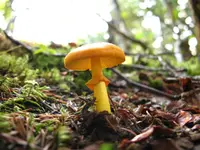
Peck's Yellow Dust Amanita
Amanita elongata
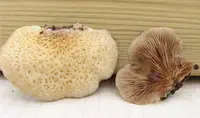
Crepidotus calolepis
Crepidotus calolepis
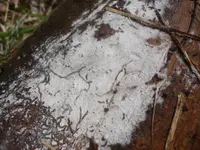
Botryobasidium subcoronatum
Botryobasidium subcoronatum
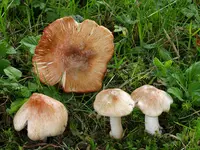
deadly fibrecap
Inosperma erubescens
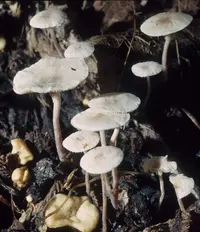
Splitpea Shanklet
Collybia cookei
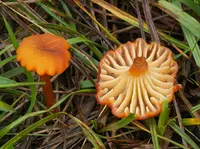
bog waxcap
Hygrocybe coccineocrenata
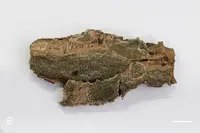
Dentocorticium portoricense
Dentocorticium portoricense
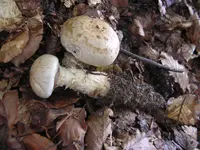
rooting poisonpie
Hebeloma radicosum