rooting poisonpie Care (Hebeloma radicosum)

rooting poisonpie

About rooting poisonpie

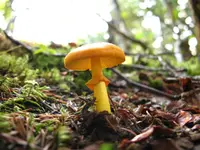
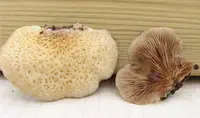
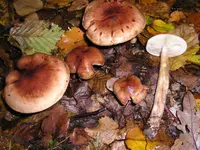
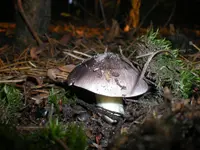
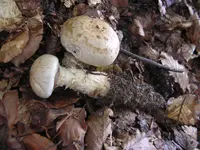
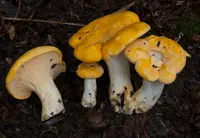
Rooting poisonpie, Hebeloma radicosum, is a small to medium-sized woodland mushroom rather than a true houseplant. It typically has a pale to tan cap, crowded gills, and a distinct root-like extension at the base of the stem that gives it the name rooting poisonpie.

This fungus is usually found in temperate forests, often associated with decaying organic matter or tree roots. It is not commonly cultivated, and attempts to care for rooting poisonpie at home are generally impractical because it relies on complex relationships with soil fungi and tree roots.

It naturally prefers cool, moist, shaded habitats with rich, humus-heavy soil, conditions that are difficult to reproduce reliably in containers or indoor spaces.

Main Plant Requirements

Care Difficulty

Hard Care

Light Preference

Partial Shade

Water Requirements

Keep Soil Moist

Temperature Preference

Cool Climate

Hardiness Zone

Unknown

Soil Texture

Loamy, Organic-rich

Soil pH

Acidic (5.5–6.5)

Soil Drainage

Moist but well-drained

Fertilization

Minimal (feed rarely)

Get Personalized Care Plan

Scan your plant to receive care tips personalized for your specific plant

Available on iOS and Android

How to Care for the rooting poisonpie

This woodland mushroom prefers cool, dappled forest light rather than direct, open sun.

  • Provide bright, filtered light under trees or shrubs, with 1–3 hours of weak morning sun and no harsh afternoon sun exposure.
  • Allow partial to deep shade; 70–100% canopy cover suits rooting poisonpie, as long as the ground does not dry out completely.
  • In summer, protect from direct sun that can overheat and desiccate the substrate; in winter, leafless canopies are acceptable as sun intensity is lower.

This fungus depends on consistently moist, but not waterlogged, soil around its host trees or shrubs.

  • Aim for soil that stays evenly damp to at least 5–8 cm depth; if the top 2–3 cm feel dry and crumbly, recent conditions have been too dry.
  • Favor loose, well-drained, humus-rich soil; standing water, sour smells, or slimy organic matter indicate excessive moisture and poor aeration.
  • During hot, dry spells, increase irrigation to keep the forest floor from fully drying; in cool, wet seasons, reduce added water to avoid waterlogging near the roots of Hebeloma radicosum.

This species is adapted to cool to mild climates with distinct seasonal shifts.

  • Support fruiting and active growth at about 50–68°F (10–20°C), which reflects typical cool spring and autumn woodland conditions.
  • Tolerate short dips near 32°F (0°C), but repeated hard freezes below 28°F (-2°C) can damage developing fruiting bodies at the soil surface.
  • In summer, aim to keep the rooting zone below 77°F (25°C); sustained heat above 86°F (30°C) and dry soil sharply reduce fruiting and overall vigor.

Humidity plays little role for this soil-dwelling fungus, which relies mainly on consistently moist substrate rather than air moisture.

Hebeloma radicosum associates with plant roots in loose, organic-rich soil and depends on moisture-retentive yet aerated substrate.

  • Use a deep, loamy mix with 40–60% leaf litter or compost blended with native garden soil to mimic forest-floor conditions.
  • Ensure drainage is moderate, not rapid; soil should stay evenly moist without forming standing water or hard, compacted patches.
  • Maintain slightly acidic to neutral pH around 6.0–7.0, avoiding limed or strongly alkaline soils that can reduce fungal vigor and root partnership.
  • Improve aeration by gently incorporating coarse sand or fine bark chips, but avoid heavy peat-only or clay-dominant mixes that collapse and exclude air.

This species is poorly suited to standard container culture because it depends on stable, symbiotic relationships with plant roots in the ground.

Hebeloma radicosum is a mycorrhizal mushroom that usually needs no direct fertilization when grown in soil with a suitable host tree.

Hebeloma radicosum does not require pruning, since the visible mushrooms are only the fruiting bodies of an underground fungal network.

Transplanting focuses on moving colonized substrate or host plants rather than handling Hebeloma radicosum as a typical potted plant.

  • Transplant in cool, moist weather, avoiding hot, dry periods that stress both roots and fungal mycelium.
  • Move young host trees or shrubs with an intact root ball, keeping as much original soil as possible around the roots.
  • Minimize disturbance of the colonized soil; handle gently to preserve fine roots and fungal threads.
  • Water thoroughly after transplanting and maintain even moisture for several weeks to support re-establishment.

Propagation of Hebeloma radicosum is specialized and typically not attempted by home growers.

Hebeloma radicosum is generally cold hardy in temperate climates and needs little specific winter care in the ground.

  • Leave leaf litter or a light mulch layer over the root zone to moderate soil temperature and moisture.
  • Avoid deep digging or root disturbance around host trees during winter dormancy.
  • Container-grown host plants with this fungus should be kept in a cold but frost-sheltered spot, with soil kept slightly moist.

Care Tips

Substrate renewal

Replace the fruiting substrate every 1–2 flushes to prevent buildup of competitor fungi and bacteria that can quickly reduce yield and deform caps.

Clean handling tools

Disinfect knives, trays, and any harvesting tools with 70% isopropyl alcohol before each use to reduce contamination risks in tightly controlled Hebeloma radicosum care.

Moderate airflow control

Use a small fan set on low, indirect flow and paired with a hygrometer to keep fresh air moving without dropping humidity below the target range.

Gradual light transitions

When moving cultures between dark incubation and dim fruiting light, change conditions over 2–3 days to reduce stress and irregular pin formation.

Dedicated growing area

Assign a separate, easy-to-clean shelf or tent only for growing rooting poisonpie and avoid storing houseplants or potting soil nearby to limit pest and spore contamination sources.

Common Pests and Diseases

Fungivorous springtails

These insects feed on decaying organic matter and fungal tissue around the mushroom base and in the casing or substrate. Symptoms include tiny jumping white or gray insects and slow or distorted fruiting near heavily infested spots.

Solution

Reduce excess moisture by improving drainage and allowing the top of the substrate to dry slightly between misting, then physically remove heavily infested debris. If needed, use fine mesh barriers and targeted biological controls such as predatory mites suitable for mushroom cultivation, and avoid overfeeding the substrate with rich organic waste that encourages springtail buildup.

Sciarid fungus gnats

These insects lay eggs in moist, organic-rich substrates, and their larvae feed on fungal mycelium and developing fruiting bodies. Symptoms include small dark flies around the growing area and tunneling damage in stems and caps near the soil line.

Solution

Allow the top layer of the substrate to become slightly less wet, use yellow sticky traps to reduce adult numbers, and cover the substrate with a breathable but fine barrier fabric to block egg laying. In indoor or controlled setups, beneficial nematodes that target gnat larvae can be applied to the substrate while maintaining moderate, not saturated, moisture levels.

Mite contamination

This pest group includes several tiny arthropods that graze on mycelium, spores, or decaying tissue in mushroom beds. Symptoms include patchy, weak mycelial growth, discolored or pitted fruiting bodies, and visible moving specks under magnification.

Solution

Remove and discard heavily infested substrate sections and any badly damaged mushrooms, then lower humidity slightly while keeping temperatures stable. Use clean, pasteurized substrate, avoid introducing unsterilized soil or compost to indoor beds, and, where allowed, introduce compatible predatory mites that suppress problem species without harming the fungus.

Competitive mold contamination

This disease arises when fast-growing molds colonize the same substrate, outcompeting the mushroom mycelium, especially under overly wet or poorly aerated conditions. Symptoms include green, blue-green, or gray fuzzy patches on the substrate or at the base of the stems, and reduced or deformed fruiting.

Solution

Promptly remove and discard moldy substrate portions and any affected fruiting bodies, keeping tools clean between cuts. Improve airflow, reduce standing moisture, and start future cultures from clean spawn on well-pasteurized or sterilized substrate, as this forms the core of reliable Hebeloma radicosum care.

Interesting Facts

Deep taprooted base

This species develops a long, rooting stem base that extends deep into the soil, a feature that inspired both its Latin epithet radicosum and the English name rooting poisonpie.

Mouse‐burrow specialist

In nature it often fruits in old rodent burrows or similar subterranean cavities, where it takes advantage of nutrient-rich, disturbed soil and stable humidity.

Strong ammonia odor

Fresh fruitbodies typically emit a sharp, ammonia-like smell, especially near the stem base, which is a useful field character for Hebeloma radicosum identification.

Botan icon

Did you know?

This fungus forms ectomycorrhizal associations with the roots of certain broadleaf trees, exchanging mineral nutrients and water from the soil for sugars produced by its host, and its presence in animal burrows suggests a three-way interaction among tree, fungus, and burrow-making mammals.

FAQs about rooting poisonpie

This fungus is considered toxic and should not be eaten. It contains gastrointestinal irritants that can cause nausea, vomiting, abdominal pain, and diarrhea. Identification errors are common, so it is safest to avoid any culinary use.

Grow Healthy Plants with Botan Care

Keep your plants happy and healthy with plant identification, disease detection, and easy care guidance.

Botan plant care app — identify plants on mobile

Explore More Plants