Birch Knight Care (Tricholoma fulvum)

Birch Knight

About Birch Knight

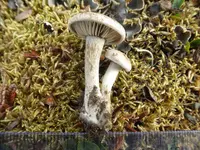
Birch Knight, Tricholoma fulvum, is a woodland mushroom rather than a green plant. It typically appears in small groups on the ground near birch trees, forming mycorrhizal partnerships where fungus and tree roots exchange nutrients.

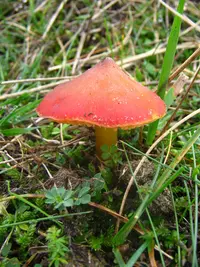
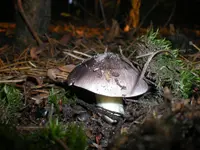
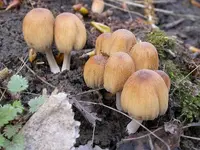
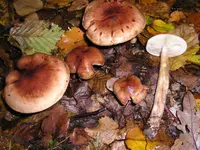
Its caps are usually brown to yellow-brown with paler gills and a sturdy stem, giving it a classic toadstool shape. It fruits mainly in cool, moist forests across parts of Europe and North America.

Because it is a fungus with specific tree partners and moisture needs, it is not simple to cultivate at home. Most references on how to care for Birch Knight focus on understanding its forest habitat rather than growing it indoors or in gardens.

Main Plant Requirements

Care Difficulty

Hard Care

Light Preference

Partial Shade

Water Requirements

Keep Soil Moist

Temperature Preference

Cool Climate

Hardiness Zone

Unknown

Soil Texture

Loamy, Organic-rich

Soil pH

Acidic (5.5–6.5)

Soil Drainage

Moist but well-drained

Fertilization

Minimal (feed rarely)

Get Personalized Care Plan

Scan your plant to receive care tips personalized for your specific plant

Available on iOS and Android

How to Care for the Birch Knight

This ectomycorrhizal fungus prefers low, forest-floor light rather than direct sun exposure.

  • Aim for bright shade or dappled light under trees, with no more than 1–2 hours of weak morning sun reaching the fruiting area.
  • Site the Birch Knight in mixed woodland or near birch where canopy cover filters at least 60–80% of direct sunlight through most of the day.
  • Protect from strong midday and afternoon sun, which can dry the leaf litter layer quickly and shorten fruiting periods in warm, clear weather.

This woodland fungus depends on consistently moist, not saturated, soil and leaf litter around its host trees.

  • Maintain evenly moist conditions in the top 3–5 cm of soil and litter; allow the surface to feel just slightly dry before rainfall or supplemental watering.
  • In dry spells, give a deep soak every few days rather than frequent light sprinkling, ensuring water drains away and does not pool for more than a few hours.
  • Watch for signs of stress: cracked, powder-dry soil and brittle litter suggest underwatering, while standing water or sour, swampy odor indicate overwatering around Tricholoma fulvum partners.

This species fruits best in cool to mild conditions typical of autumn woodlands.

  • Optimal fruiting usually occurs around 50–60°F (10–16°C), with mycelium growth continuing more broadly from about 40–68°F (4–20°C).
  • The organism tolerates brief drops near 30°F (-1°C), but repeated hard freezes below 28°F (-2°C) can halt visible fruiting until conditions warm again.
  • Sustained heat above 75–80°F (24–27°C) combined with dry weather reduces fruiting; cooler, moist late-summer to fall periods are generally most favorable.

This fungus prefers consistently moist, cool air typical of damp woodland rather than dry indoor conditions.

  • Aim for ambient humidity around 60–80% to mimic its natural forest-floor environment when attempting cultivation experiments.
  • Dry air causes caps to crack, edges to curl, and gills to dry prematurely, indicating humidity stress.
  • Increase local humidity outdoors by using thick leaf litter and lightly misting surrounding ground, avoiding direct heavy wetting of fruiting bodies.

This ectomycorrhizal fungus relies on specific forest soil conditions rather than conventional potting media.

  • Tricholoma fulvum associates with birch in cool, moist, humus-rich loam containing abundant decayed leaves and fine roots.
  • Soils should drain freely yet stay evenly moist, with a loose, crumbly structure that holds organic matter but does not become waterlogged.
  • A slightly acidic pH around 5.0–6.5 suits this species, typical of undisturbed birch woodland leaf litter layers.
  • To approximate its habitat, use a mix of native birch-forest soil, well-rotted leaf mold, and coarse sand for aeration while avoiding synthetic, heavily fertilized substrates.

This species is generally unsuitable for container cultivation because it depends on complex root associations with living birch trees rather than isolated substrate.

Tricholoma fulvum is a mycorrhizal mushroom that relies on its tree partners for nutrients, so direct fertilization is generally unnecessary for healthy growth.

Tricholoma fulvum is a wild mycorrhizal fungus and does not require or respond to pruning in the way vascular plants do.

This mycorrhizal fungus is typically managed by adjusting host tree and soil conditions rather than classic repotting.

  • Transplant only when moving young host trees or saplings already colonized by the fungus, keeping as much native soil around the roots as possible.
  • Plan any move during cool, moist periods in spring or early fall to reduce stress on both tree and fungal partner.
  • Avoid disturbing or washing roots; intact fine roots and surrounding soil help maintain the Tricholoma fulvum mycelium.
  • After transplanting, water to settle soil, then maintain even moisture without waterlogging to support gradual re-establishment.

Propagation of Tricholoma fulvum is specialized and rarely attempted by home growers, as it requires complex interactions with living tree roots.

This fungus is naturally cold hardy in its native range and usually needs no special winter care in the ground.

Care Tips

Host Tree Selection

Establish the fungus in mixed woodland dominated by birch or pine on low-fertility, undisturbed soil, as this species relies on a stable mycorrhizal partnership with suitable host trees rather than on added fertilizers.

Minimal Site Disturbance

Mark and protect the fruiting area from foot traffic, raking, and digging so the underground mycelium and fine tree roots remain intact and able to fruit reliably year after year.

Leaf Litter Management

Maintain a thin, patchy layer of natural leaf litter instead of a deep, compact mat by gently spreading or reducing excess leaves, which improves gas exchange and drainage while still protecting the soil surface.

Moisture Buffering Mulch

Use a loose, airy mulch of partially decomposed leaves or fine wood chips around host trees, not directly covering visible mushrooms, to stabilize moisture through light dry spells without creating waterlogged conditions.

Long-Term Monitoring

Record fruiting times, weather patterns, and host tree health each season, as this long-term observation helps fine-tune site management when growing Birch Knight and indicates early signs of site decline or disturbance.

Common Pests and Diseases

Mycophagous springtails

These insects feed on fungal tissue and can cluster around developing fruiting bodies, nibbling at gills and caps and causing malformed or aborted mushrooms.

Solution

Reduce excess surface moisture by improving ventilation and avoiding oversaturation of the substrate, then physically remove heavily infested mushrooms and use fine mesh or sticky traps around the cultivation area to limit adults and keep populations low.

Fungus gnat larvae

This pest thrives in moist substrates, where larvae tunnel through developing mycelium and pins, leading to deformed or partially collapsed fruiting bodies.

Solution

Allow the top layer of the substrate to dry slightly between mistings, use yellow sticky traps to capture adults, and cover vents or openings with fine mesh to prevent entry; discard heavily damaged flushes and maintain good air exchange to discourage larval development.

Parasitic mold (Trichoderma)

This disease appears as dense, fast‑spreading white growth that often turns green as spores develop, outcompeting the mushroom mycelium and halting fruiting.

Solution

Promptly remove and bag any contaminated substrate, increase fresh air exchange, lower humidity slightly, and strictly sanitize tools, containers, and work surfaces; start new cultures from clean spawn if contamination is extensive, following careful Tricholoma fulvum care practices for substrate hygiene.

Bacterial blotch

Symptoms include greasy, slimy spots or yellow‑brown lesions on caps, often developing in areas exposed to prolonged surface moisture and stagnant air.

Solution

Improve air movement, avoid overhead misting directly onto caps, and remove affected mushrooms; keep surfaces and tools clean, and maintain relative humidity in a controlled range without leaving visible water on fruiting bodies.

Mite infestation

These pests are tiny arthropods that crawl over caps and gills, leaving fine pits, scarring, or a dusty appearance on mushroom surfaces.

Solution

Discard infested flushes, thoroughly clean shelving and containers, and use physical barriers such as fine mesh and clean, sealed substrates; reduce debris and old substrate nearby to remove mite refuges and break their life cycle.

Interesting Facts

Strict birch associate

This species forms ectomycorrhizal partnerships almost exclusively with birch (Betula) trees, exchanging mineral nutrients and water from the soil for sugars produced by the tree’s photosynthesis.

Preference for wet soils

It is characteristically found in damp, often swampy birch woods and along boggy margins, making it a useful indicator of moist, nutrient-poor forest sites.

Distinctive cap and gills

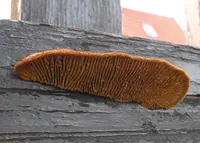
Its cap shows a brown to yellow-brown surface with darker, often streaky zones, while the gills are pale at first and become distinctly yellowish as the fruiting body matures, which helps separate it from several similar brown Tricholoma species.

Botan icon

Did you know?

Some field guides list Tricholoma fulvum as edible while others advise against eating it because of inconsistent reports on its safety and flavor, so many mycologists recommend avoiding it and using it only as a study species rather than a food source.

FAQs about Birch Knight

This mushroom is generally considered inedible or of poor culinary value and can be confused with toxic Tricholoma species. For safety, it should not be collected or eaten. Always rely on expert mycological identification before consuming wild fungi.

Grow Healthy Plants with Botan Care

Keep your plants happy and healthy with plant identification, disease detection, and easy care guidance.

Botan plant care app — identify plants on mobile

Explore More Plants