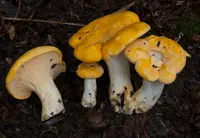
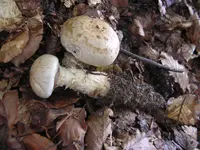
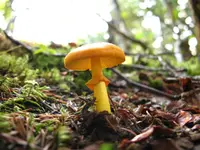
deadly fibrecap Care (Inosperma erubescens)

deadly fibrecap

About deadly fibrecap

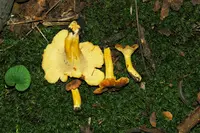
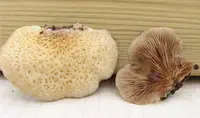
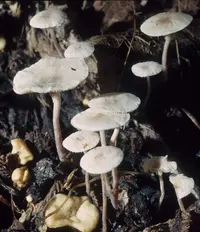
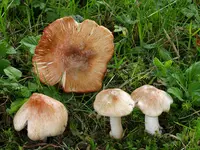
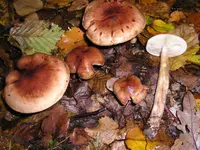
The deadly fibrecap, Inosperma erubescens, is a small woodland mushroom, not a houseplant, known for its pale cap that often bruises or stains reddish. It has a fibrous stem and grows in scattered groups on soil, usually among broadleaf trees.

This species occurs naturally across parts of Europe and Asia, appearing mainly in forests and sometimes in parks. It is not recommended to collect, cultivate, or care for deadly fibrecap because of its high toxicity and the difficulty of safely identifying and managing it.

Main Plant Requirements

Care Difficulty

Hard Care

Light Preference

Partial Shade

Water Requirements

Regular Water

Temperature Preference

Cool Climate

Hardiness Zone

Unknown

Soil Texture

Loamy, Silty, Organic-rich

Soil pH

Acidic (5.5–6.5)

Soil Drainage

Moist but well-drained

Fertilization

Minimal (feed rarely)

Get Personalized Care Plan

Scan your plant to receive care tips personalized for your specific plant

Available on iOS and Android

How to Care for the deadly fibrecap

Inosperma erubescens is a woodland fungus that relies on moderate, filtered light reaching the forest floor.

  • Site deadly fibrecap under deciduous trees where it receives dappled or filtered light for roughly 2–4 hours, avoiding direct, open sun exposure.
  • Favor morning sun with light shade by midday; strong afternoon sun can overheat the upper soil layer and dry organic matter too quickly.
  • In summer, increased canopy shade is acceptable, but if tree cover is heavily thinned and light exceeds 4–5 hours of direct sun, fruiting bodies may scorch and retreat.

Inosperma erubescens develops best in consistently moist, humus-rich forest soils rather than in repeatedly saturated ground.

  • Aim for soil that feels evenly moist 3–5 cm below the surface, allowing the top 1–2 cm of leaf litter to dry slightly between natural rains or light supplemental watering.
  • Increase moisture during warm, dry spells so the underlying soil never turns powder dry or pulls away from roots and surrounding organic debris.
  • Reduce any supplemental watering in cool or wet seasons to prevent standing water, which encourages rot, sour smells, and a slimy soil surface.

This woodland fungus favors mild, temperate conditions and reacts strongly to both hard frost and prolonged heat.

  • Optimal activity and fruiting typically occur around 55–70°F (13–21°C), with cool, moist weather supporting the most reliable development.
  • It tolerates brief drops near 32°F (0°C), but repeated or deep frosts below 28°F (-2°C) can damage or halt visible fruiting.
  • Sustained heat above 80–86°F (27–30°C), especially with dry soil, often suppresses growth, so shade and moisture become increasingly important in midsummer.

Humidity is only a minor factor for deadly fibrecap, which naturally experiences open-air forest conditions.

  • Thrives in 40–70% humidity, similar to typical outdoor woodland air levels.
  • Shows humidity stress mainly as faster cap drying and cracking rather than leaf symptoms, since it is a mushroom-forming fungus.
  • If cultivating mycelium, maintain 60–70% ambient humidity with localized moisture control in the substrate rather than misting the air heavily.

Inosperma erubescens relies on its tree partners rather than typical potting soil conditions, but the surrounding ground still matters.

  • Prefers a loose, well-drained, moderately moist forest-type substrate with a mix of mineral soil and leaf litter.
  • Best growth occurs in light, airy, sandy to loamy soil that allows rapid water movement and oxygen penetration to fine roots and fungal mycelium.
  • Slightly acidic to neutral pH (5.5–7.0) supports both host tree roots and fungal association, while strongly alkaline sites reduce vigor.
  • In managed sites, improve aeration and drainage by incorporating leaf mold and fine bark into the top 5–10 cm, avoiding heavy clay and waterlogged pockets.

This species is not realistically suitable for container growing because it depends on complex mycorrhizal relationships with mature trees and stable soil ecosystems.

Inosperma erubescens is a wild, mycorrhizal fungus that should not be fertilized directly, as it relies on its tree partners for nutrition.

Inosperma erubescens does not require pruning, since it is a wild mushroom rather than a managed garden plant.

This fungus is not suited to normal repotting or transplanting, because it forms a mycorrhizal partnership with host tree roots in undisturbed soil.

  • Avoid digging up fruiting bodies or surrounding soil, as this can damage the underground mycelium network.
  • If removal is necessary near paths or play areas, cut off only the visible caps and stems at ground level.
  • Leave the soil structure and tree roots intact to maintain overall ecosystem health and stability.
  • For those concerned about children or pets, use gloves, remove visible mushrooms, and dispose of them securely.

Deliberate propagation of Inosperma erubescens is not recommended, as this deadly fibrecap is highly toxic and primarily studied, not cultivated, by specialists.

No intentional winter care is appropriate, since this is a toxic wild fungus that naturally persists in soil with its tree hosts.

Care Tips

Toxin-safe handling

Always handle this fungus with nitrile gloves, avoid touching your face, and clean tools and collection containers with soap and water after fieldwork to limit accidental toxin transfer.

Spore print documentation

When surveying populations, take spore prints on labeled foil or paper and store them dry in sealed envelopes to help confirm identification and track local genetic and seasonal variation over time.

Site access control

Mark and, where possible, temporarily fence or flag fruiting areas in public or family-used woodlands to keep children and pets away from this highly poisonous species while still allowing monitoring and study.

Habitat recording notes

Each time you encounter fruiting bodies, record host tree species, canopy cover, soil type, and recent weather in a field notebook or app, which builds a useful habitat profile for growing deadly fibrecap under similar conditions for research plots.

Disposal of specimens

Collect unwanted or decaying fruiting bodies into a sealed bag and dispose of them in the trash rather than composting, to avoid spreading toxins or spores into garden compost or animal-accessible areas.

Common Pests and Diseases

Mycophagous springtails

These insects live in and around the fungal tissue and feed on spores and surface mycelium, sometimes scarring caps and gills. Symptoms include pitted or roughened cap surfaces and visible tiny white or gray jumping insects in moist conditions.

Solution

Limit excess surface moisture around fruiting bodies, and gently brush or wash off clusters with clean water where safe access is possible. In managed or research settings, reduce organic debris, use fine mesh barriers around developing mushrooms, and, if necessary, apply targeted, labeled soil-safe insect controls outside the immediate fruiting zone to reduce populations without contaminating the fungus.

Fungivorous mites

These pests are microscopic arachnids that feed on developing fruiting bodies, often starting at gill tissue and young caps. Symptoms include deformed caps, uneven gill development, and a fine dusting or movement visible under close inspection or magnification.

Solution

In controlled cultivation or study plots, reduce overcrowding of fruiting bodies and maintain moderate, not saturated, humidity to discourage mite buildup. Remove and discard heavily damaged mushrooms, and use physical barriers such as clean plastic collars or fabric mesh around the base area; in professional settings, introduce predatory mites as a biological control where regulations and context allow.

Slug and snail grazing

These mollusks feed directly on the caps and stems, leaving large irregular holes, slime trails, and sometimes completely consuming young mushrooms. This pest activity is most evident in damp, shaded locations and after rainfall.

Solution

Hand-pick slugs and snails in the evening or early morning and remove nearby hiding spots such as boards, dense leaf piles, and stones. In managed areas, use copper tape barriers, coarse grit rings (crushed eggshells or sharp gravel), or iron phosphate pellets placed away from the fruiting bodies to reduce grazing pressure while minimizing broader environmental impact.

Interesting Facts

Muscarine-rich gills

This fungus contains high concentrations of the neurotoxin muscarine in its white to cream gills, which is responsible for its potentially fatal poisoning syndrome affecting the parasympathetic nervous system.

Color-changing flesh

The pale flesh and cap surface slowly turn pinkish to reddish when handled or damaged, a bruising reaction that helps distinguish it from some similar, less toxic species.

Mycorrhizal with broadleaf trees

It forms ectomycorrhizal associations with roots of broadleaf trees such as beech and oak, exchanging mineral nutrients and water for sugars produced by the host through photosynthesis.

Botan icon

Did you know?

This species is one of the classic muscarine-poisoning mushrooms documented in European toxicology, and its involvement in several well-described poisoning cases helped physicians characterize the muscarinic mushroom poisoning syndrome in clinical literature.

FAQs about deadly fibrecap

This mushroom is highly poisonous and must never be eaten, even in small amounts. It contains dangerous toxins that can cause severe, delayed kidney and liver damage and may be fatal without rapid medical treatment.

Grow Healthy Plants with Botan Care

Keep your plants happy and healthy with plant identification, disease detection, and easy care guidance.

Botan plant care app — identify plants on mobile

Explore More Plants