

Site hygiene management
Remove and dispose of any decaying wood, old mulch, or rotting organic debris around the fruiting area to limit competing fungi and reduce the risk of mold overgrowth on developing mushrooms.

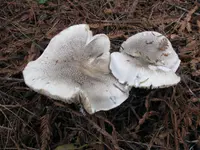
Spotted tricholoma (Tricholoma pardinum) is a terrestrial mushroom, not a leafy houseplant. It forms sturdy, fleshy caps with distinctive gray to silvery scales that create a spotted pattern, usually above thick white stems. In nature it appears in montane and subalpine coniferous forests, especially in cooler regions of Europe and North America, growing on the ground in soil rich in forest litter. Because this species forms mycorrhiza, a nutrient-exchanging partnership with tree roots, it cannot be reliably cultivated at home. For this reason, attempts to care for Spotted tricholoma as a conventional potted plant are not practical or predictable.

Care Difficulty
Hard Care

Light Preference
Partial Shade

Water Requirements
Keep Soil Moist

Temperature Preference
Cool Climate

Hardiness Zone
Unknown

Soil Texture
Loamy, Silty, Organic-rich

Soil pH
Acidic (5.5–6.5)

Soil Drainage
Moist but well-drained

Fertilization
Minimal (feed rarely)
Scan your plant to receive care tips personalized for your specific plant
Available on iOS and Android
This woodland fungus prefers cool, shaded conditions that mimic a forest floor.
This mycorrhizal fungus depends on consistently moist, not saturated, forest soil.
This species thrives in cool, temperate conditions typical of higher-elevation or northern woodlands.
Humidity does not play a major role in the development of Tricholoma pardinum, which depends far more on soil and host tree conditions than on air moisture.
This ectomycorrhizal fungus requires specific outdoor forest-like soil conditions rather than a standard garden or potting substrate.
This species is not suitable for container growing, as it depends on complex ectomycorrhizal relationships with living tree roots in natural soil profiles.
This ectomycorrhizal fungus does not benefit from direct fertilization, since it relies on a nutrient-sharing partnership with tree roots.
Tricholoma pardinum is a wild, non-woody fungus that is not managed through pruning in typical horticultural practice.
This species is not suited to container culture or routine transplanting because it depends on a stable symbiosis with host tree roots in undisturbed soil.
Propagation of Tricholoma pardinum is not practicable for home growers and is usually left entirely to natural spore dispersal in the wild.
This forest fungus is naturally cold hardy in its native range and does not need deliberate winter care from gardeners.

Plant Health Check
Not sure what's wrong with your plant? Check your plant's health inside the app.
This species is one of the more dangerous poisonous agaric mushrooms and ingestion can cause severe gastrointestinal symptoms and potentially acute kidney damage in humans.
Its cap surface shows a striking pattern of dark gray to blackish fibrils or scales on a paler gray background, giving a marbled or spotted appearance that helps distinguish it from many edible species.
It typically forms ectomycorrhizal partnerships with conifer trees, especially fir and spruce, and is most often found in montane to subalpine forests on calcareous or neutral soils in temperate regions of Europe and North America.

This species was historically confused with certain edible Tricholoma species, and several documented poisoning outbreaks in Europe during the 19th and early 20th centuries were pivotal in clarifying its taxonomy and emphasizing the dangers of relying on superficial similarity for wild mushroom identification.
This mushroom is highly poisonous and must never be eaten. It contains toxins that damage the digestive system and nervous tissue, causing severe gastrointestinal distress and potentially life‑threatening complications, even from a single meal‑sized portion.
Keep your plants happy and healthy with plant identification, disease detection, and easy care guidance.

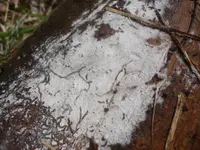
Botryobasidium subcoronatum
Botryobasidium subcoronatum
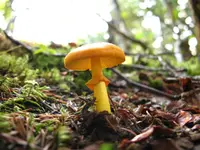
Peck's Yellow Dust Amanita
Amanita elongata
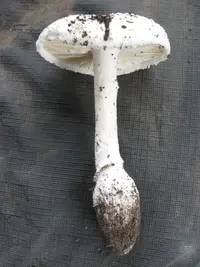
Australian Flour Lepidella
Amanita farinacea
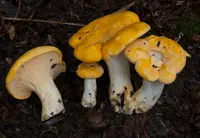
Ghost chanterelle
Cantharellus phasmatis
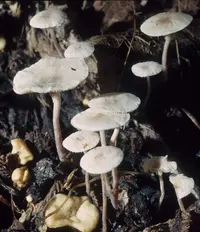
Splitpea Shanklet
Collybia cookei
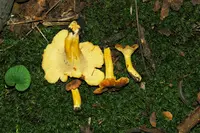
Cantharellus appalachiensis
Cantharellus appalachiensis
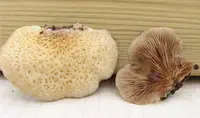
Crepidotus calolepis
Crepidotus calolepis
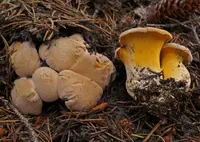
Rainbow Chanterelle
Cantharellus roseocanus