Site history check
Select a site where compatible conifer hosts (such as pine or fir) have grown undisturbed for several years, since established mycorrhizal networks are essential for reliable fruiting.

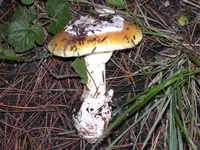
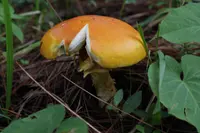
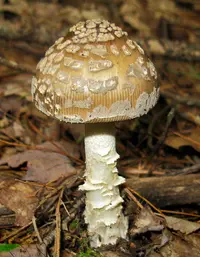
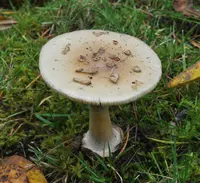
Coccora, Amanita calyptroderma, is a fleshy, mushroom-forming fungus rather than a traditional green plant. It produces a thick, white stem with a smooth, pale to orange-brown cap that often retains a white veil patch on top.
This species occurs naturally in western North America, especially in coastal forests with conifers and oaks. It forms mycorrhizal partnerships, meaning its underground structures exchange nutrients with nearby tree roots.
Because it depends on these tree partners, it is not practical to cultivate in typical home or container conditions. Information on how to care for Coccora focuses mainly on preserving its natural woodland habitat rather than growing it indoors or in gardens.

Care Difficulty
Hard Care

Light Preference
Partial Shade

Water Requirements
Keep Soil Moist

Temperature Preference
Cool Climate

Hardiness Zone
7–9

Soil Texture
Loamy, Sandy, Organic-rich

Soil pH
Acidic (5.5–6.5)

Soil Drainage
Moist but well-drained

Fertilization
Minimal (feed rarely)
Scan your plant to receive care tips personalized for your specific plant
Available on iOS and Android
This mycorrhizal mushroom favors bright forest edges with soft, filtered light rather than direct, open sun.
This ectomycorrhizal fungus depends on consistently moist, well-drained soil and stable humidity around tree roots.
This woodland mushroom fruits best in cool to mild conditions typical of coastal and montane forests.
Humidity is not a practical care factor for Amanita calyptroderma, which is a wild ectomycorrhizal fungus rather than a conventional container-grown plant.
This ectomycorrhizal mushroom relies on natural forest soil conditions rather than standard potting mixes.
This species is not suitable for container growing, as its ectomycorrhizal lifecycle depends on complex root and soil interactions in natural forest settings.
Amanita calyptroderma is a mycorrhizal fungus that does not need direct fertilization in cultivation or habitat.
Amanita calyptroderma is not pruned, since it is a wild mycorrhizal mushroom rather than a managed garden plant.
This species forms symbiotic relationships with tree roots and is not suited to typical repotting or container culture.
Propagation of Amanita calyptroderma is complex and not practical for home growers.
This wild mycorrhizal mushroom is naturally adapted to local winter conditions and does not require specific winter care in gardens.

Plant Health Check
Not sure what's wrong with your plant? Check your plant's health inside the app.
This species is native to the Pacific coast of North America and is strongly associated with coastal conifer forests, especially under Douglas-fir and pines from California into the Pacific Northwest.
It has a thick, persistent partial veil that often leaves a large, membranous ring on the stem and sometimes a ragged covering on the cap margin, which helps distinguish it from several other pale amanitas in the same region.
In much of its range it fruits mainly during the cooler, wetter months, often from late fall through early spring, aligning with peak soil moisture and active mycorrhizal exchange with host trees.

Amanita calyptroderma forms highly specialized ectomycorrhizal partnerships with its host trees, where its fine fungal threads wrap around and between root cells, greatly increasing the tree’s access to water and mineral nutrients while receiving sugars produced by photosynthesis in return.
This species is considered edible by some foragers but is very risky to collect because it closely resembles deadly Amanita species. Misidentification can be fatal. For home use, it is safer not to consume it at all.
Keep your plants happy and healthy with plant identification, disease detection, and easy care guidance.