Early canopy training
During the first 2–3 years, lightly stake and tie young laterals to guide a balanced, umbrella-shaped crown that will better resist wind and reduce future heavy pruning cuts.

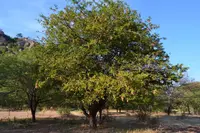
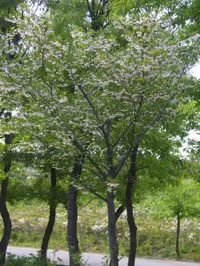
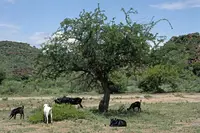
Sickleleaved albizia (Albizia harveyi) is a small to medium deciduous tree from southern Africa, belonging to the legume family. It typically has a rounded, spreading crown with fine, feathery foliage and distinctive sickle-shaped leaflets. In its native range, it grows in savanna and woodland, often on rocky slopes or well-drained hillsides. The tree is adapted to seasonal dry periods and usually shows moderate drought tolerance once established. Its growth can be somewhat slow when young but becomes easier to manage in stable outdoor conditions. For those learning how to care for Sickleleaved Albizia, it generally prefers full sun, good drainage, and low to moderate moisture rather than constantly wet soil.

Care Difficulty
Moderate Care

Light Preference
Full Sun

Water Requirements
Moderate Water

Temperature Preference
Warm Climate

Hardiness Zone
9–11

Soil Texture
Sandy, Loamy, Rocky

Soil pH
Slightly acidic (6.5–7.0), Neutral (7.0)

Soil Drainage
Well-drained

Fertilization
Minimal (feed rarely)
Scan your plant to receive care tips personalized for your specific plant
Available on iOS and Android
Albizia harveyi thrives in bright outdoor conditions with ample direct sun but some protection from extremes.
Albizia harveyi prefers deep, infrequent watering that allows the soil to dry slightly between soakings.
This species prefers warm, frost-free conditions and shows best growth in mild to hot climates.
This species tolerates a wide humidity range but grows best in moderately dry air.
Albizia harveyi prefers well-drained, moderately fertile soil that does not stay wet.
This species can be grown in containers for early stages or patio use if the pot is chosen carefully.
Albizia harveyi grows acceptably in lean soils but benefits from light, controlled feeding in containers or poor ground.
Albizia harveyi responds well to structured pruning that maintains a stable framework and safe clearance.
This species is usually grown in the ground, so focus on careful transplanting of young Albizia harveyi rather than long-term container culture.
New Albizia harveyi plants are most commonly raised from seed under warm, bright conditions.
Established Albizia harveyi in suitable climates is moderately cold hardy and usually needs minimal winter intervention.

Plant Health Check
Not sure what's wrong with your plant? Check your plant's health inside the app.
Albizia harveyi is native to warm, semi-arid regions of southern Africa, where it typically grows on rocky hillsides and open woodland rather than dense forest, reflecting its adaptation to high light and seasonal drought.
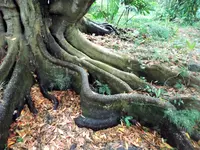
Like other mimosoid legumes, this species forms nodules on its roots that host nitrogen-fixing bacteria, which convert atmospheric nitrogen into forms usable by the tree and help enrich poor soils in its native habitat.
The species name harveyi is often associated with its characteristic sickle-shaped leaflets, which are small, narrow, and slightly curved, giving the tree a fine, feathery texture that differs from many broader-leaved Albizia species.
This species is generally fast-growing, especially in warm climates with seasonal rainfall. Young trees can add 30–60 cm per year, slowing as they mature. Poor soil, drought stress, or root disturbance can significantly reduce growth rate.
Keep your plants happy and healthy with plant identification, disease detection, and easy care guidance.