Deep root training
During the first 2–3 years, water less frequently but in high volume to encourage a deep taproot, which improves long-term drought tolerance and wind stability when growing angico outdoors.

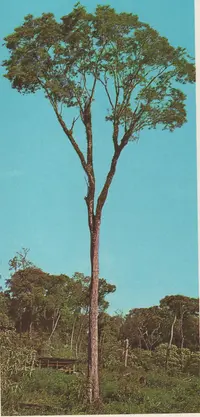
Angico (Parapiptadenia rigida) is a fast-growing, deciduous tree from South America, especially common in Brazil, Argentina, Paraguay, and Uruguay. It is typically used as a timber and shade tree in warm climates.
The tree has a straight trunk, fine feathery leaves, and elongated seed pods that give it a distinctive, airy look. In suitable conditions it can reach considerable height and forms a broad, light canopy.
It prefers full sun, well-drained soil, and moderate moisture, and it tolerates seasonal dry periods once established. These traits make it relatively resilient but best suited to larger outdoor spaces rather than containers.
Gardeners interested in how to care for angico should first check local climate and space, since this species needs warmth and room to develop its root system and crown.

Care Difficulty
Moderate Care

Light Preference
Full Sun

Water Requirements
Moderate Water

Temperature Preference
Warm Climate

Hardiness Zone
9–11

Soil Texture
Sandy, Loamy, Clay

Soil pH
Acidic (5.5–6.5), Slightly acidic (6.5–7.0)

Soil Drainage
Well-drained

Fertilization
Minimal (feed rarely)
Scan your plant to receive care tips personalized for your specific plant
Available on iOS and Android
Parapiptadenia rigida thrives in bright outdoor exposure with plenty of direct sun.
Parapiptadenia rigida prefers evenly moist but never waterlogged soil once established.
This species comes from warm regions and performs best in mild to hot climates outdoors.
This species tolerates a wide humidity range but grows best with moderately moist air.
Parapiptadenia rigida prefers deep, well-structured mineral soil with steady drainage.
This species can be grown in containers when young, mainly as a temporary or training stage.
Parapiptadenia rigida benefits from light, balanced feeding when establishing or grown in containers, while mature trees in the ground often need little extra nutrition.
Parapiptadenia rigida responds well to thoughtful structural pruning that controls size and removes weak growth.
This species is usually grown as a landscape tree, so transplanting young plants from containers into the ground is more common than long-term pot culture.
This tree is most often propagated from seed, with vegetative methods used less commonly for home gardeners.
Established trees are moderately cold tolerant in warm-temperate to subtropical climates and usually need minimal winter care.

Plant Health Check
Not sure what's wrong with your plant? Check your plant's health inside the app.
This leguminous tree forms nodules on its roots that host nitrogen-fixing bacteria, which convert atmospheric nitrogen into forms usable by plants and help enrich poor soils in its native South American range.
It is naturally distributed in southern and southeastern Brazil, Paraguay, Uruguay, and northern Argentina, where it helps structure riverine and seasonal forests and offers nectar, pollen, and seeds to a wide range of insects, birds, and mammals.
The wood is heavy, hard, and naturally resistant to decay, so in its native region it is widely used for external construction, fence posts, railway sleepers, and other situations that demand high mechanical strength and durability.

Seeds of this species are dispersed mainly by wind from its flat, dehiscent pods, which can release many papery, winged seeds at once, allowing the tree to colonize open, disturbed areas along forest edges and riverbanks with high efficiency.
This species is considered relatively fast-growing, often adding 60–100 cm in height per year under warm conditions, full outdoor exposure, and adequate moisture. Poor soil fertility, root disturbance, or prolonged drought can slow growth significantly.
Keep your plants happy and healthy with plant identification, disease detection, and easy care guidance.