Tuber Containment
Plant the tubers inside a buried, bottomless container or root barrier 25–30 cm deep to prevent unwanted spreading and make autumn harvesting more controlled.

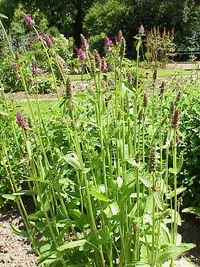
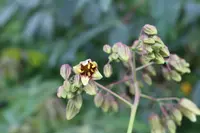
Artichoke betony (Stachys affinis) is a perennial herb grown mainly for its small, knobbly, edible tubers rather than for its foliage or flowers. The plant forms low clumps with soft, opposite leaves and sends up short flowering stems with pale blooms in late season.
It originates from East Asia and is now cultivated in temperate gardens and small farms as a specialty root crop. Plants prefer sun to light shade, evenly moist soil, and good drainage.
Once established, it is fairly resilient and cold-hardy, but it spreads by underground tubers and can become persistent if not managed. Understanding how to care for artichoke betony helps keep it productive without letting it overrun nearby beds.

Care Difficulty
Moderate Care

Light Preference
Full Sun

Water Requirements
Regular Water

Temperature Preference
Cold Hardy

Hardiness Zone
5–8

Soil Texture
Loamy, Sandy, Organic-rich

Soil pH
Acidic (5.5–6.5), Slightly acidic (6.5–7.0)

Soil Drainage
Moist but well-drained

Fertilization
Light (every 4–6 weeks)
Scan your plant to receive care tips personalized for your specific plant
Available on iOS and Android
Stachys affinis grows best in bright conditions with some protection from harsh afternoon sun.
Stachys affinis prefers evenly moist, well-drained soil and does not tolerate waterlogged conditions.
This species is a cool-temperate perennial that tolerates winter cold but grows best in mild conditions.
This species handles a wide humidity range, so levels are rarely a limiting factor.
Soil preparation is important for healthy growth and reliable tuber production.
This species is suitable for container growing when the pot is prepared for tuber spread and drainage control.
This tuber-forming perennial needs only light feeding for steady growth and tuber production.
Pruning Stachys affinis is simple and mainly keeps plants tidy and productive.
This species is most often grown in the ground, with transplanting focused on managing spreading clumps and tubers.
Stachys affinis is commonly propagated through its tubers, with division the most reliable method.
This hardy perennial usually tolerates typical winters in temperate regions with minimal intervention.

Plant Health Check
Not sure what's wrong with your plant? Check your plant's health inside the app.
This species forms small, ivory-colored tubers with a natural spiral shape that are eaten as a crunchy root vegetable, especially in East Asian cuisine. The tubers stay crisp even after light cooking, with a texture often compared to water chestnut.
Rather than relying heavily on seed, this plant mainly spreads through underground stolons that produce chains of new tubers. This clonal growth allows it to form dense patches that can persist in one site for many years.
In many temperate climates the aerial stems die back in winter while the underground tubers remain alive and dormant. New shoots then emerge from these tubers in spring, giving the plant a perennial life cycle despite its seemingly annual top growth.

Stachys affinis was introduced to European horticulture and cuisine in the late 19th century under the name Chinese artichoke or crosne, and quickly gained attention among French growers and chefs for its unusual tuber shape and delicate flavor, even though it never became a major commercial crop.
This species forms clumps and slowly expands via underground tubers. In typical garden conditions it is not aggressive, but in loose, fertile soil it can drift outward over time and may need occasional edging or division.
Keep your plants happy and healthy with plant identification, disease detection, and easy care guidance.