Wind-harden young plants
During the first growing season, expose plants gradually to stronger breezes and stake them lightly so stems flex but do not snap, which encourages thicker, more wind-resistant growth for exposed garden sites.

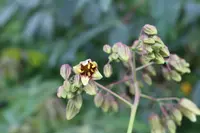
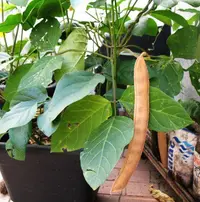
Manihot carthagenensis is a tropical shrub or small tree from the Americas, related to cassava. It is grown mainly as an ornamental foliage plant. The plant typically has deeply lobed, palmate leaves that give it a fine, airy texture and a slightly exotic look in gardens or large containers.
In its native range it occurs in warm, frost-free areas, often in open, sunny sites. It grows relatively fast and can become tall if not pruned, so it suits spacious outdoor plantings in mild climates. With warmth, well-drained soil, and steady moisture, it is generally not difficult to manage, and learning how to care for Manihot carthagenensis helps maintain a healthy, attractive shape.

Care Difficulty
Moderate Care

Light Preference
Full Sun

Water Requirements
Moderate Water

Temperature Preference
Tropical / Frost Sensitive

Hardiness Zone
10–12

Soil Texture
Sandy, Loamy, Organic-rich

Soil pH
Acidic (5.5–6.5), Slightly acidic (6.5–7.0)

Soil Drainage
Well-drained

Fertilization
Light (every 4–6 weeks)
Scan your plant to receive care tips personalized for your specific plant
Available on iOS and Android
This sun-loving shrub performs best with strong light and some protection from harsh extremes.
This species prefers evenly moist, well-drained soil and reacts quickly to prolonged drought or saturation.
This plant thrives in stable warm conditions and is sensitive to cold and frost.
This species handles a wide humidity range but grows best with moderate ambient moisture.
Manihot carthagenensis prefers loose, fast-draining, moderately fertile soil to prevent root problems.
This species is suitable for container growing when the pot supports its deep, vigorous root system and tall stems.
This species grows reasonably well in lean soil, but moderate feeding supports stronger growth in containers or poor ground.
Pruning is mainly used to manage size and encourage a well-branched, safe structure.
This plant is usually grown in the ground, so focus on careful transplanting rather than frequent repotting.
Gardeners usually propagate this species from semi-woody cuttings or seeds under warm conditions.
This tropical shrub is frost sensitive and needs protection anywhere winter temperatures drop near freezing.

Plant Health Check
Not sure what's wrong with your plant? Check your plant's health inside the app.
This species is a close wild relative of the crop Manihot esculenta (cassava), and genetic studies have used it to better understand domestication and trait variation in the genus Manihot.
It typically has deeply lobed, palm-shaped leaves with narrow segments, and some forms show noticeable variation in lobe width and length even on the same plant, which makes it useful in studies of leaf morphology.
Native to northern South America and parts of Central America, it occurs in seasonally dry tropical habitats, where it often grows in disturbed sites and forest edges, showing a clear preference for warm, frost-free climates.

Molecular phylogenetic research, which uses DNA sequences to study evolutionary relationships, has placed this species within a clade of wild Manihot relatives that help trace how the domesticated cassava lineage evolved and diversified across tropical America.
This species is a tender woody perennial shrub in warm climates. In frost-free regions it can live for many years, forming a small tree. In colder areas it is often grown as a die-back or seasonal plant.
Keep your plants happy and healthy with plant identification, disease detection, and easy care guidance.