


Wind exposure management
Site plants where they receive good air flow but are protected from persistent strong winds, which can desiccate foliage and snap brittle stems in this coastal species.

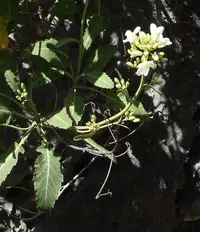
Brassica insularis is a rare, perennial member of the cabbage family, native to rocky coastal areas of Mediterranean islands such as Sardinia and Corsica. It forms loose clusters of bluish-green leaves and upright flowering stems with small yellow blossoms typical of wild brassicas.
In nature it grows in sunny, wind-exposed cliffs and shallow, well-drained soils, which makes it adapted to dry periods and nutrient-poor conditions. These traits can make it moderately challenging to cultivate, as it dislikes heavy, waterlogged substrates and prolonged shade.
Gardeners who care for Brassica insularis usually focus on providing strong light, good drainage, and protection from extreme winter cold to mimic its native habitat conditions.

Care Difficulty
Moderate Care

Light Preference
Full Sun

Water Requirements
Moderate Water

Temperature Preference
Warm Climate

Hardiness Zone
9–11

Soil Texture
Sandy, Loamy, Rocky

Soil pH
Slightly acidic (6.5–7.0), Slightly alkaline (7.0–7.5)

Soil Drainage
Well-drained

Fertilization
Minimal (feed rarely)
Scan your plant to receive care tips personalized for your specific plant
Available on iOS and Android
This Mediterranean shrub prefers bright, open conditions similar to coastal scrub habitats.
This species is adapted to relatively dry, rocky sites and dislikes prolonged soil saturation.
This shrub is adapted to mild Mediterranean climates with warm, dry summers and cool, frost-light winters.
This Mediterranean shrub tolerates a wide humidity range and rarely needs special humidity management.
This coastal species prefers mineral, fast-draining soil that avoids prolonged saturation.
This shrub can be grown in containers if drainage and root space are managed carefully.
This Mediterranean shrub usually needs modest feeding when grown in poor or disturbed soils.
Pruning helps keep Brassica insularis compact, healthy, and well-shaped in cultivation.
This species is more often transplanted in the landscape than grown long term in containers.
Propagation of this shrub is practical for conservation plantings and garden use.
This Mediterranean species prefers mild winters and can suffer in prolonged hard freezes.

Plant Health Check
Not sure what's wrong with your plant? Check your plant's health inside the app.
This species is naturally restricted to coastal limestone areas of Sardinia and a few nearby islets, making it a narrow Mediterranean island endemic with a very limited distribution range.
It grows on rocky sea cliffs and steep coastal slopes, anchoring in crevices exposed to salt-laden winds, which is unusual among relatives of cultivated cabbage and broccoli.
Habitat loss, coastal development, and competition from invasive plants have contributed to its classification as a threatened species, and it is a conservation focus in parts of its native range.

Genetic studies indicate that this rare island species is closely related to domesticated Brassica crops, making it of interest to plant breeders as a potential wild gene source for improving stress tolerance in cultivated cabbages and related vegetables.
The species is an edible wild cabbage relative, but it is rare and of conservation interest. For ethical and legal reasons, it is better not to harvest or eat it and to grow common brassicas instead.
Keep your plants happy and healthy with plant identification, disease detection, and easy care guidance.

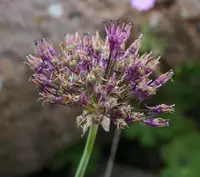
Allium cyrilli
Allium cyrilli
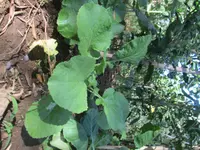
Mediterranean cabbage
Brassica fruticulosa
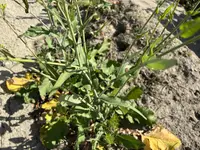
Field Mustard
Brassica rapa subsp. narinosa
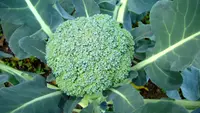
Mustard
Brassica oleracea var. italica
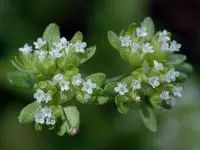
mâche
Valeriana locusta
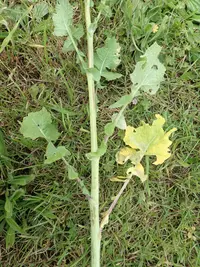
Brassica napus subsp. rapifera
Brassica napus subsp. rapifera
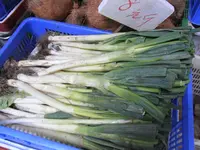
welsh onion
Allium fistulosum
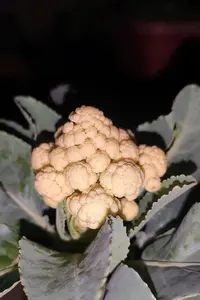
Brassica oleracea var. botrytis
Brassica oleracea var. botrytis