Brassica napus subsp. rapifera Care

Brassica napus subsp. rapifera

About Brassica napus subsp. rapifera

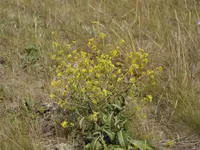
Brassica napus subsp. rapifera, commonly known as swede or rutabaga, is a cool-season root crop grown for its swollen, edible taproot. It forms a rosette of bluish-green, waxy leaves above ground, while the fleshy root develops partly buried in the soil.

This plant likely originated from hybridization within the Brassica group and is now widely cultivated in temperate regions for both human food and livestock fodder. It is generally considered easy to grow, provided it receives consistent moisture, fertile, well-drained soil, and cool conditions that prevent heat stress and bitterness.

Gardeners who want to learn how to care for Brassica napus subsp. rapifera should focus on stable cool temperatures and protection from common brassica pests such as aphids and cabbage caterpillars.

Main Plant Requirements

Care Difficulty

Moderate Care

Light Preference

Full Sun

Water Requirements

Regular Water

Temperature Preference

Cool Climate

Hardiness Zone

2–10

Soil Texture

Loamy, Silty, Organic-rich

Soil pH

Acidic (5.5–6.5), Slightly acidic (6.5–7.0)

Soil Drainage

Moist but well-drained

Fertilization

Moderate (every 2–4 weeks)

Get Personalized Care Plan

Scan your plant to receive care tips personalized for your specific plant

Available on iOS and Android

How to Care for the Brassica napus subsp. rapifera

This crop needs high light levels for strong root development and leaf growth.

  • Provide full sun for 6–8 hours daily; 8–10 hours is ideal in cooler regions for Brassica napus subsp. rapifera.
  • Tolerates light partial shade, especially with afternoon shade in hot climates, but yields and root size decrease as shade time increases.
  • Avoid intense reflected heat from walls or bare soil; use mulch or nearby crops to reduce leaf scorch risk in midsummer while still allowing open sky exposure.

Consistent, moderate soil moisture supports even root formation and prevents stress cracking.

  • Water when the top 3–5 cm of field soil feels dry and crumbly; the soil below should stay slightly moist, not saturated.
  • Increase watering frequency during rapid growth and hot, windy weather; reduce once foliage starts to yellow near harvest.
  • Watch for overwatering signs like soft, rotting roots and sour smell, and underwatering signs like wilting at midday that does not recover by evening.

Cool conditions favor strong growth and good root quality for this crop.

  • Optimal growth occurs at 55–70°F (13–21°C), with best root formation in the cooler part of this range.
  • Plants tolerate brief drops to 25–28°F (-4– -2°C) once established but young seedlings are more sensitive to hard frost.
  • Growth slows above 80°F (27°C); prolonged heat above 86°F (30°C) can cause bolting, woody roots, and reduced quality, especially without mulch.

This crop tolerates a wide humidity range, so air moisture is rarely a limiting factor outdoors.

This root crop needs loose, deep, well-drained soil that allows uniform root swelling.

  • Use a loamy or sandy loam structure enriched with mature compost to support both moisture retention and drainage.
  • Aim for slightly acidic to neutral pH around 6.0–7.0, avoiding strongly acidic or alkaline ground that reduces nutrient availability.
  • In heavy clay, incorporate coarse sand and organic matter to improve aeration and prevent waterlogging around the developing roots.
  • Avoid compacted, stony, or shallow soils, which fork or distort Brassica napus subsp. rapifera roots and limit yield.

This species can be grown in containers if the pot is chosen to match its deep taproot and top growth.

  • Select a container at least 30–35 cm deep so the taproot can develop straight without hitting the bottom and forking.
  • Choose a wide, heavy pot or add weight at the base to prevent tall foliage and flower stalks from tipping the container in wind.
  • Use a free-draining potting mix and elevate the container slightly so drainage holes never sit directly in standing water.

This crop responds well to moderate, targeted feeding for reliable root and foliage growth.

  • Apply balanced NPK granular fertilizer or well-rotted compost 1–2 weeks before sowing or transplanting Brassica napus subsp. rapifera.
  • Side-dress with a balanced or slightly higher nitrogen fertilizer once 3–4 true leaves have formed.
  • Use light applications rather than heavy doses to avoid excessive leafy growth and forked roots.
  • Stop feeding late in the season and avoid fertilizing during winter or when plants are not actively growing.

Turnips need minimal pruning, mainly to maintain plant health and light access.

  • In early growth, remove yellowing, dead, or diseased leaves with clean scissors or hand pruners.
  • Thin crowded seedlings at 5–8 cm spacing to improve air flow and produce well-shaped roots on Brassica napus subsp. rapifera.
  • Trim badly damaged outer leaves to reduce pest and disease pressure, keeping enough foliage for photosynthesis.
  • Avoid heavy cutting of healthy foliage, which can slow root development and reduce final yield.

This root crop is usually direct-sown, but young plants transplant acceptably if handled with care.

  • Transplant only very young seedlings with minimal root disturbance; older plants with circling roots suffer transplant shock.
  • Move seedlings outdoors in early spring or late summer, 2–3 weeks before expected harvest heat or frost stress.
  • Use loose, stone-free soil and set plants at the same depth as in trays to keep the root shoulder at soil level.
  • Water well after transplanting Brassica napus subsp. rapifera, then keep soil evenly moist to reduce stress and encourage quick re-establishment.

Turnips are commonly propagated from seed for uniform and fast production.

  • Sow seeds directly outdoors in early spring or late summer when soil is 45–75°F for best germination.
  • Plant seeds 0.5 in deep in loose, fertile soil, then keep the top layer evenly moist until emergence.
  • Thin seedlings to the desired spacing once they reach 5–8 cm tall to support strong root formation.
  • Save seeds from selected, healthy, overwintered plants if maintaining an open-pollinated strain.

Turnips are cool-season plants with moderate frost tolerance but benefit from simple winter protection in colder regions.

  • Mature roots of Brassica napus subsp. rapifera tolerate light frosts but can be damaged by prolonged freezes below about 20°F.
  • Apply 5–10 cm of straw or leaf mulch over the bed to insulate roots and stabilize soil temperature.
  • In very cold climates, lift roots before deep winter and store in slightly damp sand in a cool, frost-free space.

Care Tips

Row cover timing

Use lightweight floating row covers from sowing until flowering to reduce flea beetle and root maggot damage, then remove them once plants start to bloom to allow pollination and proper root sizing.

Thinning for size

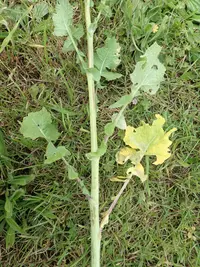
Thin seedlings to 10–15 cm apart once they have 2–3 true leaves, cutting extras at soil level rather than pulling them to avoid disturbing the roots of the remaining plants.

Staggered sowing

Sow small batches every 2–3 weeks in early spring and again in late summer to spread harvests, avoid oversized woody roots, and manage pest pressure more effectively when growing Brassica napus subsp. rapifera.

Targeted root inspection

Harvest a few plants early and split the roots lengthwise to check for tunneling or discoloration, which helps detect root maggot or nematode issues before they affect the whole planting.

Post-harvest storage

Leave a short length of leaf stalk attached, brush off loose soil without washing, and store sound roots in perforated bags in a cool, humid place (32–40°F, 90–95% RH) to maintain texture and sweetness for several months.

Common Pests and Diseases

Cabbage root fly

This pest attacks the roots, where white maggots tunnel into taproots and feeder roots, causing wilting and stunted growth. Symptoms include bluish foliage, poor vigor, and plants that pull up easily with damaged roots.

Solution

Use fine insect netting over beds from planting to block adult flies, and apply firm soil and collars around stems to reduce egg laying near the crown. Rotate crops for at least 3–4 years away from other brassicas and remove and destroy infested roots after harvest to reduce future populations.

Flea beetles

These insects chew many tiny round holes in leaves, often giving foliage a shot‑holed appearance, and can severely damage seedlings. This pest is most active in warm, dry weather and can slow growth of young plants.

Solution

Protect seedlings with floating row covers and encourage steady growth with consistent moisture and nutrition so plants outgrow damage. In garden settings, use yellow sticky traps around beds and apply a thin layer of fine mulch to make it harder for beetles to reach young plants.

Clubroot

This disease causes swollen, distorted roots that interfere with water and nutrient uptake, leading to wilting, yellowing, and poor growth, especially in warm, wet conditions. Symptoms include plants that fail to thrive despite adequate water and fertilizer.

Solution

Remove and destroy affected plants and as many root fragments as possible, and avoid growing any brassicas in the same soil for at least 4–7 years. Improve drainage, raise beds, and lime acidic soils to pH 7.0–7.2, since the pathogen is less active in neutral to slightly alkaline conditions; use certified disease‑free seedlings when growing Brassica napus subsp. rapifera in contaminated areas.

Downy mildew

This disease produces pale yellow to light green spots on upper leaf surfaces with gray or white fuzzy growth underneath, especially in cool, humid conditions. Severe infections can cause leaf blighting and reduced bulb development.

Solution

Increase spacing between plants and water at soil level in the morning so foliage dries quickly, and remove and dispose of infected leaves to limit spread. Rotate away from brassicas for 2–3 years and, in areas with frequent outbreaks, choose more resistant cultivars and avoid overhead irrigation during cool, damp periods.

Blackleg

This disease causes pale lesions on leaves that can develop dark centers with tiny black fruiting bodies, followed by cankers at the stem base which may lead to lodging and plant death. Infection often begins on seedlings and can persist in crop residues and seed.

Solution

Use certified disease‑free seed, avoid dense sowing, and promptly remove and destroy crop debris after harvest to reduce inoculum. Rotate out of brassicas for at least 3–4 years, improve drainage, and avoid wounding stems during cultivation to reduce entry points for the pathogen.

Interesting Facts

Dual-use root crop

This subspecies includes classic European forage turnips, which were bred for both edible swollen roots and leafy tops used as livestock feed, making it one of the earliest true dual-purpose root crops in temperate agriculture.

Genetic bridge species

Turnip rape belongs to Brassica napus, an allotetraploid species formed by hybridization between Brassica rapa and Brassica oleracea, so it carries combined genomes that plant breeders still use to transfer traits like disease resistance and oil quality among brassicas.

Cold-season specialist

Many forms of this subspecies show strong cold hardiness and rapid cool-season growth, which has led to its use as a cover crop and forage in northern Europe and other temperate regions where it can establish quickly in short growing seasons.

Botan icon

Did you know?

Historical records from Europe show that turnips of this subspecies were a staple famine and winter feed crop for both humans and livestock before the widespread adoption of potato and sugar beet, giving it an important role in pre-industrial food security.

FAQs about Brassica napus subsp. rapifera

This subspecies includes fodder and root types such as rutabaga, which are edible when grown in clean soil and not chemically contaminated. Leaves and swollen roots are cooked or eaten raw, depending on tenderness and flavor.

Grow Healthy Plants with Botan Care

Keep your plants happy and healthy with plant identification, disease detection, and easy care guidance.

Botan plant care app — identify plants on mobile

Explore More Plants