Mow-Around Management
When establishing plants in a lawn or meadow, stop mowing a 60–90 cm ring around each clump in early spring so new shoots are not cut off and can form a dense, flowering thicket.

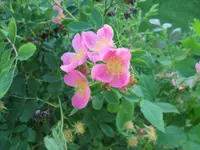
Prairie rose, Rosa arkansana, is a low, suckering shrub rose native to central North American prairies and open grasslands. It often forms spreading clumps that create dense groundcover over time.
The plant has single pink flowers with a light fragrance, followed by small red hips that attract birds. Stems are armed with straight or slightly curved prickles.
Rosa arkansana is adapted to harsh prairie conditions, tolerating cold, wind, and poor, dry soils, which makes it relatively easy to grow in suitable climates. It prefers full sun and well-drained soil, and those conditions also make it simpler to care for prairie rose in gardens and naturalized plantings.

Care Difficulty
Easy Care

Light Preference
Full Sun

Water Requirements
Moderate Water

Temperature Preference
Cold Hardy

Hardiness Zone
3–7

Soil Texture
Sandy, Loamy, Rocky

Soil pH
Acidic (5.5–6.5), Slightly acidic (6.5–7.0)

Soil Drainage
Well-drained

Fertilization
Minimal (feed rarely)
Scan your plant to receive care tips personalized for your specific plant
Available on iOS and Android
Rosa arkansana is a sun-loving prairie shrub that flowers best with strong, direct light.
This species prefers evenly moist, well-drained soil and is more drought tolerant than many garden roses.
This cold-hardy North American rose tolerates a wide temperature range once established outdoors.
Rosa arkansana handles a wide humidity range and rarely needs special humidity management outdoors.
Rosa arkansana prefers moderately fertile, well-structured mineral soil that drains freely yet holds some moisture.
This species can be grown in containers, but long-term performance is better in the ground.
This tough native rose needs modest feeding, mainly to support flowering on poor soils.
Pruning helps Rosa arkansana maintain a healthy, flowering thicket without becoming overly woody.
This species is usually planted in the ground, so focus more on site transplanting than long-term container culture.
Rosa arkansana is commonly propagated for restoration plantings and naturalistic gardens.
This prairie rose is very cold hardy and usually needs minimal winter care in the ground.

Plant Health Check
Not sure what's wrong with your plant? Check your plant's health inside the app.
This prairie rose is native to central North America, where it naturally occurs from the Great Plains into parts of the Midwest, forming an important component of native tallgrass and mixed-grass prairie plant communities.
The species has a deep, spreading root system that helps it survive drought, prairie fires, and grazing, allowing it to resprout even after above-ground parts are damaged.
Its open, single flowers produce accessible pollen and nectar that attract a wide range of native bees, hoverflies, and beetles, making it a valuable resource in pollinator-friendly plantings and for those interested in Rosa arkansana plant care.

Rosa arkansana naturally forms low, spreading colonies through underground stems called rhizomes, so a single genetic individual can occupy a surprisingly large patch of prairie over time, creating dense, thorny thickets that provide shelter and nesting sites for small birds and mammals.
This species spreads moderately by underground stems and self-seeding, forming loose colonies over time. In garden settings, edging, root barriers, and prompt removal of unwanted seedlings usually keep it from becoming difficult to manage.
Keep your plants happy and healthy with plant identification, disease detection, and easy care guidance.