Regular tip pruning
Pinch or lightly trim soft shoot tips several times in the growing season to keep plants compact, encourage dense branching, and produce more foliage for harvest.

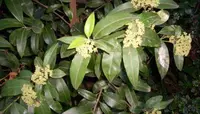
Lemon myrtle (Backhousia citriodora) is an evergreen shrub or small tree, valued for its strong lemon-scented leaves. It has glossy green foliage and a naturally bushy, upright growth habit.
This species is native to the subtropical rainforests of eastern Australia, where it grows in warm, humid conditions. The leaves are used for culinary, aromatic, and herbal purposes, which encourages regular light pruning.
Backhousia citriodora is generally considered straightforward to grow if its basic needs are met. It prefers bright light, protection from hard frost, well-drained soil, and steady moisture, which guides how to care for Lemon myrtle.

Care Difficulty
Moderate Care

Light Preference
Full Sun

Water Requirements
Moderate Water

Temperature Preference
Tropical / Frost Sensitive

Hardiness Zone
10–11

Soil Texture
Sandy, Loamy, Organic-rich

Soil pH
Acidic (5.5–6.5), Slightly acidic (6.5–7.0)

Soil Drainage
Moist but well-drained

Fertilization
Minimal (feed rarely)
Scan your plant to receive care tips personalized for your specific plant
Available on iOS and Android
Backhousia citriodora prefers bright conditions that mimic its native subtropical habitat.
Backhousia citriodora prefers consistently moist but not waterlogged soil.
This species thrives in mild to warm climates with minimal frost exposure.
This species prefers moderate humidity but adapts to many household conditions if airflow and watering are managed carefully.
This plant grows best in free-draining, moderately fertile soil that stays slightly moist but never waterlogged.
This species is well suited to container growing when root space and drainage are managed carefully.
Backhousia citriodora benefits from light, steady feeding during active growth in containers or nutrient-poor soils.
Pruning helps Backhousia citriodora maintain a dense, healthy canopy and good air flow.
Backhousia citriodora in containers or young landscape plants benefit from thoughtful transplanting to support steady growth.
New plants are most often raised from semi-hardwood cuttings, as seed-grown Backhousia citriodora can be slow and variable.
This subtropical species is sensitive to hard frost and benefits from targeted winter protection in cooler climates.

Plant Health Check
Not sure what's wrong with your plant? Check your plant's health inside the app.
The leaves contain an exceptionally high concentration of citral, often higher than that of lemon verbena or lemongrass, which gives the plant its intense lemon aroma valued by the flavor and fragrance industries.
This species is naturally restricted to subtropical and tropical rainforests of eastern Australia, where it typically grows as an understorey or edge tree in warm, humid habitats.
In commercial production, the leaves are harvested and dried or steam‑distilled for use as a lemon-flavored ingredient in foods, teas, syrups, and essential oils, rather than for fruit, since the plant does not produce edible lemons.

Lemon myrtle became widely recognized outside Australia only in the late 20th century, when its strong, stable lemon aroma and high citral levels led to its adoption as a native Australian bushfood flavoring and a specialty ingredient in cosmetics and personal care products, prompting increased interest in Backhousia citriodora plant care for small-scale cultivation.
The aromatic leaves are edible and widely used fresh or dried to flavor teas, desserts, sauces, seafood, and poultry. Essential oil is very concentrated and should be used carefully, properly diluted, and never ingested undiluted.
Keep your plants happy and healthy with plant identification, disease detection, and easy care guidance.