lanceleaf rose gentian Care (Sabatia difformis)

lanceleaf rose gentian

About lanceleaf rose gentian

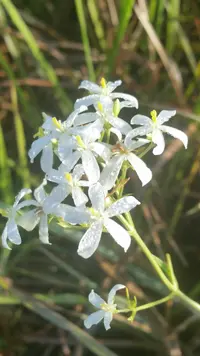
Lanceleaf rose gentian (Sabatia difformis) is a short-lived perennial wildflower in the gentian family, known for its star-shaped pink flowers with yellow centers. It typically forms slender, upright stems with narrow leaves and blooms in summer, giving a delicate but bright display.

This species is native to the coastal plain of the southeastern United States, where it grows in moist meadows, wet pinelands, and open, sunny wetlands. It prefers full sun, consistently moist soil, and low competition from taller plants.

Gardeners who care for lanceleaf rose gentian often find it moderately challenging, mainly due to its need for steady moisture and specific habitat-like conditions. It suits naturalistic gardens, rain gardens, and restoration plantings more than formal borders or dry sites.

Main Plant Requirements

Care Difficulty

Moderate Care

Light Preference

Full Sun

Water Requirements

Keep Soil Moist

Temperature Preference

Warm Climate

Hardiness Zone

7–10

Soil Texture

Sandy, Loamy, Organic-rich

Soil pH

Acidic (5.5–6.5)

Soil Drainage

Waterlogged tolerant

Fertilization

Minimal (feed rarely)

Get Personalized Care Plan

Scan your plant to receive care tips personalized for your specific plant

Available on iOS and Android

How to Care for the lanceleaf rose gentian

This sun-loving wildflower needs bright conditions to build strong stems and abundant blooms.

  • Provide 6–8 hours of direct sun, with a preference for morning sun and early afternoon light; light afternoon shade is helpful in very hot climates.
  • Lanceleaf rose gentian tolerates light partial shade (about 3–4 hours of sun), but flowering and compact growth decrease as shade increases.
  • Watch for stress signals: pale, elongated stems indicate too little sun, while scorched or crispy leaf edges suggest excessive intense afternoon exposure.

This species is adapted to moist habitats and prefers steadily damp, not stagnant, soil.

  • In the ground, aim for evenly moist soil, allowing only the top 1–2 cm to lose its sheen before the next thorough soak, especially during active growth and flowering.
  • In rainy seasons, ensure the site drains slowly but does not stay flooded for more than 24 hours to prevent root decline and fungal rot in Sabatia difformis.
  • Signs of underwatering include limp, folding leaves and wilting in midday that does not recover by evening; sour smell, blackened roots, or algae crust indicate chronic overwatering.

This plant thrives in warm, temperate conditions typical of its native wetland and meadow habitats.

  • Optimal growth occurs around 70–85°F (21–29°C), with strongest vegetative growth and flowering when nights stay above about 55°F (13°C).
  • Plants generally tolerate down to about 30–32°F (-1–0°C) for brief periods, but repeated or hard frosts can damage stems and may kill young seedlings.
  • In hot spells above 90°F (32°C), growth can slow; consistent soil moisture and slight afternoon shade help prevent heat stress and flower drop.

This species prefers moderately moist air but usually adapts to typical outdoor humidity.

  • Aim for 40–60% humidity in exposed containers, especially during hot, drying winds.
  • Dry air can cause leaf edge browning and faster wilting, especially in full sun sites.
  • Increase humidity by grouping pots in a shallow, water-filled gravel tray so evaporation rises around lanceleaf rose gentian, not by misting.

Sabatia difformis grows best in consistently moist, light-textured, slightly acidic substrates.

  • Use a sandy loam or peat-based mix with 20–30% sand to mimic moist, open habitats and prevent compaction.
  • Keep drainage moderate: soil should drain within a few hours but still feel evenly damp, never waterlogged for days.
  • Target pH 5.5–6.5 by combining peat or coco coir with a small amount of compost to buffer acidity and nutrients.
  • Improve aeration by blending coarse sand or fine grit rather than large bark pieces, and avoid heavy clay or dense, manure-rich mixes.

This species can be grown in containers if moisture and root space are managed carefully.

  • Choose a deep, narrow pot to allow a stronger taproot and reduce rapid surface drying.
  • Use a heavier container material or weight the base to keep tall flowering stems from tipping in wind.
  • Elevate the pot slightly on feet or bricks so drainage holes clear quickly after summer storms.

This native wildflower needs only light feeding, especially when grown in naturally lean, sandy soils.

  • Use a low-dose balanced NPK liquid fertilizer at 1/4–1/2 strength if growth appears weak in container-grown lanceleaf rose gentian.
  • Apply during the active growing season, about every 4–6 weeks, and skip feeding once flowering finishes.
  • Avoid rich compost or heavy slow-release products that can cause lanky, weak growth.
  • Always water lightly before and after feeding to reduce root burn risk.

Pruning Sabatia difformis is minimal and mainly supports tidy growth and flowering.

  • Trim spent flowering stems in late summer to encourage a neater shape and sometimes a light rebloom.
  • Remove dead, damaged, or diseased stems as noticed, cutting back to healthy tissue with clean scissors or hand pruners.
  • Thin crowded stems slightly to improve airflow, which lowers the risk of fungal issues in humid climates.
  • Avoid hard cutting back into very low, green growth, as this may reduce next season’s flowering.

This species is most often grown in the ground, so focus on gentle transplanting rather than frequent repotting.

  • Transplant in early spring when soil is workable and plants are small, reducing shock to the fine root system of Sabatia difformis.
  • Look for signs such as roots circling a nursery pot or stalled growth to decide if a container plant needs a larger pot.
  • Shift up only 1–2 pot sizes, using a sharply drained, sandy mix to mimic natural habitats.
  • Water thoroughly after transplanting, then keep soil evenly moist and shaded for 3–5 days to limit stress.

Propagation of Sabatia difformis is usually done from seed rather than division or cuttings.

  • Sow fresh seed in late fall or late winter outdoors so natural cold stratification helps break dormancy.
  • Use a shallow tray with a sandy, well-drained mix and press seeds lightly on the surface, as they need light to germinate.
  • Keep the medium consistently moist but not waterlogged, maintaining cool to mild temperatures around 60–70°F.
  • Transplant seedlings carefully once they have several true leaves, avoiding damage to the fine taproot.

In its native range, this wildflower is generally cold hardy and needs little targeted winter care.

  • Tolerates light frosts but may struggle in areas with prolonged freezes below local norms.
  • In colder zones, apply a thin mulch layer around the root zone after the ground cools, avoiding direct contact with stems.
  • For containers, move pots into a sheltered, unheated space where temperatures stay above hard-freeze levels.

Care Tips

Site Hydrology Check

Before planting, observe the site for several weeks after rain to confirm it stays consistently moist but not flooded, since this species declines quickly in ground that alternates between drought and prolonged standing water.

Seasonal Microtopography

In wetter sites, plant on very low mounds 2–4 in high to prevent root rot, and in slightly drier sites, plant in shallow swales to help channel extra water toward the root zone.

Companion Matrix Planting

Combine plants with low, fine-rooted wetland natives like Juncus and small Carex species around the crowns to shade the soil surface, reduce weed pressure, and stabilize moisture without competing heavily for resources.

Self‑Seeding Management

Leave some spent flower heads to dry fully and drop seed in late summer, then lightly rake or disturb the soil surface to improve seed-to-soil contact and encourage a self-sustaining colony when growing lanceleaf rose gentian.

Targeted Weed Suppression

Use a thin layer of washed coarse sand or fine gravel around young plants instead of organic mulch to suppress small weeds while keeping the crown exposed and preventing stems from rotting at soil level.

Common Pests and Diseases

Leaf spot fungi

This disease produces small water-soaked or tan to brown lesions on leaves that can merge and cause premature yellowing and drop, especially in warm, wet weather. Symptoms include most severe damage on older foliage and in dense clumps with poor air movement.

Solution

Remove and discard heavily spotted leaves and thin crowded stems to improve airflow around the plant. Avoid overhead watering, keep foliage as dry as possible, and, in persistent wet-site plantings, consider rotating plants or allowing a dry period between irrigations to reduce fungal pressure.

Powdery mildew

This disease appears as a white to gray powdery coating on upper leaf surfaces, which may cause leaf distortion and reduced flowering in humid, stagnant conditions. Symptoms include heaviest growth on plants shaded for part of the day with limited air circulation.

Solution

Increase spacing between plants, trim nearby vegetation to improve airflow, and water at soil level rather than over the top. Remove and dispose of badly affected stems and, if needed, apply a labeled sulfur or potassium bicarbonate product early in the outbreak according to Sabatia difformis care instructions for sun-exposed wetland perennials.

Aphids

These insects cluster on young stems, buds, and the undersides of leaves, sucking sap and causing curling, distortion, and sticky honeydew that can lead to sooty mold. This pest often builds up during warm, calm weather when natural predators are limited.

Solution

Dislodge colonies with a firm stream of water from a hose, focusing on shoot tips and leaf undersides. For persistent infestations, treat with insecticidal soap or a light horticultural oil, applied in the early morning and repeated as needed while monitoring for beneficial insects such as lady beetles.

Leaf-chewing caterpillars

These insects feed on the foliage, leaving irregular holes or nearly skeletonized leaves, and can reduce flowering if populations are high during bud formation. Symptoms include visible frass pellets on leaves and stems below feeding sites.

Solution

Hand-pick caterpillars in the early morning or evening and drop them into soapy water, especially on small plantings. In larger or repeated infestations, use a Bacillus thuringiensis (Bt) product directed at young larvae, applying only to infested foliage to limit impact on non-target insects.

Interesting Facts

Coastal plain specialist

This species is native to the sandy, seasonally wet flatwoods and savannas of the southeastern US Coastal Plain, where it is adapted to nutrient-poor, acidic soils that experience periodic flooding and drying.

Water level indicator

In its natural habitat, it often appears in shallow depressions and wet prairies, so its presence can indicate sites with a naturally high water table and a history of regular soil saturation.

Delicate genetic distinctness

Although it resembles some other pink-flowered Sabatia species, genetic and morphological studies recognize it as a distinct taxon with its own narrow, linear leaves and finely branched habit suited to open, wet habitats.

FAQs about lanceleaf rose gentian

The flowers are rich in nectar and typically attract a range of native bees, small wasps, and various butterflies. Planting several together in an open, sunny meadow-style bed increases visibility and foraging value for pollinators.

Grow Healthy Plants with Botan Care

Keep your plants happy and healthy with plant identification, disease detection, and easy care guidance.

Botan plant care app — identify plants on mobile

Explore More Plants