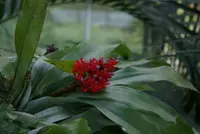
Peperomia pecuniifolia Care

About Peperomia pecuniifolia

Peperomia pecuniifolia is a compact tropical houseplant grown mainly for its fleshy, coin-like leaves and tidy, upright to slightly trailing growth. It belongs to the pepper family but stays small and manageable indoors. Native to tropical regions of Central and South America, it usually grows in sheltered, humid forest habitats, often as an epiphyte on trees or in leaf litter. Its thick leaves store water, so it tolerates short dry spells better than many thin-leaved plants. This makes it a good choice for owners who prefer a low-maintenance plant. Light to moderate indirect light, a well-draining potting mix, and careful watering are usually enough to successfully care for Peperomia pecuniifolia.

Main Plant Requirements

Care Difficulty

Easy Care

Light Preference

Bright Indirect Light

Water Requirements

Moderate Water

Temperature Preference

Tropical / Frost Sensitive

Hardiness Zone

10–12

Soil Texture

Loamy, Peaty, Organic-rich

Soil pH

Acidic (5.5–6.5), Slightly acidic (6.5–7.0)

Soil Drainage

Well-drained

Fertilization

Light (every 4–6 weeks)

Get Personalized Care Plan

Scan your plant to receive care tips personalized for your specific plant

Available on iOS and Android

How to Care for the Peperomia pecuniifolia

This species prefers bright but gentle light that mimics dappled forest shade.

  • Provide 4–6 hours of bright, indirect light daily, such as near an east window or behind a sheer curtain with filtered light.
  • Tolerates partial shade, but if stems stretch or leaves lose color, move Peperomia pecuniifolia slightly closer to the light source.
  • Avoid harsh midday and strong afternoon sun, which can scorch leaves; in winter, shift it closer to brighter exposures to compensate for shorter days.

Watering should match its semi-succulent foliage and relatively small root system.

  • Allow the top 2–4 cm of soil to dry before watering, then water thoroughly so excess can drain away and the root zone is moist but not soggy.
  • In spring and summer, expect more frequent watering, while in fall and winter intervals usually lengthen as growth and evaporation slow.
  • Watch for soft, yellowing, or translucent leaves as signs of overwatering, and for drooping, thin, or curling leaves as signs of underwatering or very dry soil.

Stable, warm conditions support compact growth and healthy leaves.

  • Aim for 65–80°F (18–27°C) for active growth, avoiding sudden swings that can stress foliage and roots.
  • Protect from cold; growth slows below about 60°F (16°C), and damage can occur near 50°F (10°C), especially with prolonged exposure.
  • Never expose the plant to frost, and shield from hot drafts or locations above 86°F (30°C), which can cause leaf scorch and rapid moisture loss.

This species prefers moderate room humidity but copes with typical indoor air if not too dry.

  • Aim for 40–60% humidity; values much lower can slow growth and cause leaf edges to crisp.
  • Watch for curled, thin, or browning leaf margins as signs of low-humidity stress in Peperomia pecuniifolia.
  • Increase humidity by placing the pot on a pebble tray with water or grouping plants, rather than misting frequently.

This species prefers a light, airy mix that drains quickly yet holds some moisture around the roots.

  • Use a mix of roughly 50% all-purpose potting mix, 30% perlite, and 20% fine orchid bark for a loose, chunky structure.
  • Ensure very free drainage so water runs through within seconds; waterlogged soil quickly causes root rot in Peperomia pecuniifolia.
  • Target a slightly acidic to neutral pH around 6.0–7.0, which suits most commercial peat- or coir-based mixes.
  • Avoid heavy garden soil, straight compost, or mixes dominated by fine peat that compact and limit oxygen around the roots.

This species is well suited to container growing due to its compact, shallow-rooted habit.

  • Choose a low to medium-depth pot so the mix dries evenly, since overly deep containers stay wet around the lower roots.
  • Select a pot material that matches your climate; porous terracotta is useful in humid areas, while plastic slows drying in drier homes.
  • Use a pot only 2–3 cm wider than the root ball so the plant does not sit in excess wet mix between waterings.

This compact species benefits from modest feeding but is sensitive to overfertilization.

  • Use a balanced liquid fertilizer around 10-10-10 or 20-20-20, diluted to 25–50% strength.
  • Feed every 4–6 weeks during spring and summer when Peperomia pecuniifolia is actively growing.
  • Skip or greatly reduce feeding in fall and winter to avoid salt buildup in the potting mix.
  • Avoid manure-heavy compost; use a light, peat-free or coco-based mix with slow-release granules only if growth is weak.

Light pruning helps maintain shape and plant health without stressing this small houseplant.

  • Best time is late winter to early spring, just before strong new growth starts.
  • Remove dead, yellowing, or damaged leaves and any soft, rotting stems back to firm tissue.
  • Thin crowded stems to improve light penetration and airflow, encouraging compact, bushy growth in Peperomia pecuniifolia.
  • Use clean, sharp scissors or small pruning shears, disinfected before and after use to limit disease spread.

This plant prefers a slightly snug pot and only occasional repotting.

  • Repot every 2–3 years or when roots circle the pot, emerge from drainage holes, or growth slows without another clear cause.
  • Plan repotting in spring so Peperomia pecuniifolia can recover during the active growing season.
  • Move to a pot only 2–3 cm wider with good drainage and a loose, airy houseplant or succulent mix.
  • Handle the root ball gently, loosen only lightly, water after potting, then keep in bright, indirect light while it re-establishes.

Peperomia pecuniifolia is commonly propagated from stem or leaf cuttings under warm, humid conditions.

  • Take 5–8 cm tip cuttings or whole leaves with petioles in spring or early summer.
  • Allow cut ends to dry for 30–60 minutes, then place in moist, well-draining mix or perlite.
  • Maintain 70–80°F, high humidity, and bright, indirect light to support rooting.
  • Keep the medium just slightly moist, and transplant to individual pots once strong new roots and shoots form.

As a tender tropical, this plant must be kept above freezing during winter.

  • Peperomia pecuniifolia is not frost hardy and should stay indoors year-round in most climates.
  • Maintain room temperatures around 65–75°F and avoid cold drafts from windows or doors.
  • Reduce watering in winter, letting the top layer of mix dry more between waterings to limit root rot.
  • If grown outdoors in warm regions, move containers inside before temperatures drop near 50°F.

Care Tips

Staggered Repotting

Shift the plant only 1 pot size up and keep it slightly root bound, as this species tends to produce tighter, more compact foliage and is less likely to rot when the root ball fills most of the container.

Stem Tip Pinching

Pinch or cut soft stem tips above a leaf pair every few months to encourage branching and a fuller mat of leaves instead of long, sparse trailing stems.

Gentle Vine Training

Guide new stems over a low trellis or around the rim of the pot using soft plant ties, which keeps the brittle succulent stems from kinking and distributes foliage for more even light exposure.

Targeted Pest Checks

Inspect the undersides of leaves and the inner nodes where petioles meet stems every 1–2 weeks so that early mealybug or spider mite activity is caught before it damages the thin, fleshy foliage.

Seasonal Rest Adjustment

Reduce handling, repotting, and any major pruning in low-light winter months, then resume structural pruning and training in late spring when the plant is actively growing and better able to recover.

Common Pests and Diseases

Mealybugs

This pest often hides in leaf axils and along stems, where it appears as white, cottony clusters that weaken the plant by sucking sap. Symptoms include sticky honeydew and slow, stunted growth.

Solution

Isolate the plant, then dab visible insects with cotton swabs dipped in 70% isopropyl alcohol and gently wipe leaf undersides and stem joints. Repeat every 5–7 days for several cycles and, for heavier infestations, use a ready-to-use insecticidal soap, keeping foliage out of direct sun until dry.

Spider mites

These insects thrive on Peperomia’s thick, succulent leaves in dry indoor air, causing fine stippling, dull foliage, and sometimes fine webbing between leaves and stems. Symptoms include faded leaf color and general decline despite normal watering.

Solution

Increase humidity around the plant and rinse leaves under a gentle lukewarm shower, focusing on undersides. Follow up with insecticidal soap or a neem oil spray applied to both leaf surfaces every 7–10 days until new growth appears clean.

Fungus gnat larvae

This pest develops in consistently moist, organic-rich potting mixes and damages the fine, shallow roots, leading to slow growth and occasional leaf yellowing. Symptoms include tiny black flies hovering around the potting mix when disturbed.

Solution

Allow the top 2–3 cm of the potting mix to dry between waterings, then apply a biological control containing Bacillus thuringiensis israelensis (BTI) according to label directions. Sticky traps can reduce adult numbers, while repotting into a fresh, well-draining mix helps break the life cycle when infestations are persistent.

Edema

This disorder appears when roots take up more water than leaves can transpire, which is common in Peperomia with fleshy leaves in cool, low-light conditions. Symptoms include small corky, rough, or blister-like spots on leaves, often on the underside.

Solution

Reduce watering frequency, keep the plant in bright, indirect light, and avoid sudden shifts to cooler temperatures. Ensure the potting mix drains well and empty any saucers after 10–15 minutes so roots do not sit in standing water.

Bacterial leaf spot

This disease can occur on crowded plants with poor airflow and frequent overhead misting, causing small, water-soaked translucent spots that may darken and merge over time. Symptoms include irregular lesions that can lead to leaf drop on severely affected foliage.

Solution

Remove and discard affected leaves, sterilizing scissors between cuts with 70% alcohol, and avoid wetting the foliage when watering. Improve airflow, space plants apart, and if symptoms continue, apply a copper-based bactericide labeled for houseplants, following directions carefully and testing on a small area first.

Interesting Facts

Coin‑leaf growth habit

This species develops small, thick, nearly circular leaves with a slightly cupped surface, an adaptation that helps reduce water loss compared to many thinner-leaved peperomias.

Natural epiphyte tendency

In its native habitats of northern South America, it often grows as an epiphyte on tree bark or decaying wood, using its roots mainly for anchoring rather than for deep soil penetration.

Subtle flower spikes

It produces narrow, tail‑like flower spikes made up of many tiny, inconspicuous flowers, a typical trait in the genus but especially modest in this species, which invests more in foliage than in showy blooms.

FAQs about Peperomia pecuniifolia

This species is naturally slow-growing. In average indoor conditions it usually adds only a few centimeters of growth per year. Growth speeds up slightly with stable warmth, moderate light, and consistent but careful watering, then slows in winter.

Grow Healthy Plants with Botan Care

Keep your plants happy and healthy with plant identification, disease detection, and easy care guidance.

Botan plant care app — identify plants on mobile

Explore More Plants