


Tank water hygiene
Empty and rinse the central cup every 1–2 weeks before refilling so organic debris does not rot and attract fungus gnats or mosquitoes.

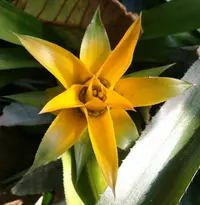
Canistropsis billbergioides is a compact bromeliad from the Atlantic Forest of Brazil, often grown as an ornamental foliage plant. It usually forms a tidy rosette of arching, straplike leaves that can be green or softly tinted, with colorful bracts and small tubular flowers appearing in the center. In nature it often grows as an epiphyte, attached to trees, which means its roots mainly anchor the plant rather than search for deep soil. This habit makes it suitable for pots, mounts, or mixed bromeliad displays indoors. It is considered moderately easy to grow, as long as it receives bright, filtered light, regular moisture in the central cup, and a free-draining mix. Learning how to care for Canistropsis billbergioides helps it keep a compact shape and good color.

Care Difficulty
Moderate Care

Light Preference
Partial Shade

Water Requirements
Moderate Water

Temperature Preference
Tropical / Frost Sensitive

Hardiness Zone
11–12

Soil Texture
Loamy, Peaty, Organic-rich

Soil pH
Acidic (5.5–6.5), Slightly acidic (6.5–7.0)

Soil Drainage
Moist but well-drained

Fertilization
Light (every 4–6 weeks)
Scan your plant to receive care tips personalized for your specific plant
Available on iOS and Android
This bromeliad prefers bright, gentle light that mimics dappled forest conditions.
Watering should keep the central cup filled and the root zone lightly moist but never waterlogged.
Stable, warm conditions support healthy growth and flowering.
This bromeliad prefers warm, moderately humid air and reacts quickly to very dry conditions.
This species prefers a very airy, fast-draining mix similar to epiphytic bromeliads rather than compact potting soil.
This species is well suited to container growing due to its compact rosette and shallow root system.
This bromeliad needs only light feeding to support foliage color and flowering.
Pruning is minimal and mainly keeps the rosette neat and healthy.
This bromeliad is usually repotted infrequently, mainly to refresh mix or accommodate offsets.
Propagation is most reliable by removing well-formed offsets from the mother rosette.
This species dislikes cold and needs protection in regions with cool or freezing winters.

Plant Health Check
Not sure what's wrong with your plant? Check your plant's health inside the app.
This bromeliad naturally grows as an epiphyte or on rocks in the Atlantic Forest of southeastern Brazil, adapted to bright but filtered understory light rather than direct sun.
The cultivar often grown under this name, commonly called 'Citrina', develops striking lemon-yellow rosettes with contrasting red bracts during flowering, a color pattern that helps attract pollinating hummingbirds.
Its tight leaf rosette forms a small water-holding tank that captures rain, debris, and tiny organisms, creating a miniature habitat that contributes to local nutrient cycling in its native ecosystem.

In its native Brazilian Atlantic Forest, this species is part of complex canopy communities where multiple bromeliad species grow together on the same host tree, forming layered microhabitats that support distinct assemblages of insects, frogs, and other small animals.
This bromeliad adapts well both indoors and outdoors in mild, frost-free climates. Indoors it prefers bright, filtered light and stable warmth. Outdoors it does best in shaded, humid spots protected from direct midday sun and cold snaps.
Keep your plants happy and healthy with plant identification, disease detection, and easy care guidance.

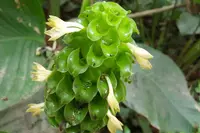
Goeppertia cylindrica
Goeppertia cylindrica
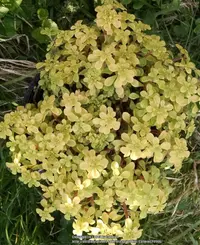
Japanese Woodland Stonecrop
Sedum makinoi 'Ogon'
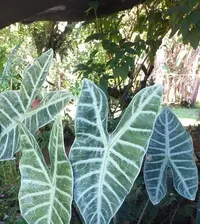
Alocasia × mortfontanensis
Alocasia × mortfontanensis
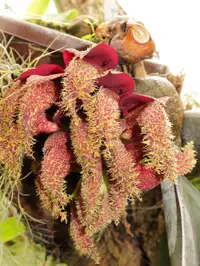
Bulbophyllum phalaenopsis
Bulbophyllum phalaenopsis
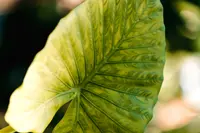
Elephant Ear
Colocasia esculenta Royal Hawaiian® Maui Gold
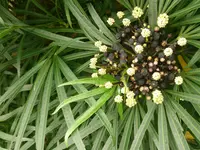
miagos bush
Osmoxylon lineare
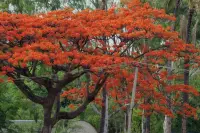
Royal poinciana
Delonix regia
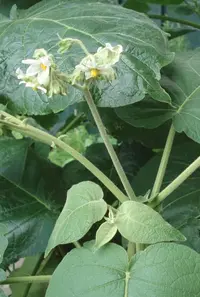
Dwarf Tamarillo
Solanum abutiloides