Offset management
Remove offsets when they are about one-third to one-half the size of the mother rosette, using a clean, sharp knife and dusting the cut with sulfur or cinnamon to reduce rot risk before potting them individually.

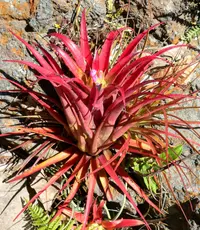
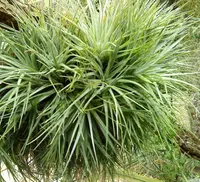
Aechmea recurvata is a small terrestrial or epiphytic bromeliad known for its stiff, arching leaves and compact rosette shape. It often forms clumps over time, creating a dense, architectural display.
The foliage is typically green to reddish, sometimes spiny at the edges, with bright flower bracts that add strong color contrast. It naturally occurs in southern Brazil, Paraguay, and nearby regions, where it grows on rocks, trees, or well-drained ground.
This species is generally considered tough and adaptable, which makes it suitable for beginners learning how to care for Aechmea recurvata. It prefers bright light, moderate moisture, and airy, fast-draining substrate rather than dense, waterlogged soil.

Care Difficulty
Easy Care

Light Preference
Partial Sun

Water Requirements
Moderate Water

Temperature Preference
Warm Climate

Hardiness Zone
9–11

Soil Texture
Sandy, Loamy, Organic-rich

Soil pH
Acidic (5.5–6.5), Slightly acidic (6.5–7.0)

Soil Drainage
Well-drained

Fertilization
Light (every 4–6 weeks)
Scan your plant to receive care tips personalized for your specific plant
Available on iOS and Android
This bromeliad prefers bright conditions but tolerates some shade if protected from harsh midday sun.
Watering focuses on lightly moist roots and a consistently filled central cup without stagnation.
This species prefers warm, frost-free conditions with only mild short-term temperature swings.
This bromeliad handles typical indoor humidity but benefits from slightly moist air.
This species prefers a coarse, airy mix that drains very quickly and mimics epiphytic conditions.
This species adapts very well to container growing, both indoors and outdoors in mild climates.
This bromeliad needs only light, occasional feeding to stay healthy in containers.
Pruning is minimal and mainly used to keep the plant tidy and support pup development.
Repotting focuses on giving offsets space rather than providing a larger pot for the original rosette.
Propagation is most reliable from offsets produced after flowering.
This species is relatively cold tolerant but still benefits from simple winter precautions in cooler climates.

Plant Health Check
Not sure what's wrong with your plant? Check your plant's health inside the app.
In the wild, this bromeliad often grows terrestrially in shallow soil pockets among rocky outcrops and cliffs in southern Brazil, tolerating high light and significant temperature fluctuations that many other bromeliads avoid.
The normally green to gray-green leaves can flush bright red or pink around flowering, a pigment change triggered by high light and the development of its central inflorescence.
Unlike many tropical bromeliads, it can tolerate brief exposure to near-freezing temperatures, which has led to its use in mild-climate outdoor plantings and rock gardens in some regions.

This species naturally forms small, tight clumps that can anchor into rock crevices, and over time these clumps create miniature microhabitats that trap leaf litter and moisture, allowing other small organisms such as mosses and invertebrates to establish around the plants.
Lack of flowering usually comes from insufficient light, a pot that is too large, or a very young rosette. Stable warmth, bright indirect light, and avoiding frequent repotting support bud formation and colorful bracts.
Keep your plants happy and healthy with plant identification, disease detection, and easy care guidance.