


Pogonatherum crinitum Care

Pogonatherum crinitum

About Pogonatherum crinitum

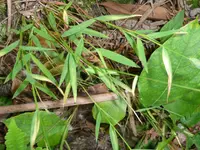
Pogonatherum crinitum, often sold as baby panda bamboo or mini bamboo, is actually a small ornamental grass rather than a true bamboo. It forms dense, fountain-like clumps of fine, bright green leaves that give a soft, bamboo-like look.

In nature it occurs in warm, humid regions of Asia, usually in open, moist sites. It is often grown indoors or on shaded patios as a compact foliage plant.

This species prefers consistent moisture, moderate light, and good air circulation, so it can be slightly demanding if the air is very dry or watering is irregular. Understanding how to care for Pogonatherum crinitum helps keep the foliage full and prevent leaf tip browning.

Main Plant Requirements

Care Difficulty

Moderate Care

Light Preference

Partial Shade

Water Requirements

Keep Soil Moist

Temperature Preference

Tropical / Frost Sensitive

Hardiness Zone

10–11

Soil Texture

Loamy, Silty, Organic-rich

Soil pH

Acidic (5.5–6.5), Slightly acidic (6.5–7.0)

Soil Drainage

Moist but well-drained

Fertilization

Light (every 4–6 weeks)

Get Personalized Care Plan

Scan your plant to receive care tips personalized for your specific plant

Available on iOS and Android

How to Care for the Pogonatherum crinitum

This compact bamboo-like grass prefers bright, indirect light to maintain dense, fresh green growth.

  • Provide 3–5 hours of soft morning sun with bright, filtered light the rest of the day; avoid harsh midday or intense afternoon sun that can scorch leaves.
  • Pogonatherum crinitum tolerates light partial shade, but in too much shade stems stretch, foliage thins, and color dulls over several weeks.
  • In summer, protect from reflected heat near south- or west-facing walls; in winter, move closer to bright windows or open shade edges to offset shorter days.

This species prefers evenly moist conditions but reacts quickly to water stress.

  • Allow the top 2–3 cm of soil to dry slightly between waterings, then water thoroughly so moisture reaches the full root zone without leaving the soil soggy.
  • Use a free-draining mix or well-structured garden soil so excess water can exit; persistently wet soil leads to yellowing leaves, soft stems, and root rot.
  • In warmer months, monitor more often and expect faster drying; in cooler seasons, extend intervals and watch for browning leaf tips and curling as signs of underwatering.

This grass thrives in mild, frost-free conditions with stable warmth through the growing season.

  • Aim for 65–80°F (18–27°C) for active growth, where leaves stay dense and bright and new shoots emerge steadily.
  • Protect from temperatures below 40°F (4°C); light frost can burn foliage, and sustained cold near freezing may kill stems and roots, especially in containers.
  • In hot spells above 90°F (32°C), provide shade during the hottest hours and increase air movement to limit heat stress and leaf tip scorch.

This species prefers moderately high humidity and reacts quickly to very dry indoor air.

  • Aim for 50–70% humidity, especially in heated homes, to keep foliage dense and fresh-looking.
  • Tolerates brief dips to 30–40%, but prolonged dryness causes brown leaf tips, crispy edges, and premature leaf drop.
  • Increase humidity with a nearby humidifier, grouped plants, or a wide pebble tray under the pot, keeping the pot base above water.

This grass prefers moist, airy, and slightly acidic to neutral soil that drains freely but does not dry out fast.

  • Use a loose, loamy mix such as 2 parts peat or coco coir, 1 part compost, and 1 part perlite or coarse sand for structure and drainage.
  • Aim for pH around 6.0–7.0; mildly acidic substrates support nutrient uptake and steady growth for Pogonatherum crinitum.
  • Ensure the mix holds moisture without becoming heavy; test by squeezing a handful so it clumps lightly but does not release water.
  • Avoid compacted clay, pure garden soil, or mixes high in fine sand alone, which either stay soggy or set hard and limit root aeration.

This species is well suited to container growing when the pot supports its dense, fountain-like clumps.

  • Choose a wide, stable container that resists tipping as the plant forms a heavy, arching canopy of stems and leaves.
  • Select a pot depth that allows fibrous roots to spread horizontally rather than forcing them into a tight vertical column.
  • Opt for slightly porous materials like unglazed clay if the site is humid, to prevent the root zone from staying wet for too long.

This fine-textured grass responds well to light, consistent feeding during active growth.

  • Use a balanced liquid fertilizer (for example 10-10-10) at 1/4–1/2 strength every 4–6 weeks in spring and summer for Pogonatherum crinitum.
  • Choose products labeled for foliage plants or apply a thin top-dressing of mature compost to container surfaces.
  • Always water before applying fertilizer to reduce root burn risk, and avoid feeding drought-stressed plants.
  • Stop or reduce feeding to 1 light application for the whole period in fall–winter, especially indoors.

This plant benefits from modest pruning to maintain a dense, fountain-like form.

  • Best timing is late winter or early spring, just before new growth starts, with light touch-ups through summer.
  • Use clean, sharp scissors or hand shears to remove dead, yellowing, or damaged stems at the base of Pogonatherum crinitum.
  • Thin out the most crowded or weak culms to improve air flow and keep a graceful, arching shape.
  • Lightly trim uneven tips to neaten the clump, avoiding hard cuts into very old, woody bases.

Clump-forming growth means container plants occasionally need more space or refreshed substrate.

  • Repot every 2–3 years in spring when roots circle the pot, water drains slowly, or growth becomes stunted.
  • Choose a container 2–4 cm wider with ample drainage holes and a loose, well-drained mix rich in organic matter.
  • Gently tease apart tight root coils, trim dead roots, and keep as much healthy root mass intact as possible to limit stress.
  • Water thoroughly after potting, keep in bright but indirect light for 3–7 days, and resume normal care once growth appears steady.

This species is most reliably multiplied by division of established clumps.

  • Divide plants in early spring when new shoots emerge and temperatures are mild.
  • Lift the clump, then separate sections with several shoots and a healthy root system for each new division of Pogonatherum crinitum.
  • Replant divisions at the same depth in moist, well-drained substrate and water thoroughly to settle roots.
  • Maintain evenly moist conditions and bright, indirect light until new growth confirms successful establishment.

This warm-climate grass has limited frost tolerance and benefits from basic winter protection in cooler regions.

  • In USDA zones colder than 9, grow in containers and move indoors or into a frost-free greenhouse before temperatures drop near 40°F.
  • Outdoors in mild climates, apply a 5–8 cm mulch layer around the root zone of Pogonatherum crinitum, keeping mulch off the stems.
  • Indoors over winter, keep temperatures around 60–70°F with bright, indirect light and slightly reduced watering.

Care Tips

Rotate container regularly

Turn the pot 1/4 turn every 1–2 weeks so stems receive even light from all sides, which keeps the clump symmetrical and reduces leaning or weak, one-sided growth when caring for Pogonatherum crinitum.

Shear, do not thin

Use clean scissors to lightly shear the outer dome of foliage every few months instead of pulling individual stems, which encourages dense new shoots and prevents the plant from becoming patchy in the center.

Refresh outer soil

Once or twice a year, gently scrape away the top 1–2 cm of old potting mix around the clump and replace it with fresh mix to restore nutrients and improve surface aeration without disturbing the roots.

Use low, wide pots

Choose a shallow, broad container rather than a deep narrow one to accommodate the fibrous, spreading root system and keep the foliage mound stable and less likely to topple as it becomes fuller.

Shower to dust

Every 4–6 weeks, place the plant in a shower or sink and rinse the foliage with lukewarm water for 1–2 minutes to remove dust, reduce spider mite risk, and keep the fine leaves photosynthesizing efficiently.

Common Pests and Diseases

Mealybugs

This pest feeds on sap in leaf sheaths and stem joints, leaving white cottony clusters and causing weak, yellowing foliage. Symptoms include sticky honeydew and sooty mold developing on the stems and leaves.

Solution

Isolate the plant, then wipe or dab colonies with cotton swabs dipped in 70% isopropyl alcohol, repeating weekly until no new insects appear. Improve light and air movement, and use a labeled insecticidal soap spray directed into the dense clumps, making sure to reach the inner stems where mealybugs hide.

Spider mites

These insects thrive on Pogonatherum clumps kept in warm, dry indoor air, causing fine speckling, dull foliage, and delicate webbing inside the grass tufts. This pest often appears when humidity is low and the plant is under moisture stress.

Solution

Rinse the foliage thoroughly with lukewarm water, directing the spray into the center of the clump to wash off mites, and repeat every few days for several cycles. Raise humidity to 50–60% and, if needed, apply insecticidal soap or a neem-based spray to both sides of the leaves according to label directions.

Fungal leaf spot

This disease causes small brown or tan spots on the narrow leaves that may merge into larger patches in dense, poorly ventilated clumps. Symptoms include premature leaf tip dieback and thinning foliage, especially in plants kept constantly wet.

Solution

Remove and discard affected leaves, then water at the base and allow the upper substrate to dry slightly between waterings so the foliage does not stay wet for long. Improve air circulation around the plant, avoid overhead watering, and use a broad-spectrum fungicide labeled for ornamental grasses if spotting continues to spread.

Basal stem rot

This disease starts at the crown where stems emerge, leading to browning at the base, lodging of shoots, and a progressive collapse of whole clumps in overly wet or compacted substrates. Symptoms include a sour smell and discolored, mushy stem bases near the soil line.

Solution

Reduce watering and ensure the pot has free-draining substrate and unobstructed drainage holes, then cut out and discard all softened or darkened basal stems. Repot into a fresh, airy mix, keep the root zone just slightly moist, and in advanced cases discard severely affected plants to prevent spread to nearby containers.

Aphids

These insects congregate on soft new shoots and inner stems, sucking sap and causing deformed, curled, or stunted growth. This pest also produces honeydew, which can attract ants and lead to sooty mold on the fine foliage.

Solution

Shower the plant with a firm, gentle stream of water to dislodge colonies, repeating every few days until populations drop. For persistent infestations, use insecticidal soap or a horticultural oil spray, making sure to coat the new growth and the inner parts of the clump, as part of broader Pogonatherum crinitum care instructions focused on balanced watering and good light.

Interesting Facts

Miniature bamboo look

This grass forms dense, tufted clumps with slender, jointed stems and narrow leaves that closely resemble small bamboo, which is why it is often sold as a dwarf bamboo impostor even though it is not a true bamboo.

Riverbank and wetland native

In the wild it occurs on moist slopes, stream banks, and other damp habitats in tropical and subtropical Asia, naturally adapted to environments with high humidity and periodic soil saturation.

Short-lived perennial habit

Although it behaves as a perennial grass in warm climates, individual clumps tend to be relatively short-lived and often decline after a few years, a pattern typical of many small, fast-growing grasses.

FAQs about Pogonatherum crinitum

This compact bamboo-like grass works well indoors if given bright light, consistent moisture, and good air circulation. It suits desks, shelves, or grouped displays. Pogonatherum crinitum indoor care focuses on avoiding dry air and waterlogged soil.

Grow Healthy Plants with Botan Care

Keep your plants happy and healthy with plant identification, disease detection, and easy care guidance.

Botan plant care app — identify plants on mobile









