whitecolumn foxtail cactus Care (Escobaria tuberculosa)

Also known as: Incense Cory Cactus, Corncob Cactus
whitecolumn foxtail cactus

About whitecolumn foxtail cactus

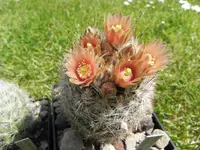
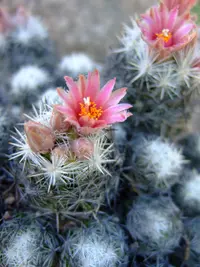
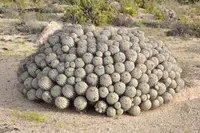
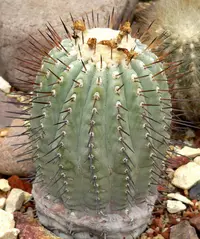
Escobaria tuberculosa, commonly called whitecolumn foxtail cactus, is a small, clumping cactus with dense white spines that give it a fuzzy, columnar look. It usually stays compact, making it suitable for pots and small rock gardens.

This species is native to arid, rocky areas of Texas and northern Mexico, where it grows in full sun and very well-drained mineral soils. Spines provide some sun protection and reduce water loss, which helps explain its strong drought tolerance.

For those learning how to care for whitecolumn foxtail cactus, its slow growth, drought resistance, and preference for bright light make it relatively easy, as long as excess moisture is avoided.

Main Plant Requirements

Care Difficulty

Moderate Care

Light Preference

Full Sun

Water Requirements

Low Water

Temperature Preference

Cold Hardy

Hardiness Zone

5–9

Soil Texture

Sandy, Rocky, Loamy

Soil pH

Slightly acidic (6.5–7.0), Neutral (7.0)

Soil Drainage

Well-drained

Fertilization

Minimal (feed rarely)

Get Personalized Care Plan

Scan your plant to receive care tips personalized for your specific plant

Available on iOS and Android

How to Care for the whitecolumn foxtail cactus

This small desert cactus needs strong light to stay compact and flower well.

  • Provide 6–8 hours of direct sun daily, ideally with morning sun and some protection from intense midafternoon summer rays to prevent scorching of stems.
  • Outdoors, place in an open, south- or west-facing position; in very hot regions, use light shade cloth or nearby rocks to create bright, filtered light during the hottest hours.
  • In winter, ensure the whitecolumn foxtail cactus still receives at least 4–5 hours of sun; low light leads to elongated, weak growth and fewer blooms.

Watering should be infrequent and guided by soil dryness rather than by a fixed schedule.

  • Allow the top 3–5 cm of gritty, fast-draining soil to dry fully before watering, then soak thoroughly so excess drains away and no water pools around the roots.
  • In spring and summer, expect to water roughly every 10–21 days in hot, dry climates; extend intervals in cooler or humid weather to avoid root rot and splitting stems.
  • From late fall through winter, keep Escobaria tuberculosa almost dry, watering lightly only if stems begin to noticeably wrinkle or shrivel from prolonged drought.

This species handles a wide temperature range but performs best with warm days and cool, dry winters.

  • Aim for active growth in 70–85°F (21–29°C) with nights around 55–65°F (13–18°C), keeping soil dry during cooler periods to reduce disease risk.
  • Established plants can survive brief drops to about 0–10°F (-18 to -12°C) if soil is very well drained and kept dry, but repeated freeze-thaw with moisture increases rot risk.
  • In hot regions, temperatures above 95°F (35°C) are tolerated if there is airflow and strong light with slight midafternoon shade; avoid humid heat combined with wet soil.

This desert cactus prefers very dry air and usually does not need extra humidity control indoors.

This species requires a very fast-draining, mineral-rich substrate to prevent root rot.

  • Use a gritty mix of 50–70% mineral material such as pumice, coarse sand, or fine gravel with the remainder cactus potting mix.
  • Aim for a slightly alkaline to neutral pH around 7.0–7.8, which matches Escobaria tuberculosa’s native limestone habitats.
  • Ensure the mix feels loose and crumbly, never sticky, so water flows through within seconds and does not pool around roots.
  • Avoid peat-heavy, compacted, or water-retentive substrates that stay wet longer than 1–2 days after watering.

This compact cactus is well suited to container growing.

  • Choose a shallow but wide pot that matches the spread of the stem cluster so the root zone dries evenly after watering.
  • Select unglazed clay to allow faster evaporation, which reduces the risk of rot in cool or low-light periods.
  • Place the pot where it cannot be knocked over, since the clustered stems become top-heavy as they mature.

Escobaria tuberculosa needs only light feeding in containers, and established plants in the ground usually manage with minimal supplementation.

  • Use a low-strength balanced liquid fertilizer (around 10-10-10) diluted to 25–50% for potted plants during active growth in spring and early summer.
  • Apply every 4–6 weeks in the growing season, always onto pre-moistened soil to reduce root burn risk.
  • Do not fertilize in winter or when growth has stopped, as the cactus rests and excess nutrients may damage roots.
  • For very lean mixes, a small amount of slow-release cactus fertilizer in spring supports healthy, compact growth in whitecolumn foxtail cactus.

Escobaria tuberculosa needs minimal pruning, mainly for hygiene and to maintain a neat clump.

  • Best time for any pruning is late spring to early summer when active growth supports healing.
  • Remove only dead, shriveled, or rotted stems and any damaged tips using clean, sharp scissors or pruning snips.
  • Cut close to the base without injuring healthy stems to keep the plant compact and reduce disease entry points.
  • Discard diseased tissue in the trash, not in compost, to avoid spreading fungal or bacterial problems.

This cactus grows slowly and prefers infrequent disturbance, so repot or transplant Escobaria tuberculosa only when clearly needed.

  • Check for roots circling the drainage holes, soil drying extremely fast, or stunted growth as signals that a larger pot or new site is needed.
  • Aim to repot container plants every 3–5 years in late spring, using a shallow pot and very fast-draining cactus mix.
  • Water lightly a few days before moving, then gently loosen the root ball and remove only loose, dead roots to limit shock.
  • After transplanting, keep in bright shade for 7–10 days, water sparingly, and resume full sun exposure gradually to support recovery.

Escobaria tuberculosa is usually propagated by offsets or seeds under warm, bright, and dry conditions.

  • Detach small offsets in late spring, allow cut surfaces to callus for 5–7 days, then place on slightly moist cactus mix.
  • Keep offsets in bright, indirect light at 70–80°F, watering lightly only when the mix is almost dry to encourage rooting.
  • For seeds, sow on the surface of sterile, gritty mix, barely cover, and maintain 70–80°F with gentle bottom warmth if possible.
  • Provide high light without intense midday sun and good air movement to limit damping-off, a fungal disease that kills seedlings.

Escobaria tuberculosa is relatively cold hardy but still benefits from thoughtful winter management, especially in containers.

  • In-ground plants tolerate brief drops near 0°F if soil is very well-drained and stays mostly dry.
  • Apply a light gravel or coarse sand mulch around the crown to keep the base dry and reduce freeze–thaw stress.
  • Move container plants under a dry, unheated shelter or indoors to a bright, cool spot around 40–50°F.
  • Keep soil almost completely dry in winter, watering only enough to prevent severe shriveling of stems.

Care Tips

Rain protection

In wet climates, place pots under a clear overhang or move them to a sheltered spot during prolonged rain to keep the stems and crown from staying wet, which greatly reduces rot risk when growing whitecolumn foxtail cactus.

Top-dress with grit

Add a 1–2 cm layer of coarse grit or small gravel on the soil surface to keep the stem base dry, prevent algae and moss, and make it easier to spot early signs of rot or mealybugs.

Winter dryness check

Before any light winter watering, gently lift or tilt the pot to feel its weight; only add a small amount of water if the pot feels almost weightless, helping the plant stay firm without breaking dormancy.

Rotate for symmetry

Rotate the pot 90° every 2–3 weeks during active growth to keep the column evenly lit, which encourages straight, compact growth with evenly spaced tubercles and spines.

Root health inspection

Every 2–3 years, unpot the plant in late spring, gently remove loose soil, and trim any black, mushy, or hollow roots before repotting into fresh, dry mix to maintain a compact and healthy root system.

Common Pests and Diseases

Cochineal scale

This pest appears as small white, cottony spots clustering on ribs and between tubercles, often on stressed or sun-exposed pads. These insects suck sap, leading to yellowing, weakened growth, and sticky residues that may attract sooty mold.

Solution

Remove visible insects with a cotton swab dipped in 70% isopropyl alcohol, then gently rinse the plant and allow it to dry fully. Improve light and airflow, avoid overfertilizing, and, if infestations persist, use a labeled systemic or contact insecticide suitable for cacti following the product directions closely.

Spider mites

This pest causes fine speckling, dull patches, and occasional thin webbing between tubercles, especially in hot, dry conditions under cover. These insects feed on plant juices and can make stems lose their natural color and vigor over time.

Solution

Rinse the cactus thoroughly with a firm but controlled stream of water to dislodge mites, keeping the crown dry afterward. For ongoing problems, increase airflow, slightly raise ambient humidity without wetting the plant regularly, and apply a horticultural oil or insecticidal soap labeled for spider mites, making sure to treat crevices between tubercles.

Cactus mealybugs

This pest hides in the woolly areoles and between tubercles, where it looks like tiny white cotton tufts. These insects weaken plants by sucking sap and can lead to distorted new growth and a general loss of vigor.

Solution

Inspect closely around the plant base and in between tubercles, then spot-treat with 70% isopropyl alcohol on a cotton swab and remove all visible mealybugs. For heavier infestations, use repeated applications of insecticidal soap or a systemic insecticide for succulents, and quarantine affected plants to prevent spread while maintaining dry, bright conditions that support plant recovery.

Fungal stem spots

This disease presents as small sunken brown or black spots on tubercles that may slowly enlarge, often after prolonged dampness or minor mechanical injury. Symptoms include localized tissue collapse if infection advances, especially in crowded or poorly ventilated collections.

Solution

Cut out affected tissue with a sterile knife back into firm, healthy flesh, then let the wound dry and callus in a warm, airy place before any watering. Reduce overhead moisture, space plants so air can move freely, and, if spotting is recurrent, apply a sulfur-based or copper-based fungicide suitable for cacti according to label guidance.

Bacterial soft rot

This disease causes localized areas of soft, water-soaked tissue that quickly become foul-smelling and collapse, often starting near small wounds or around the base in overly moist conditions. Symptoms include rapid spread through the stem if not addressed quickly.

Solution

Isolate the plant at the first sign of soft tissue, then cut away all affected areas with a sterile blade, leaving only firm, unblemished tissue and discarding severely rotted plants if necessary. Allow cut surfaces to dry completely in a warm, dry location, avoid watering until a firm callus forms, and improve drainage and watering intervals to reduce future risk, which is essential for Escobaria tuberculosa care instructions.

Interesting Facts

Rock crevice specialist

This cactus naturally grows tucked into limestone rock crevices in the Chihuahuan Desert, where its stems are partly shaded and roots exploit narrow cracks that collect brief pulses of rainwater.

Camouflaged spines

Its stiff, whitish spines form a tight, star-like covering that helps reflect intense sunlight and visually breaks up the stem outline, making the plant difficult to spot against pale rock fragments.

Cold-tolerant desert cactus

Unlike many desert cacti, it tolerates substantial winter cold and light snow in its native range, surviving brief freezes by remaining compact and low to the ground with minimal exposed surface area.

Botan icon

Did you know?

This species often forms small, tight clusters that can slowly expand into cushion-like mats, allowing genetically identical stems to occupy a wider patch of rock and better capture scattered rainfall and windblown organic debris.

FAQs about whitecolumn foxtail cactus

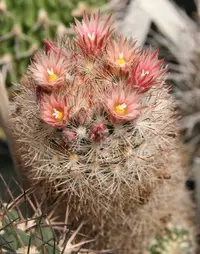
Blooming usually occurs in late spring to early summer. The plant produces small, funnel-shaped pink to magenta flowers near stem tips. Blooms open in good light, often for several days, and attract native pollinators.

Grow Healthy Plants with Botan Care

Keep your plants happy and healthy with plant identification, disease detection, and easy care guidance.

Botan plant care app — identify plants on mobile

Explore More Plants