Rhipsalis clavata Care

Rhipsalis clavata

About Rhipsalis clavata

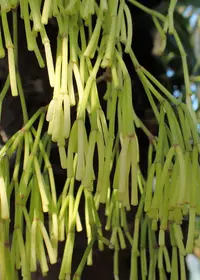
Rhipsalis clavata is an epiphytic cactus from tropical forests of Brazil. It naturally grows on trees, forming long, thin, hanging stems. The plant has a cascading habit that suits hanging baskets and high shelves. Its narrow, cylindrical stems create a soft, trailing curtain effect rather than the spiny look of desert cacti. In nature it grows in shaded, humid conditions, which makes it better suited to bright, indirect light indoors. It prefers airy, well-drained substrate and consistent, light moisture without waterlogging. Overall, it is considered moderately easy for those who learn how to care for Rhipsalis clavata and match its forest cactus needs.

Main Plant Requirements

Care Difficulty

Moderate Care

Light Preference

Bright Indirect Light

Water Requirements

Moderate Water

Temperature Preference

Tropical / Frost Sensitive

Hardiness Zone

11–12

Soil Texture

Sandy, Loamy, Organic-rich

Soil pH

Acidic (5.5–6.5), Slightly acidic (6.5–7.0)

Soil Drainage

Well-drained

Fertilization

Light (every 4–6 weeks)

Get Personalized Care Plan

Scan your plant to receive care tips personalized for your specific plant

Available on iOS and Android

How to Care for the Rhipsalis clavata

This epiphytic cactus prefers bright, indirect light with brief gentle direct sun.

  • Provide 6–8 hours of bright, filtered light each day, such as near an east-facing window or under light shade outdoors; short morning sun is fine.
  • Protect Rhipsalis clavata from strong midday or afternoon sun, which can cause yellowing, bleached patches, or scorched stems.
  • In winter, move it to the brightest frost-free spot available and, if indoors, rotate the pot every 1–2 weeks to prevent one-sided growth.

This species likes lightly moist, freely draining conditions rather than constant wetness.

  • Water when the top 2–3 cm of the mix feels dry, then soak thoroughly and let excess drain; avoid leaving the pot standing in water.
  • Reduce watering in fall and winter, allowing the top 3–4 cm to dry, since cooler temperatures and lower light slow Rhipsalis clavata growth.
  • Watch for shriveling or very light stems as a sign of underwatering, and for mushy segments, sour smell, or fungus gnats as signs of overwatering and poor drainage.

This cactus prefers mild, stable temperatures without frost or extreme heat swings.

  • Aim for an ideal range of 65–80°F (18–27°C) for steady growth, with slightly cooler nights improving overall vigor.
  • Protect it from cold below 50°F (10°C); brief dips to 45°F (7°C) are usually tolerated, but true frost can damage or kill stems.
  • In hot weather above 85°F (29°C), increase shade and airflow, and avoid placing it next to heat sources or on sun-baked surfaces that overheat roots.

This epiphytic cactus handles typical indoor humidity but benefits from slightly moist air.

  • Aim for 40–60% humidity, similar to many homes, with the higher end preferred in heated or air-conditioned rooms.
  • Rhipsalis clavata tolerates short dry spells in air but may show shriveling tips and slower growth when humidity stays very low.
  • Increase humidity with a nearby open tray of water and pebbles or by grouping plants, rather than misting heavily.

This species needs a loose, airy mix that drains rapidly yet holds light, even moisture.

  • Use a mix of roughly 50% cactus or succulent potting mix and 50% orchid bark, coco coir, and perlite for a fibrous, chunky texture.
  • Ensure very fast drainage; water should exit the pot within seconds, leaving roots in moist, not saturated, particles.
  • Keep pH slightly acidic to neutral (about 5.5–7.0), which typical peat- or coco-based mixes already provide.
  • Avoid dense clay, fine sand-heavy blends, or any mix that compacts, since low aeration quickly leads to root rot in epiphytic cacti.

This species is very suitable for container growing, especially in hanging pots or elevated planters.

  • Choose a relatively shallow but wide pot to match its fibrous, spreading roots and hanging stems rather than a deep columnar container.
  • Select a stable, weighty pot or hanging basket hardware that prevents tipping as stems elongate and shift the center of gravity outward.
  • Use a pot material like unglazed terracotta if extra evaporation is needed, or glazed ceramic if mixes dry too fast in your conditions.

This epiphytic cactus grows well with light feeding rather than heavy fertilization.

  • Apply a balanced liquid cactus fertilizer at 1/4–1/2 strength every 4–6 weeks in spring and summer.
  • Use a low-salt, balanced NPK or organic compost tea suited to epiphytes for Rhipsalis clavata.
  • Skip feeding in late fall and winter when growth slows.
  • Always water lightly before fertilizing to limit root burn in the airy mix.

This plant needs only modest pruning to maintain a tidy, cascading form.

  • Carry out pruning in late winter or early spring, before active growth.
  • Use clean, sharp scissors to remove dead, damaged, or shriveled stems at the base.
  • Thin very crowded or tangled sections to improve light penetration and airflow.
  • Shortening overly long stems encourages fuller, more branched growth without harming flowering.

This cactus prefers slightly snug pots and only occasional repotting in a loose, airy mix.

  • Repot every 2–3 years or when roots circle the pot or poke from drainage holes and growth slows.
  • Plan repotting for spring so Rhipsalis clavata can recover during the active season.
  • Use a shallow pot with fresh cactus or orchid mix to keep roots well aerated and fast draining.
  • Handle stems gently, disturb roots as little as possible, and water lightly after repotting to reduce stress.

This species is commonly propagated from stem cuttings under warm, bright, indirect light.

  • Take 5–10 cm healthy stem segments in spring or early summer using clean scissors.
  • Allow cut ends to dry and callus for 1–2 days to reduce rot risk.
  • Insert cuttings shallowly into slightly moist cactus or orchid mix with high air content.
  • Keep humidity moderate, temperatures around 68–77°F, and soil barely moist until roots form.

This tropical cactus is frost sensitive and needs mild, sheltered conditions in winter.

  • Keep temperatures above 50°F; avoid exposure to frost or freezing drafts.
  • Move container plants indoors or into a greenhouse before nights drop near 50°F.
  • Place in bright, indirect light and reduce watering so the mix dries more between waterings.
  • Do not fertilize in winter, allowing a brief rest period until spring growth resumes.

Care Tips

Basket depth choice

Use a relatively shallow but wide hanging basket so the roots stay slightly constrained, which encourages denser, more cascading stems instead of sparse, elongated growth.

Support and direction

Gently drape new stems over the rim of the pot or through a hanging frame while still flexible, guiding them into an even curtain and preventing kinks or breakage later.

Controlled branching

Pinch or cut back a few overly long, bare stem tips in late spring to stimulate side-branching along the remaining segments and create a fuller plant over time.

Safe handling practice

Handle the plant by the pot or main root ball rather than lifting it by the stems, since the segmented growth snaps easily and can leave wounds that are slow to heal.

Repot timing cue

Schedule repotting only when roots are circling and the pot dries much faster than usual, as mild root crowding tends to improve stability and appearance when caring for Rhipsalis clavata.

Common Pests and Diseases

Mealybugs

This pest often hides in stem joints and among the dangling stems, sucking sap and causing yellowing, shriveling segments, and sticky honeydew that can lead to sooty mold. Infestations are more common in warm, dry indoor conditions with limited air movement.

Solution

Isolate the plant, then dab visible insects with cotton swabs dipped in 70% isopropyl alcohol and rinse the stems under a gentle lukewarm shower. Repeat weekly until no new insects appear and slightly increase air circulation while avoiding sudden drafts as part of ongoing Rhipsalis clavata plant care.

Soft scale

These insects attach along the segmented stems and look like small, smooth bumps, leading to gradual yellowing, weak growth, and sticky residue. Symptoms include reduced vigor and black sooty mold developing on the honeydew deposits.

Solution

Scrape or wipe off individual scales with a cotton pad moistened with 70% isopropyl alcohol, then wash the plant under a mild shower to remove remaining residues. For persistent cases, use a horticultural oil spray labeled for indoor succulents, applied thoroughly to stems and branch points, and repeat according to label directions.

Spider mites

This pest thrives in low-humidity rooms and can cause fine webbing, pale stippling, and a dull, dusty look on the stems. Symptoms include slow decline, slight shriveling, and increased sensitivity to light stress.

Solution

Increase humidity slightly around the plant and rinse stems under a gentle stream of water, paying attention to internal tangles where mites hide. If activity continues, apply an insecticidal soap or a ready-to-use miticide labeled for indoor ornamental plants, repeating every 7–10 days until new growth appears clean.

Fungal stem spots

This disease shows as small, sunken, brown to dark spots on the green stems, sometimes merging into larger patches in plants kept too wet or in stagnant air. Symptoms include softened segments and occasional stem collapse from the affected areas.

Solution

Cut away all visibly affected stems with sterile scissors, then allow the plant to dry slightly between waterings and improve airflow around the hanging mass of stems. If new spots continue to appear, use a sulfur- or copper-based fungicide labeled for cacti and succulents, applied lightly to the remaining healthy tissue.

Bacterial soft rot

This disease causes localized, water-soaked, mushy areas on the fleshy stems, often with a sour odor, and can spread quickly in overwatered or poorly ventilated conditions. Symptoms include sudden segment collapse and a slimy texture at the affected sites.

Solution

Immediately remove and discard all soft, discolored tissue with sterilized tools, cutting well into firm, healthy stem, and dispose of contaminated material away from other plants. Allow the plant to dry, reduce watering volume and frequency, and ensure the potting mix drains freely; severely affected plants are often best replaced from healthy cuttings taken before the rot spread.

Interesting Facts

Pendant jungle cactus

This species forms long, slender, pendent stems that can reach over 1 m in length in mature specimens, naturally hanging from tree branches in its native Atlantic Forest habitat of southeastern Brazil.

Epiphytic but not parasitic

Rhipsalis clavata anchors itself to tree bark as an epiphyte, taking moisture and nutrients from rain, mist, and decaying organic matter rather than from the host tree’s tissues.

Night-fragrant flowers

Its small, white, tubular flowers typically open along the sides and tips of the stems and release a light fragrance in the evening, which is thought to help attract nocturnal pollinators in its native range.

Botan icon

Did you know?

In its natural Brazilian habitat, Rhipsalis clavata often grows high in the forest canopy together with mosses, ferns, and bromeliads, contributing to a complex mini-ecosystem that intercepts rain and provides shelter for small invertebrates and amphibians.

FAQs about Rhipsalis clavata

Slow growth is normal for this epiphytic cactus, especially in low light, cool temperatures, or small pots. Limited nutrients and old, compacted substrate also reduce growth. If new segments still appear each season, the plant is generally healthy.

Grow Healthy Plants with Botan Care

Keep your plants happy and healthy with plant identification, disease detection, and easy care guidance.

Botan plant care app — identify plants on mobile

Explore More Plants