bejuco de santiago Care (Aristolochia trilobata)

bejuco de santiago

About bejuco de santiago

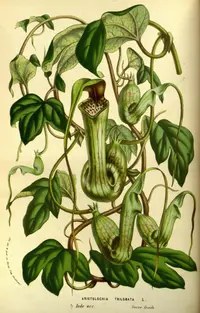
Bejuco de santiago (Aristolochia trilobata) is a fast-growing tropical vine known for its glossy, three-lobed leaves and unusual, pipe-shaped flowers. It is mainly grown as an ornamental for foliage and screening rather than for blooms.

This species is native to Central and South America and thrives in warm, humid climates where it can climb fences, trellises, or trees. It can grow vigorously in suitable conditions, so regular pruning is usually needed.

Aristolochia trilobata prefers bright light, consistent moisture, and well-drained, fertile soil. Understanding these basic needs helps gardeners learn how to care for bejuco de santiago in home gardens or sheltered outdoor spaces.

Main Plant Requirements

Care Difficulty

Moderate Care

Light Preference

Partial Shade

Water Requirements

Regular Water

Temperature Preference

Tropical / Frost Sensitive

Hardiness Zone

10–12

Soil Texture

Loamy, Organic-rich

Soil pH

Acidic (5.5–6.5), Slightly acidic (6.5–7.0)

Soil Drainage

Moist but well-drained

Fertilization

Light (every 4–6 weeks)

Get Personalized Care Plan

Scan your plant to receive care tips personalized for your specific plant

Available on iOS and Android

How to Care for the bejuco de santiago

Aristolochia trilobata thrives in bright, indirect light similar to bright forest edges.

  • Provide 4–6 hours of bright, filtered light or light dappled shade; morning sun with afternoon shade suits bejuco de santiago well in warm climates.
  • Plant where it receives protection from harsh midday and late-afternoon sun to prevent leaf scorch and curling edges.
  • In cooler seasons or cloudy regions, allow a bit more direct morning sun, while in hot summers increase filtered shade under trees or shade cloth.

This vine prefers evenly moist but not waterlogged soil throughout the growing season.

  • Water when the top 3–5 cm of soil feels dry, soaking the root zone thoroughly, then let excess drain away.
  • Use a rich, well-draining soil to limit root rot; signs of overwatering include yellowing, mushy leaves, while drooping, crisp leaves suggest underwatering.
  • In cooler months and slower growth, extend intervals between waterings, but do not allow deep, prolonged drying of the root area for Aristolochia trilobata.

This tropical climber grows best in consistently warm, frost-free conditions.

  • Aim for 70–85°F (21–29°C) for active growth; short peaks up to 90°F (32°C) are tolerated if soil moisture is stable.
  • Protect the plant from temperatures below 55°F (13°C); foliage and stems can suffer damage as it approaches 40°F (4°C).
  • In regions with cool winters, treat it as a warm-season vine outdoors and avoid any frost exposure, which can kill top growth or the entire plant.

This species prefers moderately humid air and can struggle in very dry indoor conditions.

  • Aim for 50–70% humidity to keep foliage lush and reduce leaf edge browning.
  • It tolerates brief dips to 35–40%, but prolonged dry air may cause curling, crisp tips, and slower growth.
  • Increase humidity with a nearby humidifier, grouped plants, or an evaporation tray rather than misting, which adds only short-lived moisture for bejuco de santiago.

Provide loose, fast-draining, organic-rich soil to support vigorous root and vine growth.

  • Use a mix of roughly 50% peat or coco coir, 30% compost, and 20% perlite or pumice to balance moisture retention and drainage.
  • A slightly acidic to neutral pH around 6.0–7.0 suits Aristolochia trilobata and helps nutrient availability.
  • In heavy native soil, lighten texture by blending in coarse sand and chunky bark to improve aeration and prevent compaction.
  • Avoid dense clay, waterlogged spots, or fully sandy mixes that either suffocate roots or dry out within hours.

This vine is well suited to container growing when the pot supports its vigorous, climbing habit.

  • Choose a wide, heavy container so the tall vine and support structure do not tip in wind or when wet.
  • Use a deep pot that allows roots to extend downward, which stabilizes the plant as the top growth becomes dense.
  • Install a sturdy trellis or frame inside the pot at planting time so stems can be tied and guided upward as they elongate.

This vigorous tropical vine responds well to moderate feeding in containers or poor soils, but often needs little fertilizer in rich ground.

  • Use a balanced liquid fertilizer (for example 10-10-10) at 1/2 strength every 4–6 weeks during spring–summer for bejuco de santiago.
  • Apply a slow-release granular fertilizer once at the start of the growing season if growth is weak.
  • Avoid heavy feeding; excess nitrogen can cause lush foliage with fewer flowers.
  • Stop fertilizing or reduce to 1/4 strength in fall–winter when growth slows.

Pruning helps manage size and shape of Aristolochia trilobata and keeps the vine healthy and floriferous.

  • Best time is late winter or early spring, before vigorous new growth begins.
  • Remove dead, diseased, or damaged stems first, then thin crowded or crossing vines.
  • Shorten overly long shoots to control spread and encourage branching and flowering.
  • Use clean, sharp bypass pruners and make angled cuts just above healthy buds or leaf joints.

This fast-growing climber benefits from timely repotting or transplanting to maintain healthy root development.

  • Check for roots circling inside the pot, emerging from drainage holes, or unexplained slow growth as signals to move up.
  • Repot or transplant in spring, every 2–3 years, choosing a container 1–2 in wider with good drainage or a permanent ground site.
  • Gently loosen root circling, trim only broken roots, and keep the root ball as intact as possible to limit shock.
  • Water thoroughly after moving, keep shaded for 3–5 days, and maintain even moisture until new growth resumes.

Aristolochia trilobata is commonly propagated from cuttings and sometimes seeds, under warm and humid conditions.

  • Take semi-ripe stem cuttings in late spring–summer, each with 2–3 nodes.
  • Dip the cut end in rooting hormone, place in a light, well-drained mix, and keep at 70–80°F with high humidity.
  • Use bottom heat and bright, indirect light to speed rooting and reduce rot risk.
  • Sow fresh seeds in warm conditions, barely covered, and keep evenly moist until germination.

This species is frost-sensitive and needs protection in climates cooler than tropical or frost-free subtropical zones.

  • In USDA zones colder than 10, grow in containers so plants can be moved indoors before temperatures fall below 40°F.
  • Provide bright, indirect light indoors and water sparingly while growth slows.
  • In mild climates, mulch the root zone lightly to buffer short cool spells without keeping soil soggy.
  • Avoid exposure to frost or freezing winds, which can kill stems and foliage.

Care Tips

Early vine training

Install a sturdy trellis, wire frame, or pergola when the plant is still young and loosely tie new shoots with soft garden ties so stems harden in the desired direction rather than tangling or pulling away from supports later.

Root zone mulching

Apply a 3–5 cm layer of coarse organic mulch around, but not touching, the main stem to keep roots cool, reduce evaporation, and minimize weed competition that can stress this vigorous climber.

Wind and load support

In windy or storm-prone areas, anchor the support structure securely and periodically check fasteners and ties because mature vines become heavy and can topple weak trellises or fences.

Targeted pest scouting

Inspect the undersides of leaves and young tendrils every 1–2 weeks for chewing damage, caterpillars, or spider mites, and remove localized infestations by hand or with a strong water spray before considering any treatment.

Container management

When growing bejuco de santiago in large containers, use a wide, heavy pot and place it where the base is protected from being knocked over, then rotate the container 90° every few weeks so growth stays evenly balanced around the support.

Common Pests and Diseases

Leaf miners

This pest forms pale, winding tunnels inside the thick leaves, often causing distorted or scarred foliage on new growth. Damage is mostly cosmetic but can weaken young vines if severe.

Solution

Remove and discard leaves with fresh mines to reduce larvae, and encourage natural predators by avoiding broad-spectrum insecticides. For recurrent problems, use a targeted systemic insecticide labeled for leaf miners, following directions carefully and treating when new flushes of growth appear.

Spider mites

These insects cause fine stippling, bronzing, and a dull appearance on the leathery leaves, often accompanied by fine webbing on the undersides and between stems. Symptoms include reduced vigor in hot, dry conditions or indoors with low humidity, where these mites thrive.

Solution

Rinse foliage thoroughly with a strong but gentle stream of water, paying attention to leaf undersides, and repeat every few days for several cycles. In persistent cases, apply insecticidal soap or horticultural oil, keep humidity in the 50–60% range, and avoid placing the plant in very hot, stagnant air to support long-term Aristolochia trilobata plant care.

Scale insects

This pest appears as small, dome-shaped bumps on stems and leaf veins, often exuding sticky honeydew that can lead to sooty mold. Heavy infestations may cause yellowing leaves, stunted growth, and reduced flowering.

Solution

Wipe affected areas with a cotton pad dipped in 70% isopropyl alcohol to remove individual scales, then prune heavily infested stems. Follow with 2–3 rounds of horticultural oil or insecticidal soap at 7–10 day intervals, and improve light and airflow so the vine can recover strong growth.

Anthracnose

This disease produces irregular tan to dark brown leaf spots that may coalesce, sometimes with a yellow halo and a tendency for affected areas to dry and drop out. Symptoms include premature leaf drop on heavily infected vines, especially in warm, humid, shaded conditions.

Solution

Prune and discard infected leaves and any fallen debris, and avoid overhead watering to keep foliage dry. Improve spacing and airflow around the vine, and in severe or recurring cases use a copper-based or other labeled fungicide at the first sign of new spotting, repeating per label directions until conditions become drier.

Cercospora leaf spot

This disease causes numerous small, circular to oval spots with gray or tan centers and darker margins, giving leaves a speckled, tired look. Severe infections can thin the foliage and slow vine growth, especially in warm, wet weather or overcrowded plantings.

Solution

Remove and dispose of affected leaves, clean up all fallen plant material, and water at soil level rather than on the foliage. If spotting continues to spread, apply a labeled foliar fungicide for Cercospora on ornamentals, and maintain good air circulation and moderate fertilization to help new, healthy foliage replace the damaged leaves.

Interesting Facts

Traplike fly pollination

Its oddly curved, pipe-shaped flowers emit a strong odor and temporarily trap small flies, releasing them only after they have picked up or deposited pollen, a specialized pollination strategy seen in this genus.

Evergreen tropical liana

This species is an evergreen woody vine native to tropical America, where it can climb high into forest canopies using twining stems and broad, trilobed leaves to capture light in warm, humid habitats.

Host for butterfly larvae

In parts of its range, the vine serves as a food plant for caterpillars of certain swallowtail butterflies, whose larvae can tolerate the plant’s defensive chemicals and gain protection from predators by storing them.

Botan icon

Did you know?

Chemical compounds in this species make it unpalatable to many herbivores, and some specialized butterfly caterpillars that feed on it use these same compounds to become distasteful themselves, creating a defensive link between plant and insect.

FAQs about bejuco de santiago

This species is a vigorous, twining vine that climbs rather than sprawling. It wraps its flexible stems around supports such as trellises, fences, or nearby shrubs and trees, eventually forming dense vertical coverage if not pruned.

Grow Healthy Plants with Botan Care

Keep your plants happy and healthy with plant identification, disease detection, and easy care guidance.

Botan plant care app — identify plants on mobile

Explore More Plants