Mark Dormant Clumps
After foliage dies back, place discreet markers where bulbs are growing so you do not disturb or damage them when digging or replanting nearby later in the season.

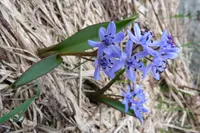
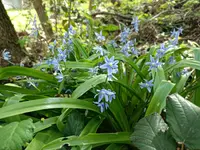
Alpine squill, Scilla bifolia, is a small spring-blooming bulb from mountain woodlands and meadows in Europe and western Asia. It forms low clumps of narrow leaves and short flower stems. Its star-shaped flowers are usually bright blue, sometimes pink or white, and appear very early, often as snow melts. Plants naturalize slowly, creating loose carpets in cool, humus-rich soils. This species prefers partial sun to light shade and evenly moist but well-drained soil. Once established, it is generally low-maintenance and resilient in suitable climates, which makes it straightforward to care for alpine squill outdoors.

Care Difficulty
Easy Care

Light Preference
Partial Shade

Water Requirements
Moderate Water

Temperature Preference
Cold Hardy

Hardiness Zone
3–8

Soil Texture
Loamy, Sandy, Organic-rich

Soil pH
Acidic (5.5–6.5), Slightly acidic (6.5–7.0)

Soil Drainage
Well-drained

Fertilization
Minimal (feed rarely)
Scan your plant to receive care tips personalized for your specific plant
Available on iOS and Android
This early spring bulb prefers bright, cool light similar to open woodland edges.
This bulb prefers evenly moist but not waterlogged soil during its active spring growth.
This hardy bulb thrives in cool to mild climates with a pronounced winter chill.
Humidity is not a major factor for Scilla bifolia, which adapts well to typical outdoor conditions in temperate climates.
Scilla bifolia grows best in light, well-aerated soil that drains quickly yet holds some moisture around the bulbs.
This species is well suited to container growing when the pot and substrate prevent waterlogging of the bulbs.
Scilla bifolia needs only modest feeding when grown in typical, humus-rich garden soil.
Scilla bifolia requires minimal pruning, mainly to keep plantings tidy and healthy.
This bulb is usually left undisturbed, but light transplanting helps manage crowded clumps over time.
Scilla bifolia is commonly propagated by bulb division and, less often, by seed.
This hardy bulb tolerates typical winter conditions in much of the US and usually needs little special care.

Plant Health Check
Not sure what's wrong with your plant? Check your plant's health inside the app.
This species flowers very early in spring, often while snow still patches the ground in its native European woodlands, taking advantage of full sunlight before trees leaf out. Its life cycle is strongly synchronized with this short window of high light in deciduous forests.
The flowers show a clear actinomorphic symmetry, meaning they are radially symmetric with tepals that are all similar in shape and color, making it difficult to distinguish petals from sepals. This uniform structure helps attract a broad range of early pollinating insects such as small bees and flies.
In suitable habitats, dense colonies develop through both seed and bulb offsets, forming extensive blue carpets under trees and shrubs. These colonies tend to persist for many years in stable, lightly disturbed woodlands and old gardens.

Genetic and morphological studies have shown that populations formerly treated as varieties of Scilla bifolia in different parts of Europe actually represent distinct, closely related species, so the traditional concept of S. bifolia has been narrowed as taxonomy has become more precise.
Lack of flowers usually comes from bulbs planted too deep, insufficient winter chill, or foliage being cut back too early the previous spring. Crowded clumps may also stop flowering and benefit from division every few years.
Keep your plants happy and healthy with plant identification, disease detection, and easy care guidance.