Manage Spreading Suckers
Inspect the root zone 2–3 times per year and cut or spade out unwanted suckers at the edge of the clump to prevent the plant from overtaking nearby beds or lawns.

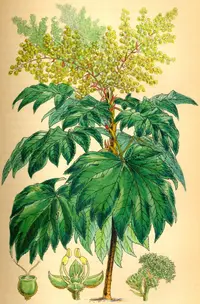
Rice-paper plant, Tetrapanax papyrifer, is a fast-growing, deciduous shrub or small tree valued for its huge, dramatic, lobed leaves. It creates a bold, architectural look in gardens, especially in mild climates.
This species is native to Taiwan and parts of China, where it grows in woodland edges and sheltered slopes. In suitable conditions it can spread by suckers and form thickets, so space and containment matter.
It is generally considered easy to grow if given a sheltered spot with bright light, moisture-retentive but well-drained soil, and protection from harsh wind or frost. Understanding how to care for rice-paper plant helps keep its large foliage healthy and long-lived.

Care Difficulty
Moderate Care

Light Preference
Partial Sun

Water Requirements
Moderate Water

Temperature Preference
Warm Climate

Hardiness Zone
7–10

Soil Texture
Loamy, Clay, Organic-rich

Soil pH
Acidic (5.5–6.5), Slightly acidic (6.5–7.0)

Soil Drainage
Moist but well-drained

Fertilization
Minimal (feed rarely)
Scan your plant to receive care tips personalized for your specific plant
Available on iOS and Android
This large-leaved shrub prefers bright conditions with some protection from intense midday sun.
This species prefers consistently moist but not waterlogged soil, especially during active growth.
This plant grows best in mild, frost-sheltered climates with warm summers and cool, not severe, winters.
This species grows well in typical outdoor humidity but benefits from moderately moist air indoors.
Tetrapanax papyrifer prefers deep, loose, moisture-retentive but free-draining soil.
This species can be grown in large containers if the pot is chosen and managed for its vigorous, tall growth.
Tetrapanax papyrifer responds well to moderate feeding during the active growing season in rich but free-draining soil.
Pruning helps manage the size, structure, and safety of Tetrapanax papyrifer, especially in small gardens.
This species is usually grown in the ground, so care focuses more on planting and transplanting than long‑term container culture.
Propagation of Tetrapanax papyrifer is commonly done through root suckers, but other methods are also possible.
Cold tolerance is moderate, so winter care depends on local minimum temperatures and site exposure.

Plant Health Check
Not sure what's wrong with your plant? Check your plant's health inside the app.
The pith of this shrub was traditionally used in China and Taiwan to make a fine, spongy material also called rice paper, used for crafts, artificial flowers, and sometimes for mounting artwork, even though it is not made from rice at all.
Mature plants can produce single leaves over 60–90 cm across on long stalks, creating a layered, umbrella-like canopy that casts surprisingly dense shade for a relatively open-branched shrub.
This species often sends out creeping rhizomes that emerge as new stems at a distance from the original plant, allowing it to form wide colonies and sometimes making it difficult to confine in small gardens.

In some mild-climate regions, this species is considered potentially invasive because its rhizome-driven spread and bird-dispersed seeds allow it to escape cultivation and establish self-sustaining populations outside gardens.
Growth is usually rapid once established. In suitable outdoor conditions, new shoots can extend 60–120 cm in a single growing season, forming a clump with thick upright stems and large leaves that create a bold, architectural effect.
Keep your plants happy and healthy with plant identification, disease detection, and easy care guidance.