Staggered Succession Sowing
Sow small batches of seed every 2–3 weeks in spring and early summer to keep flowering continuous and to replace older, exhausted plants without leaving gaps in the display.

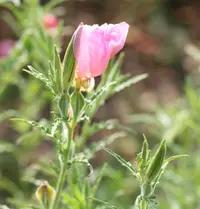
Fourwing evening primrose (Oenothera tetraptera) is a short-lived perennial or reseeding annual known for its delicate white flowers that age to pink. The blooms open mainly in the evening and attract night-flying pollinators such as moths.
The plant usually forms a low, branching clump with narrow green leaves and upright flowering stems. It is native to parts of North and Central America but is grown ornamentally in many warm-temperate regions.
Gardeners value it for its tolerance of poor, sandy soils and its ability to cope with heat and short dry spells, which makes it relatively easy to manage. Understanding how to care for fourwing evening primrose starts with providing plenty of sun, good drainage, and only moderate watering.

Care Difficulty
Easy Care

Light Preference
Full Sun

Water Requirements
Moderate Water

Temperature Preference
Warm Climate

Hardiness Zone
8–11

Soil Texture
Sandy, Loamy, Rocky

Soil pH
Slightly acidic (6.5–7.0), Neutral (7.0)

Soil Drainage
Well-drained

Fertilization
Minimal (feed rarely)
Scan your plant to receive care tips personalized for your specific plant
Available on iOS and Android
This species thrives in bright, open sites where it receives strong direct sun for much of the day.
This plant prefers dry to moderately moist conditions and is more tolerant of drought than excess water.
This species is adapted to warm, temperate to hot climates with moderate winter cold.
Humidity is not a major factor for Oenothera tetraptera, which adapts well to typical outdoor air levels.
Oenothera tetraptera prefers light, well-drained soil that does not stay wet after rain or irrigation.
This species adapts well to container growing when drainage and root space are managed carefully.
This species grows well in lean soil, so fourwing evening primrose needs only light feeding in most gardens.
Pruning Oenothera tetraptera is useful for tidiness and to encourage continued flowering.
This species is more often grown in beds than containers, so care focuses on transplanting young plants with minimal root disturbance.
Propagation of this species is most commonly done from seed, which allows quick establishment in sunny beds or meadows.
This plant is generally cold hardy in mild to moderate climates and needs little special winter care in well‑drained soil.

Plant Health Check
Not sure what's wrong with your plant? Check your plant's health inside the app.
This species opens its white, four-petaled flowers in the evening or at night, then they usually fade or fall by the next day, matching the active time of its main pollinators such as nocturnal moths.
The flowers often age from pure white to pinkish tones, which is thought to signal to pollinators that they are past their peak nectar and pollen availability.
It often appears as a short-lived perennial or biennial in disturbed, open sites like roadsides and waste areas, taking advantage of full sun and reduced competition to complete its life cycle quickly.

This species, originally native to Mexico and parts of Central America, has naturalized in several warm-temperate and subtropical regions worldwide, where it can form self-sustaining populations along roadsides and in urban habitats, illustrating how easily some evening primroses can expand their range when conditions match their ecological preferences.
Poor flowering usually comes from too little light, excess nitrogen fertilizer, or young plants that are not yet mature. Ensure full sun, avoid high-nitrogen feeding, and deadhead spent flowers so energy goes into new buds rather than seeds.
Keep your plants happy and healthy with plant identification, disease detection, and easy care guidance.