Cutleaf Japanese Maple Care (Acer palmatum 'Crimson Queen')

Also known as: Threadleaf Japanese Maple, Japanese Maple, Maple

About Cutleaf Japanese Maple

Acer palmatum 'Crimson Queen' is a finely cut, weeping Japanese maple grown mainly as an ornamental small tree or large shrub. It is valued for its cascading habit and deeply dissected red foliage that holds color well through the growing season.

This cultivar originates from selections of Japanese maple native to Japan, Korea, and parts of China, but is now widely grown in gardens and containers. Its compact size and slow growth make it suitable for small spaces, though it needs protection from harsh sun and drying winds.

Soil that drains well, steady moisture, and light shade usually make it easier to care for Cutleaf Japanese Maple.

Main Plant Requirements

Care Difficulty

Moderate Care

Light Preference

Partial Shade

Water Requirements

Moderate Water

Temperature Preference

Cold Hardy

Hardiness Zone

5–8

Soil Texture

Loamy, Sandy, Organic-rich

Soil pH

Acidic (5.5–6.5), Slightly acidic (6.5–7.0)

Soil Drainage

Moist but well-drained

Fertilization

Minimal (feed rarely)

Get Personalized Care Plan

Scan your plant to receive care tips personalized for your specific plant

Available on iOS and Android

How to Care for the Cutleaf Japanese Maple

This laceleaf Japanese maple prefers bright conditions with protection from harsh midday rays.

  • Provide 3–5 hours of direct morning sun with dappled or filtered light in the afternoon to prevent leaf scorch on Acer palmatum 'Crimson Queen'.
  • In hot summers, site the tree where it receives afternoon shade; intense sun, wind, and reflected heat can brown leaf edges and fade color.
  • In cooler or northern climates, it tolerates more direct sun, but in deep shade growth becomes sparse and foliage turns dull with fewer red tones.

This maple prefers evenly moist, cool soil that never stays soggy.

  • Water when the top 3–5 cm of soil feels dry, soaking the root zone deeply, then allow excess to drain fully to prevent root rot.
  • Use well-drained, loamy soil; yellowing leaves and persistently wet soil signal overwatering, while crisp leaf tips and drooping new growth suggest the tree is too dry.
  • During hot, dry periods, increase watering frequency, but in cool spring and fall, reduce frequency while still preventing the fine roots of Acer palmatum 'Crimson Queen' from drying out completely.

This maple is cold hardy yet sensitive to extreme heat and sudden temperature swings.

  • Active growth occurs best around 60–75°F (16–24°C), with stable spring temperatures helping new leaves avoid frost damage and tip dieback.
  • The tree tolerates winter lows near 0°F (−18°C) once established, but late frosts after bud break can damage young foliage, which may then refoliate more weakly.
  • In summer, prolonged heat above 90°F (32°C), especially with hot dry winds, can scorch leaves; mulch the root zone and avoid heat-reflective sites to moderate soil temperature.

This maple prefers moderate outdoor humidity but usually adapts without special measures.

  • Aim for 40–60% humidity; brief dips lower are tolerated if soil moisture is stable.
  • Watch for crisp leaf edges and premature leaf drop during hot, very dry spells as signs of humidity stress.
  • In dry, windy periods, shelter Cutleaf Japanese Maple and mulch the root zone to reduce transpiration and moisture loss.

Acer palmatum 'Crimson Queen' performs best in moist, well-aerated, slightly acidic to neutral soil.

  • Use a loose, loamy structure with high organic content, combining garden loam with composted bark or leaf mold.
  • Ensure rapid drainage by avoiding heavy clay; incorporate coarse sand or fine grit if water lingers after rain.
  • Target pH around 5.5–6.8; amend alkaline soils gradually with organic matter such as compost or pine fines.
  • Improve aeration by avoiding compaction, using raised beds or mounded planting where native soil drains poorly.

This Japanese maple is well suited to container growing when specific structural needs are met.

  • Select a wide, relatively shallow pot to match the plant’s fibrous, spreading root system and limit tipping risk.
  • Use a heavier material such as ceramic or concrete in windy sites to stabilize the broad, cascading canopy.
  • Choose a container depth that allows at least 8–10 in of root space while keeping the root zone above any standing water areas.

Acer palmatum 'Crimson Queen' benefits from light, controlled feeding rather than heavy fertilization.

  • Use a balanced slow-release fertilizer (around 10-10-10) or a thin layer of compost in early spring as new growth starts.
  • Apply once in spring and, if growth seems weak, one light application in early summer for caring for Cutleaf Japanese Maple.
  • Reduce or stop feeding in late summer so shoots harden before winter and avoid fertilizing during dormancy.
  • For liquid feeds, use at 1/2 strength on moist soil to limit root burn and salt buildup.

Pruning Acer palmatum 'Crimson Queen' should be light and focused on health and structure.

  • Best time is late winter to early spring, before bud break, or mid-summer after leaves harden.
  • Remove dead, damaged, crossing, or inward-growing branches using clean, sharp bypass pruners.
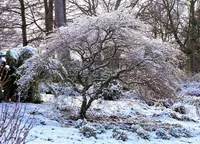
  • Thin crowded interior twigs slightly to improve airflow while keeping the weeping, mounded form.
  • Avoid heavy cuts; make small, angled cuts just above a bud or side branch to reduce stress.

Container-grown Acer palmatum 'Crimson Queen' needs careful transplanting to avoid root stress.

  • Check for roots circling the pot, crowded drainage holes, or declining vigor as signs it needs a larger container.
  • Plan repotting or transplanting for early spring or early fall, when temperatures are mild and moisture is steady.
  • Move to a pot only 1–2 in wider or a ground site with well-drained, slightly acidic soil and afternoon shade.
  • Loosen circling roots gently, water thoroughly after planting, and mulch lightly to keep the root zone cool and moist.

Acer palmatum 'Crimson Queen' is usually propagated by grafting, which is specialized and not often done at home.

Acer palmatum 'Crimson Queen' is generally cold hardy but benefits from some winter root protection, especially in containers.

  • In-ground trees tolerate typical winters in USDA zones 5–8 once established, though late frosts may damage young leaves.
  • Apply 5–8 cm of mulch over the root zone in late fall, keeping mulch a few cm away from the trunk.
  • For container plants, wrap the pot, group containers together, or move them to an unheated garage or sheltered spot.
  • Avoid late-season nitrogen feeding and heavy pruning so new growth matures and withstands freezing.

Care Tips

Protect Grafted Union

Locate the graft line near the base and keep mulch slightly away from it while ensuring the graft sits just above soil level to prevent rot and promote strong, stable growth.

Shield From Wind

Install a low, breathable windbreak such as a slatted fence or shrub layer on the windward side to reduce leaf shredding and moisture loss during storms.

Summer Leaf Scorch Check

During heat waves, inspect outer canopy leaves every few days and temporarily add a shade cloth or move potted specimens to dappled shade at the first sign of browning leaf edges.

Branch Layering Support

If long, weeping branches touch or rest near the soil, pin one down gently with a U-shaped wire in well-drained soil to encourage layering and create a fuller, multi-stem appearance.

Adjust Mulch Seasonally

Maintain a 5–7 cm mulch ring year-round but increase to 8–10 cm in late fall for root insulation, then thin back in spring to avoid excess moisture against the trunk, which is useful when caring for Cutleaf Japanese Maple in variable climates.

Common Pests and Diseases

Verticillium wilt

This disease causes branch dieback, yellowing or browning leaves, and one-sided decline, often starting on a single limb. Symptoms include sparse foliage and discolored wood in the sapwood when branches are cut.

Solution

Prune out affected branches well into healthy wood and disinfect tools between cuts. Improve soil drainage, avoid overwatering and heavy fertilization, and if decline is severe, remove the tree and avoid planting other maples or susceptible species in the same spot.

Leaf scorch

Symptoms include brown, dry leaf margins and tips, often following hot, sunny, or windy weather, even when soil is moist. This problem is physiological rather than infectious but can weaken the tree if repeated every year.

Solution

Provide light afternoon shade, maintain even soil moisture with mulch over the root zone, and avoid heat-reflecting surfaces near the tree. Do not overfertilize, and reduce pruning stress so the plant can better tolerate environmental extremes when caring for Cutleaf Japanese Maple.

Powdery mildew

This disease appears as white, powdery patches on leaves and young shoots, sometimes causing distortion or premature leaf drop. Symptoms include a dusty coating that is easiest to see on the upper leaf surface.

Solution

Increase air circulation by thinning crowded branches and avoid overhead watering late in the day. Remove and discard heavily infected leaves, and if needed use a labeled horticultural oil or potassium bicarbonate product applied according to instructions during mild temperatures.

Japanese maple scale

This pest forms small, white to grayish shell-like bumps on branches and twigs, leading to thinning foliage and branch dieback over time. These insects feed on sap and can weaken the tree if populations build up.

Solution

Prune out and dispose of heavily infested twigs and scrub lightly infested branches with a soft brush to remove scales. Apply a dormant horticultural oil in late winter and, if needed, a light summer oil when crawlers are active, ensuring full coverage of branches and trunk.

Aphids

These insects cluster on new shoots and the undersides of leaves, sucking sap and causing curling or distortion. Symptoms include sticky honeydew on leaves or surfaces below the tree and sometimes sooty black mold growing on the residue.

Solution

Spray infested areas with a firm stream of water to dislodge aphids and repeat as needed. Encourage natural predators like lady beetles, and if populations remain high, use insecticidal soap or lightweight horticultural oil, coating the undersides of leaves and young stems thoroughly.

Interesting Facts

Stable weeping habit

This cultivar has a genetically fixed strongly cascading, dome-shaped growth form that remains compact and low, usually no taller than a small single-story porch, which makes it distinct from upright Japanese maple types that must be regularly pruned to stay low.

Heat-linked color shift

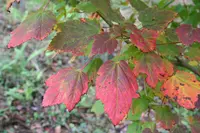
In many warm-summer climates, its finely divided foliage emerges a vivid deep red in spring, then softens to red-bronze through hotter months, and returns to stronger crimson-red tones in fall, a seasonal color pattern that is more stable than in many seed-grown red Japanese maples.

True laceleaf structure

The leaves are dissected so deeply that each lobe is long, narrow, and feather-like, creating a lace-like canopy that filters light into dappled shade beneath the plant, unlike typical Japanese maples with broader, less divided lobes.

Botan icon

Did you know?

Acer palmatum 'Crimson Queen' is one of the longest-established red laceleaf Japanese maple cultivars in ornamental horticulture, documented in the nursery trade since the mid-20th century and still widely used as a reference standard when evaluating new red dissectum introductions.

FAQs about Cutleaf Japanese Maple

Brown, crispy leaf edges usually result from heat, dry wind, low humidity, or salt buildup from fertilizers. Newly planted trees may also suffer from transplant stress. Improve watering consistency, mulch the root zone, and provide shelter from harsh sun and wind.

Grow Healthy Plants with Botan Care

Keep your plants happy and healthy with plant identification, disease detection, and easy care guidance.

Botan plant care app — identify plants on mobile

Explore More Plants