Gasteria obliqua Care

Gasteria obliqua

About Gasteria obliqua

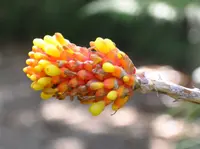
Gasteria obliqua is a compact succulent from South Africa, valued for its thick, tongue-shaped leaves and slow, clumping growth habit. The leaves are usually dark green with pale spots or bands, forming neat rosettes that suit windowsills and small indoor spaces. In good conditions it produces arching flower stems with tubular, coral-pink blooms that attract attention without needing complex care. This species tolerates indoor conditions well, so learning how to care for Gasteria obliqua is straightforward for most plant owners. It prefers bright, indirect light, infrequent watering, and a gritty, fast-draining soil mix that protects the roots from staying wet too long.

Main Plant Requirements

Care Difficulty

Easy Care

Light Preference

Bright Indirect Light

Water Requirements

Low Water

Temperature Preference

Tropical / Frost Sensitive

Hardiness Zone

10–11

Soil Texture

Sandy, Loamy, Rocky

Soil pH

Slightly acidic (6.5–7.0), Neutral (7.0)

Soil Drainage

Well-drained

Fertilization

Minimal (feed rarely)

Get Personalized Care Plan

Scan your plant to receive care tips personalized for your specific plant

Available on iOS and Android

How to Care for the Gasteria obliqua

This compact succulent prefers bright, indirect light with some gentle direct sun.

  • Provide 4–6 hours of bright, filtered light daily; early morning sun is ideal, while harsh afternoon sun should be softened with a sheer curtain or light shade.
  • Outdoors, place Gasteria obliqua in dappled shade or east-facing exposure; strong midday sun can bleach, scar, or redden leaves.
  • In winter, move plants to the brightest spot available to compensate for shorter days, but avoid placing them right against hot or frigid window glass.

This species stores water in its leaves and needs infrequent, careful watering.

  • Allow the top 3–5 cm of soil to dry fully before watering; the pot should feel noticeably lighter and the surface no longer cool to the touch.
  • In spring and summer, water thoroughly, then drain completely; in fall and winter, reduce frequency by about half as growth slows.
  • Watch for soft, yellowing, or transparent leaves as signs of overwatering, and for very wrinkled, limp leaves and pulling from the soil as signs of underwatering.

This succulent prefers moderate, stable temperatures and avoids extremes.

  • Aim for 65–80°F (18–27°C) during active growth; short peaks to 85°F (29°C) are tolerated if light is filtered and air is moving.
  • Protect from cold below 50°F (10°C); brief dips to 40–45°F (4–7°C) may be survived, but repeated exposure weakens the plant.
  • Avoid frost entirely, as tissue is easily damaged, and shield from heat above 90°F (32°C) with extra shade to prevent leaf scorch and stress.

This succulent handles typical indoor humidity with no special adjustment.

  • Aim for 30–50% humidity; avoid persistently above 60% to reduce rot risk.
  • Dry household air is usually tolerated, but sudden, very dry heat can crisp leaf tips.
  • Low humidity stress shows as browning edges and slow growth rather than soft, mushy leaves.
  • Increase humidity slightly, if needed, by grouping plants nearby rather than misting Gasteria obliqua directly.

Use a very free-draining, mineral-rich mix that dries quickly between waterings.

  • Choose a gritty, sandy substrate with coarse structure rather than fine, peat-heavy mixes that hold water.
  • Aim for a cactus/succulent blend around pH 6–7, then lighten it further with extra perlite or pumice for sharper drainage.
  • Combine roughly 50% commercial succulent mix with 25% coarse sand and 25% pumice or small gravel to improve aeration.
  • Avoid dense garden soil, unamended compost, or pots that sit in saucers of water, which can cause root rot in Gasteria obliqua.

This species is well suited to container growing when the pot limits moisture retention.

  • Select a shallow but wide container so the relatively shallow roots can spread without trapping deep, cold moisture.
  • Use unglazed terracotta if extra evaporation is needed in cool or dim conditions, since it dries faster than plastic or glazed ceramic.
  • Raise the pot slightly on feet or mesh so drainage holes stay clear and excess water leaves the container quickly.

This compact succulent benefits from light feeding during active growth but is sensitive to excess salts.

  • Use a diluted balanced liquid fertilizer (around 10-10-10 or similar) at 1/4–1/2 strength during spring and summer watering.
  • Apply no more than every 4–6 weeks, ensuring the potting mix is already slightly moist before feeding.
  • Avoid heavy compost or rich slow-release products that keep the soil wet, which can stress roots.
  • Stop feeding Gasteria obliqua in fall and winter when growth slows, resuming only once new growth appears.

Gasteria obliqua needs only light, selective pruning to maintain a clean rosette and reduce disease risk.

  • Best time for any pruning is late spring to summer, when the plant is actively growing and recovers faster.
  • Use clean, sharp scissors or pruning snips to remove dead, dried, or rotting leaves at the base.
  • Trim damaged or badly marked leaves back to healthy tissue to improve appearance and airflow around the rosette.
  • Cut spent flower stalks at the base once they dry, which keeps the plant compact and directs energy back to foliage growth.

This slow-growing succulent prefers slightly tight quarters and only occasional repotting in a gritty mix.

  • Check for roots circling the drainage holes, very slow growth, or soil that stays wet as signs it needs repotting.
  • Plan to repot every 3–4 years in late spring, choosing a pot only 1–2 in wider with excellent drainage holes.
  • Use a cactus/succulent mix with extra mineral grit, handling roots gently and keeping them as intact as possible.
  • After repotting, keep the plant shaded and barely moist for 7–10 days to limit root stress and encourage recovery.

New plants are most reliably produced by dividing offsets from a mature clump.

  • Best time for propagation is late spring to early summer, when warmth supports root formation.
  • Gently remove the plant from its pot and separate offsets, ensuring each has some roots attached.
  • Let any broken surfaces dry and callus for 1–2 days in shade before planting in a dry, gritty succulent mix.
  • Keep newly potted divisions in bright, indirect light and water lightly only after initial root anchoring is felt.

This succulent is not fully frost hardy and benefits from mild, dry winter conditions.

  • Aim to keep temperatures around 50–60°F; brief dips near freezing may mark leaves but can damage roots if soil is wet.
  • In cold climates, move containers indoors or into an unheated but frost-free room with bright, indirect light.
  • Reduce watering sharply in winter, allowing the mix to dry almost completely to prevent cold-related root rot.

Care Tips

Rotate For Symmetry

Turn the pot 90° every 2–3 weeks so rosettes develop evenly and do not lean toward the strongest light source, which keeps the plant compact and balanced when growing Gasteria obliqua indoors.

Use Top-Dressing Gravel

Add a 0.5–1 in layer of clean aquarium gravel or coarse pumice on the soil surface to keep lower leaves dry, reduce fungus gnat breeding, and prevent soil from splashing onto the rough leaf surface.

Quarantine New Plants

Keep any new succulents at least 2–3 weeks in a separate area and inspect weekly for mealybugs or scale before placing them near established Gasteria to avoid slow, hard-to-eradicate infestations.

Seasonal Pot Check

At the start of spring, gently loosen the pot and check the root ball; if thick roots circle the bottom or press hard against the sides, plan a repot into the next pot size up to maintain healthy growth.

Cooler Rest Period

Provide a slightly cooler, drier rest in winter (around 55–65°F with reduced watering) to reduce stress, limit etiolation, and support long-term vitality when caring for Gasteria obliqua.

Common Pests and Diseases

Aloe mite

This pest causes distorted, swollen, or tumor-like growths on leaves and leaf tips, often with rough or corky texture. Symptoms include localized galls that slowly expand but do not wipe off.

Solution

Isolate the plant, then cut away all affected tissue well into healthy green tissue and discard it in the trash. Disinfect cutting tools with alcohol between cuts, keep the plant in drier, bright conditions, and only reintroduce it to other succulents after new growth appears normal; severely deformed plants are best culled to prevent spread to other Gasteria and Aloe relatives.

Aloe scale

These insects appear as small, hard, brown or gray bumps on leaves, often along the midrib or at the leaf base, and they suck sap causing yellowing and reduced vigor. This pest is common on succulent Asphodelaceae such as Gasteria and Aloe in warm, dry indoor conditions.

Solution

Gently scrape or wipe off visible scale with a cotton swab dipped in rubbing alcohol, then rinse the plant with lukewarm water. For heavier infestations, repeat alcohol swabbing weekly and improve light and air movement; for collections, use a systemic insecticide labeled for ornamental succulents according to label directions.

Mealybugs

These insects form white, cottony clusters in leaf axils, along leaf edges, and around roots, leading to sticky honeydew and sooty mold on nearby surfaces. This pest often hides deep in the tight rosettes where it can be overlooked at first.

Solution

Physically remove visible mealybugs with cotton swabs dipped in rubbing alcohol and rinse the foliage thoroughly, letting the potting mix dry slightly afterward. Check leaf bases and the root zone by unpotting; wash roots, repot into fresh, well-drained mix, and repeat inspections every 7–10 days until no new insects appear, which supports long-term Gasteria obliqua indoor care.

Basal stem rot

This disease starts at the base of the rosette where symptoms include soft, watery, brown tissue and a foul odor, often progressing upward into leaves. It is usually triggered by fungal or oomycete pathogens in consistently wet, poorly drained mix.

Solution

Remove the plant from the pot, cut away all soft, discolored tissue, and allow any firm healthy sections to dry for several days before replanting. Use a fresh, fast-draining succulent mix, a pot with drainage holes, and water only when the mix is completely dry; in humid areas, a preventive drench with a labeled fungicide can be used on valuable collections.

Leaf spot

This disease causes small, sunken, tan to brown spots on leaves that may have darker margins, sometimes coalescing into irregular patches. Symptoms include cosmetic damage but can also lead to localized tissue collapse in severe cases, especially under cool and humid conditions.

Solution

Remove and discard heavily spotted leaves and keep foliage dry by watering at the soil level. Improve air circulation, reduce overhead misting, and if spots continue to spread, treat with a low-toxicity copper or sulfur fungicide labeled for succulents, applied according to label directions and only in suitable temperature ranges.

Interesting Facts

Oblique leaf orientation

This species is named for its slightly oblique, or slanting, leaf bases, which cause the thick leaves to sit at a subtle angle rather than perfectly upright, giving the rosette a skewed, fan-like appearance in juvenile stages.

Distinctive leaf texture

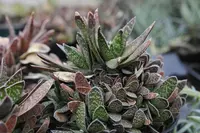
Mature plants develop smooth, glossy, strap-shaped leaves with small, whitish spots arranged in irregular bands, a pattern that helps distinguish it from more heavily rough-textured or tuberculate Gasteria species.

Arching coral-pink flowers

Its inflorescences carry pendent, tubular flowers that are pink to coral on the outside and paler toward the tips, adapted to bird and insect pollinators that can access nectar from the hanging blooms.

FAQs about Gasteria obliqua

This species is flexible. In most climates it performs best indoors or on sheltered patios, where light, temperature, and watering are controlled. Outdoors, it only suits frost-free, very dry regions with excellent drainage and protection from heavy rain.

Grow Healthy Plants with Botan Care

Keep your plants happy and healthy with plant identification, disease detection, and easy care guidance.

Botan plant care app — identify plants on mobile

Explore More Plants