Thelocactus leucacanthus Care

Thelocactus leucacanthus

About Thelocactus leucacanthus

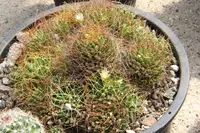
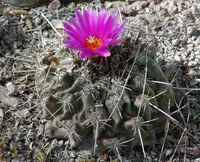
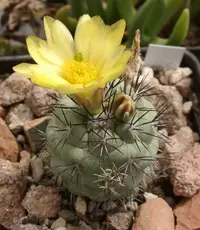
Thelocactus leucacanthus is a small, slow-growing desert cactus known for its rounded, ribbed body and striking white spines. It often stays compact, making it suitable for container growing and windowsills. Native to arid regions of central Mexico, it is adapted to intense sun, rocky soils, and long dry periods. This background explains its preference for bright light, very fast-draining mineral soil, and careful watering with thorough drying in between. Once its basic needs are understood, how to care for Thelocactus leucacanthus becomes straightforward for growers who can provide a sunny, dry spot and avoid overwatering.

Main Plant Requirements

Care Difficulty

Moderate Care

Light Preference

Full Sun

Water Requirements

Low Water

Temperature Preference

Tropical / Frost Sensitive

Hardiness Zone

10–11

Soil Texture

Sandy, Rocky, Loamy

Soil pH

Slightly acidic (6.5–7.0), Neutral (7.0)

Soil Drainage

Well-drained

Fertilization

Minimal (feed rarely)

Get Personalized Care Plan

Scan your plant to receive care tips personalized for your specific plant

Available on iOS and Android

How to Care for the Thelocactus leucacanthus

This desert cactus needs strong light that mimics open, arid habitats.

  • Provide 6–8 hours of direct sun daily, ideally with morning sun and light afternoon shade in hot, low-latitude climates.
  • In very intense summer sun, use 30–40% shade cloth or position where rock or sparse shrub cover gives brief midday relief to prevent epidermis scorch.
  • In cooler or cloudy regions, place Thelocactus leucacanthus in the brightest outdoor spot; slow, elongated growth indicates it is not receiving enough light.

This species is highly drought-tolerant and must dry well between waterings.

  • Allow the top 3–5 cm of gritty, fast-draining soil to dry completely before watering, then soak thoroughly so excess drains away.
  • In active growth (roughly spring to early fall), expect to water roughly every 10–21 days depending on heat, wind, and soil porosity, never on a fixed schedule.
  • In late fall and winter, keep almost dry; overwatering shows as yellowing, soft or translucent stem tissue, while deep wrinkling signals prolonged underwatering.

This cactus prefers warm, dry conditions with a distinct cool, dry rest period.

  • Aim for 70–90°F (21–32°C) during active growth; short heat spikes up to 100°F (38°C) are tolerated if soil is dry and airflow is good.
  • Protect from frost; growth stops below about 50°F (10°C), and tissue damage often occurs if exposed to prolonged temperatures near or below 32°F (0°C).
  • For winter dormancy, keep it cool and dry at 45–55°F (7–13°C); avoid repeated freeze–thaw cycles and sudden swings between hot days and cold nights.

This cactus prefers dry indoor air and does not need added humidity.

  • Target 20–40% humidity, similar to a typical heated home, to reduce rot risk.
  • Dry air is well tolerated; avoid placing the plant near humidifiers or steamy kitchens and bathrooms.
  • Humidity stress shows as black or soft stem spots; improve air movement and reduce ambient moisture if this appears.

Provide a very fast-draining, mineral-rich cactus substrate to prevent root rot.

  • Use a gritty mix of 30–40% cactus potting mix with 60–70% mineral material such as pumice, coarse sand, and small gravel.
  • Aim for slightly acidic to neutral pH around 6.0–7.2, avoiding strongly alkaline or salty substrates.
  • Increase aeration by using large, angular particles (not fine play sand) so water drains through in seconds, not minutes.
  • Avoid dense peat-heavy mixes, water-retentive compost, or pure garden soil, which stay wet too long and suffocate roots of Thelocactus leucacanthus.

This species is well suited to container culture when drainage and stability are managed carefully.

  • Choose a pot only 1–2 in wider than the root ball so the mix dries evenly between sparse waterings.
  • Select a heavy clay or ceramic pot for stability, as the spiny body can become top-heavy on narrow bases.
  • Ensure drainage holes are fully open and raise the pot on feet or stones so excess water escapes immediately.

This desert cactus benefits from light feeding during active growth but is sensitive to excess nutrients.

  • Use a low-strength balanced cactus fertilizer (around 10-10-10) diluted to 25–50% in spring and early summer for Thelocactus leucacanthus.
  • Apply liquid feed every 4–6 weeks during the growing season, always onto already moist soil, never completely dry roots.
  • Avoid compost-rich or organic-heavy mixes, which can hold too much moisture and increase rot risk.
  • Stop fertilizing in late summer and withhold feed in fall and winter when growth is dormant.

Pruning needs are minimal and mainly focused on plant health and safety rather than shaping.

  • Limit work on Thelocactus leucacanthus to removing dead, diseased, or rotting tissue with sharp, disinfected tools.
  • Cut away soft, dark, or foul-smelling spots back to firm, healthy tissue, then allow the wound to dry and callus.
  • Remove spent flowers only if they are molding; otherwise, leaving dry remains does not harm the plant.
  • Handle with thick gloves or tongs to avoid damage to stems and spines while pruning.

This species grows slowly and prefers infrequent repotting with minimal root disturbance.

  • Check for roots circling the pot drainage holes, compacted mix, or stalled growth as signs it needs a larger container.
  • Plan to repot every 3–5 years in late spring, when Thelocactus leucacanthus resumes active growth.
  • Choose a pot only 1–2 cm wider with very fast-draining cactus mix, and gently loosen outer roots without tearing.
  • After repotting, keep soil barely moist for 1–2 weeks and provide bright, indirect light to limit transplant shock.

Propagation is usually done from seed, as this cactus rarely offsets and vegetative methods are less reliable.

  • Sow fresh seeds in late spring or early summer on a sterile, very gritty cactus substrate.
  • Press seeds lightly into the surface without burying deeply, then mist and cover with a clear lid to maintain 60–70% humidity.
  • Provide bright, indirect light and stable warmth around 70–80°F to support even germination.
  • Vent containers regularly to prevent fungal growth, then gradually acclimate seedlings to drier air and stronger light.

Winter care focuses on keeping this cactus cold but dry to prevent rot and tissue damage.

  • Thelocactus leucacanthus tolerates brief dips near 25–28°F if perfectly dry, but prolonged freezing is risky.
  • In cold climates, overwinter containers indoors in a bright, cool room around 45–55°F.
  • Keep soil almost completely dry in winter, watering only enough to prevent severe shriveling.
  • If grown outdoors in mild regions, use a rain shelter or cold frame to keep the root zone dry during freezes.

Care Tips

Mineral mulch topdressing

Apply a 0.5–1 in layer of coarse gravel or pumice on the soil surface to keep the neck of the plant dry, reduce splash-borne rot, and keep spines clean for easier inspection.

Controlled pot sizing

Use a pot only 1–2 in wider than the plant body and repot infrequently, since slightly cramped roots help maintain compact growth and reduce the risk of excess moisture around the taproot.

Cold rest management

Provide a cool, bright, and very dry rest period in winter (ideally 45–55°F with no watering) to encourage stronger flowering and tighter spine formation in the following growing season.

Root health checks

During repotting, gently remove old mix, trim any black or mushy roots with sterile scissors, then let the plant dry for 3–5 days before replanting to prevent infection in fresh cuts.

Targeted pest monitoring

Inspect the base of spines, areoles, and the root zone for mealybugs or scale every few weeks, and isolate and treat early with a systemic insecticide or alcohol swabs to protect long-term health when growing Thelocactus leucacanthus.

Common Pests and Diseases

Red spider mites

This pest often appears in hot, dry indoor air and can form fine webbing between ribs and spines. Symptoms include dull, grayish skin and tiny yellow speckling on the cactus surface.

Solution

Increase air humidity locally around the plant without wetting the body, and rinse the cactus gently with a strong but controlled stream of lukewarm water to dislodge mites. If activity persists, apply a miticidal soap or neem oil spray to all surfaces, repeating every 7–10 days while keeping the plant in bright, indirect light during treatment.

Root mealybugs

These insects live hidden around the roots and the base of the stem, forming cottony white clusters in the potting mix. Symptoms include slow growth, unexplained wrinkling, and poor response even when watering is correct.

Solution

Remove the plant from the pot, wash off all soil, and inspect roots carefully, cutting away heavily infested or dead roots with sterile tools. Soak the root zone briefly in an insecticidal soap or systemic insecticide solution labeled for cacti, repot in fresh, very well-drained mineral mix, and isolate the plant to monitor for reinfestation as part of long-term Thelocactus leucacanthus care instructions.

Corky rust spots

This disease shows as small, rough, brown or rust-colored corky patches that develop on the ribs. Symptoms include hardened, slightly sunken lesions that may expand slowly but usually stay localized.

Solution

Improve air movement around the plant and avoid overhead watering so the stem surface dries quickly. Remove severely affected tissue only if soft or sunken, then keep the cactus in a bright, dry, well-ventilated position and consider a light application of a copper-based fungicide if new spots continue to appear.

Soft bacterial rot

This disease causes localized soft, wet, often foul-smelling areas on the stem, usually following mechanical damage or water sitting in the crown. Symptoms include rapid collapse of tissue and discoloration from green to dark brown or black.

Solution

Cut away all affected soft tissue with a sterile, sharp knife until only firm, healthy flesh remains, then dust the wound with sulfur powder or a dry copper-based fungicide. Keep the plant completely dry in a warm, airy place until a dry callus forms, then resume very light watering while ensuring no water collects in the crown.

Scale insects

These insects attach to ribs and around areoles as small, round or oval brown or gray bumps. Symptoms include sticky honeydew, sooty mold on spines, and gradual weakening of the plant.

Solution

Manually remove visible scale with a cotton swab dipped in isopropyl alcohol, paying attention to the base of spines and areoles. For persistent infestations, apply a systemic insecticide suitable for cacti and repeat treatments according to the label, keeping the plant isolated and monitoring new growth for clean, uninfested tissue.

Interesting Facts

Variable spine coloration

This species often shows striking variation in spine color on the same plant, from pure white to yellowish or brown-tipped, which helps it blend into different rocky backgrounds in its native habitat.

Limestone specialist

It typically grows on limestone hills and rocky outcrops in central Mexico, where its roots exploit cracks in calcareous rock, making it highly adapted to alkaline, mineral-rich substrates.

Showy spring flowers

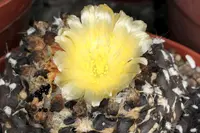
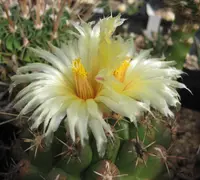
Mature plants produce large, funnel-shaped flowers in spring, usually white to pale pink with a contrasting darker throat, which are disproportionately large compared with the compact, globular stem.

FAQs about Thelocactus leucacanthus

This cactus usually flowers in late spring to summer, once temperatures are consistently warm. It can bloom more than once in a season, producing several flushes of funnel-shaped flowers if light, watering, and rest periods are appropriate.

Grow Healthy Plants with Botan Care

Keep your plants happy and healthy with plant identification, disease detection, and easy care guidance.

Botan plant care app — identify plants on mobile

Explore More Plants