mitre aloe Care (Aloe perfoliata)

Also known as: Rubble Aloe, Krans Aloe
mitre aloe

About mitre aloe

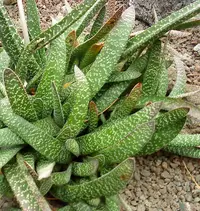
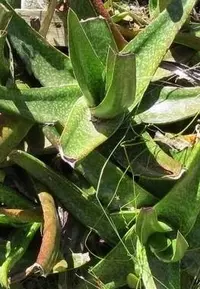
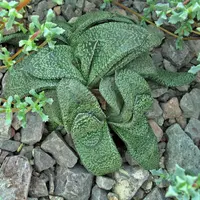
Mitre aloe, Aloe perfoliata, is a compact, clumping succulent from rocky slopes in South Africa’s Western Cape. It forms dense rosettes of blue-green, triangular leaves edged with firm teeth. Over time, the plant can trail or cascade, creating layered, architectural mounds that suit containers, rock gardens, and dry borders. In favorable conditions it produces tall stalks with tubular orange-red flowers that attract pollinators. This species is adapted to strong light, lean, well-drained soil, and infrequent but deep watering, which makes it relatively forgiving for beginners. Understanding how to care for mitre aloe mainly involves preventing overwatering and providing enough sun and airflow.

Main Plant Requirements

Care Difficulty

Easy Care

Light Preference

Full Sun

Water Requirements

Low Water

Temperature Preference

Warm Climate

Hardiness Zone

9–11

Soil Texture

Sandy, Loamy, Rocky

Soil pH

Slightly acidic (6.5–7.0), Neutral (7.0)

Soil Drainage

Well-drained

Fertilization

Minimal (feed rarely)

Get Personalized Care Plan

Scan your plant to receive care tips personalized for your specific plant

Available on iOS and Android

How to Care for the mitre aloe

This species thrives with strong light but needs some protection from harsh extremes, especially in hot climates.

  • Provide 6–8 hours of sun daily, ideally with morning sun and light afternoon shade; in very hot zones, use filtered light after 1–2 p.m.
  • Outdoors, place mitre aloe where it receives bright, open exposure but is shielded from highly reflective surfaces that intensify heat.
  • Watch leaves: pale, brown-tipped, or scorched patches suggest too much intense sun, while stretched, floppy growth indicates insufficient light.

Aloe perfoliata prefers thorough but infrequent watering, with time to dry between soakings.

  • Allow the top 3–5 cm of soil to dry before watering again; in hot, active growth this may mean roughly every 7–14 days, and much less in cool seasons.
  • Use gritty, fast-draining soil on a slope or raised area so water does not pool around the roots after rain or irrigation.
  • Monitor leaves as indicators: soft, yellowing, or translucent leaves suggest overwatering, while very thin, wrinkled leaves point to underwatering.

This aloe handles a fairly wide temperature range but is not reliably frost-hardy without protection.

  • Aim for 65–80°F (18–27°C) for strongest growth, with good air movement to reduce heat stress and fungal issues.
  • Protect plants when temperatures drop near 32°F (0°C); brief light frosts may be tolerated, but repeated or hard freezes can damage leaves and roots.
  • In hot regions, plants tolerate 90–100°F (32–38°C) if soil drains very well and they receive some afternoon shade during peak summer.

This species handles typical indoor humidity well and rarely needs adjustments.

  • Target 30–50% relative humidity, similar to most heated or air-conditioned homes.
  • Leaves staying firm and not wrinkling, yellowing, or soft at the base indicate humidity is adequate for mitre aloe.
  • If air is extremely dry and hot, slightly increase local humidity by grouping plants or placing the pot above, not in, a pebble tray with water.

Aloe perfoliata prefers a fast-draining, mineral-rich mix that dries quickly between waterings.

  • Use a cactus/succulent mix based on sandy or gritty material, not dense peat, to prevent water retention around the roots.
  • Improve drainage and aeration by blending the base mix with 30–50% coarse amendments such as perlite, pumice, or 3–5 mm horticultural grit.
  • Slightly acidic to neutral pH around 6.0–7.0 supports nutrient uptake without increasing salt stress.
  • Avoid compacted, clay-heavy, or moisture-retentive soils and any mix that stays wet longer than 3–4 days after thorough watering.

This species is well suited to container growing when stability and drainage are prioritized.

  • Choose a wide, relatively shallow pot so the spreading rosettes remain stable and the root zone dries at a predictable rate.
  • Select unglazed terracotta if possible, since its porous walls help moisture evaporate and reduce the risk of root rot.
  • Position the container where it cannot tip as the plant spreads and becomes heavier on one side, such as against a wall or within a heavy cachepot.

Aloe perfoliata uses nutrients efficiently and only needs light feeding in active growth.

  • Use a diluted balanced liquid fertilizer (for example 10-10-10 or 20-20-20 at 1/4–1/2 strength) in spring and summer.
  • Feed every 4–6 weeks while growth is active, skipping any application if the soil is still very rich.
  • Do not fertilize in winter or when growth has slowed, as roots are less active and salt buildup may occur.
  • For mitre aloe in very poor soil, a thin top-dressing of compost in spring can gently improve nutrition.

Pruning Aloe perfoliata focuses on hygiene and maintaining a tidy rosette form.

  • Best time is late winter to early spring, before strong new growth starts.
  • Remove dead, yellowing, shriveled, or damaged leaves at the base using clean, sharp scissors or pruners.
  • Cut spent flower stalks close to the rosette once blooms dry to direct energy back to foliage and new offsets.
  • Thin out badly crowded offsets only if they deform the clump or trap debris that could promote rot.

Container-grown Aloe perfoliata benefits from occasional repotting to refresh soil and manage offsets.

  • Look for roots circling the pot, emerging from drainage holes, or slowed growth as main signs it needs a larger container.
  • Plan to repot every 2–3 years in late winter or early spring, before the main growing season starts.
  • Gently loosen the root ball, remove old dry leaves and extra offsets, and replant in a slightly larger pot with gritty, fast-draining mix.
  • Minimize root stress by handling roots carefully, watering lightly once after repotting, then waiting until the mix nearly dries before the next watering.

Aloe perfoliata is most often propagated by separating offsets, with seeds used less frequently.

  • Divide offsets in late spring or early summer when plants are actively growing and pups have several leaves.
  • Lift the clump, gently twist or cut offsets away, keeping some roots attached if possible.
  • Allow any cut surfaces to dry and callus for 1–2 days before planting in a gritty, well-drained mix.
  • Keep newly potted offsets warm with bright, indirect light and only lightly moist soil until strong new roots form.

Aloe perfoliata dislikes hard frost and needs simple but consistent winter protection in cold climates.

  • In regions below 30°F, grow Aloe perfoliata in containers so it can be moved indoors before freezing nights.
  • Outdoors in mild areas, provide a gravel mulch around the base to keep the crown drier and insulate surface roots.
  • Indoors, place in the brightest possible spot, keep soil almost dry, and avoid cold drafts or unheated window sills.

Care Tips

Control clumping spread

Remove and replant outer offsets every 2–3 years so the clump does not shade its center, using a clean, sharp knife and letting cuts dry for 2–3 days before potting to prevent rot.

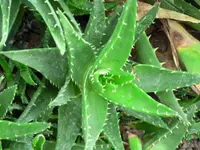
Encourage compact rosettes

Provide strong side light and rotate the pot 90° every 1–2 weeks so rosettes stay low, tight, and balanced instead of stretching toward a single light source.

Protect leaf teeth

Place the pot where leaves will not be brushed by passing people or pets, since repeated mechanical damage to the toothy leaf edges creates entry points for fungal problems.

Use mineral topdressing

Add a 0.5–1 cm layer of coarse grit or small gravel on the soil surface to keep leaf bases dry, reduce fungus gnat breeding, and stabilize shallow roots in tall containers when growing mitre aloe.

Practice dry-season rest

In winter or any cool, low-light period, reduce watering frequency and avoid repotting or heavy feeding so the plant can follow its natural semi-dormant cycle and maintain stronger root health.

Common Pests and Diseases

Aloe mite

This pest causes abnormal, lumpy galls or crest-like growths on leaves and along the leaf margins, often starting in tight leaf bases. Symptoms include distorted tissue that feels hard and cannot be rubbed off.

Solution

Remove and discard all affected leaves or entire rosettes well below the damaged area, using sterilized tools and disposing of material in the trash, not compost. Isolate the plant, improve air movement around it, and in severe or spreading cases use a targeted miticide labeled for eriophyid mites, following label directions carefully.

Aloe rust

This disease produces small yellow spots on the upper leaf surface that turn brown, while the underside develops orange to black, powdery spore pustules. Symptoms include weak, blemished leaves that may yellow and dry prematurely under humid or wet conditions.

Solution

Remove and discard all affected leaves and avoid overhead watering so foliage dries quickly. Increase spacing and airflow around plants and, if rust persists in damp climates, apply a sulfur- or copper-based fungicide labeled for aloe, rotating products to reduce resistance risk.

Leaf spot

This disease causes round to irregular brown spots, often with darker edges and a pale halo, usually starting on older leaves. Symptoms include spots that may merge into larger patches, leading to thinning, weakened leaf tissue.

Solution

Cut off badly marked leaves and dispose of them in the trash, then keep water off the foliage and avoid crowding plants. Improve light and airflow, water only at the base, and in persistent cases use a broad-spectrum fungicide suitable for succulents as part of general Aloe perfoliata care.

Mealybugs

These insects appear as white, cottony clusters in leaf axils and roots, sucking plant sap and excreting sticky honeydew. Symptoms include slowed growth, yellowing patches, and sooty black mold growing on the honeydew in severe cases.

Solution

Dab visible insects with cotton swabs dipped in 70% isopropyl alcohol and repeat weekly until gone, and repot if roots are infested, discarding old soil. Improve light and reduce overcrowding, then use an insecticidal soap or a systemic insecticide labeled for container succulents if the population is large.

Scale insects

These insects form small, rounded or oval brown bumps on leaves and stems that do not wipe off easily and may cluster along leaf edges. Symptoms include loss of vigor, yellowing areas around feeding sites, and in heavy infestations, leaf shriveling.

Solution

Gently scrape or rub off individual scales with a fingernail or soft brush and alcohol, focusing on leaf margins and undersides. For ongoing problems, apply horticultural oil or insecticidal soap thoroughly to all leaf surfaces, repeating according to label directions and maintaining bright, dry conditions to discourage reinfestation.

Interesting Facts

Natural cliff specialist

In its native South African range, this species often grows on steep sandstone or granite slopes and rocky ledges, where its sprawling stems help anchor it against gravity and erosion.

Clumping, not solitary

Unlike many aloes that stay as single rosettes, it forms sprawling clumps of many rosettes connected by creeping stems, creating dense mats that can cover exposed rock surfaces.

Flower timing with seasons

In habitat, its tall, branched inflorescences with orange-red tubular flowers typically appear in winter to early spring, aligning with peak activity of its bird pollinators such as sunbirds in the Western Cape.

Botan icon

Did you know?

Aloe perfoliata was long confused with several related cliff-dwelling aloes; modern botanists had to restrict the name to plants from the Western Cape with specific cliff-dwelling habits and clumping morphology, which led to older literature and horticulture using the name for different species that are now recognized separately.

FAQs about mitre aloe

Leaf tips often brown from underwatering, intense sun, or low humidity, while widespread browning with soft tissue suggests root rot from excess moisture. Check roots, adjust watering, and remove only fully dead tissue.

Grow Healthy Plants with Botan Care

Keep your plants happy and healthy with plant identification, disease detection, and easy care guidance.

Botan plant care app — identify plants on mobile

Explore More Plants