


Mounting strategy
Mount plants on cork or hardwood with a thin pad of long-fiber sphagnum only under the rhizome, leaving roots exposed so they dry quickly and receive maximum air movement.

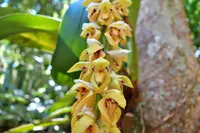
Bulbophyllum occlusum is an epiphytic orchid, meaning it grows on trees rather than in soil, using its roots mainly for anchoring. It forms compact clumps of pseudobulbs with narrow leaves and produces unusual, often intricate flowers typical of the Bulbophyllum group.
This species is native to warm, humid forests in Southeast Asia, where it experiences filtered light and constant air movement. Its need for high humidity, good airflow, and stable warmth makes it more challenging than common orchids. For those who want to learn how to care for Bulbophyllum occlusum, it suits growers who can offer orchid-specific conditions rather than a standard windowsill setup.

Care Difficulty
Hard Care

Light Preference
Bright Indirect Light

Water Requirements
Keep Soil Moist

Temperature Preference
Tropical / Frost Sensitive

Hardiness Zone
Unknown

Soil Texture
Peaty, Organic-rich

Soil pH
Acidic (5.5–6.5)

Soil Drainage
Moist but well-drained

Fertilization
Moderate (every 2–4 weeks)
Scan your plant to receive care tips personalized for your specific plant
Available on iOS and Android
This epiphytic orchid prefers bright, filtered light that mimics dappled forest canopy conditions.
This orchid requires consistently moist but airy conditions around its roots, not waterlogged media.
This species prefers intermediate to warm temperatures with minimal short-term fluctuations.
This orchid needs consistently high humidity to grow well indoors or in a greenhouse.
Bulbophyllum occlusum prefers a very open, airy, moisture-retentive epiphytic mix rather than dense potting soil.
This species is well suited to container culture, especially shallow orchid pots or mounted baskets.
This epiphytic orchid benefits from light, consistent feeding during active growth for balanced Bulbophyllum occlusum care.
Pruning needs are minimal and focus on hygiene and maintaining plant health for Bulbophyllum occlusum.
This orchid prefers to stay slightly crowded and is repotted infrequently to avoid stress.
Division is the standard method for multiplying this species, while seed propagation is specialized and rarely done at home.
This warmth-loving orchid is not frost tolerant and needs indoor or greenhouse conditions in cold climates.

Plant Health Check
Not sure what's wrong with your plant? Check your plant's health inside the app.
This species has been documented from low to mid-elevation forests in parts of Southeast Asia, where it grows as an epiphyte on tree trunks and branches rather than in soil.
It forms small, tightly spaced pseudobulbs (storage organs) with single leaves, creating compact mats on bark that help the plant cope with alternating wet and dry periods in its native habitat.
Flowers of this species, like many in the genus, are thought to attract specific fly pollinators through a combination of color, form, and scent, although detailed pollination biology for this exact species remains only sparsely documented in the literature.
Lack of flowering often relates to insufficient humidity, stale air, or inadequate rest after a growth flush. Provide strong air movement, consistently moist (not soggy) roots, and a slight drier, cooler rest to encourage spike formation.
Keep your plants happy and healthy with plant identification, disease detection, and easy care guidance.

common motherwort
Leonurus cardiaca
Philodendron bipennifolium
Philodendron bipennifolium
Vanda coerulescens
Vanda coerulescens
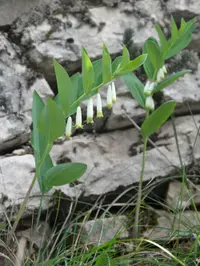
angular Solomon's seal
Polygonatum odoratum
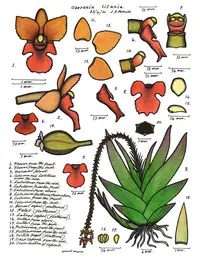
Soldier's crest orchid
Oberonia titania
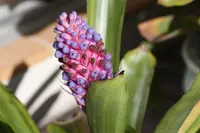
matchstick airplant
Aechmea cylindrata
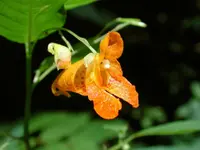
orange balsam
Impatiens capensis
Buchanan's pagodaflower
Clerodendrum buchananii