Knobcone Pine Care (Pinus attenuata)

Also known as: Narrowcone Pine
Knobcone Pine

About Knobcone Pine

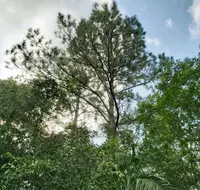
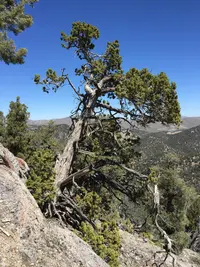
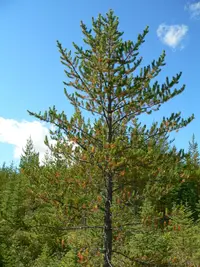
Knobcone pine, Pinus attenuata, is a small to medium coniferous tree native to dry, fire-prone slopes of California and southern Oregon. It naturally forms open, irregular crowns with sparse branches and narrow needles.

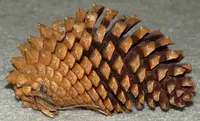
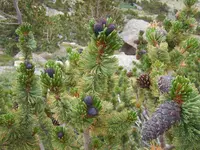
The species is best known for its hard, knobby cones that often remain sealed on the branches until exposed to intense heat from wildfire. This adaptation makes it resilient in its native habitat but less common in cultivation.

In gardens, it suits well-drained, sandy or rocky soils and full sun, and it tolerates drought once established. Understanding this tough, fire-adapted background helps guide how to care for Knobcone Pine in low-maintenance, dry landscapes.


Main Plant Requirements

Care Difficulty

Moderate Care

Light Preference

Full Sun

Water Requirements

Low Water

Temperature Preference

Warm Climate

Hardiness Zone

7–10

Soil Texture

Sandy, Loamy, Rocky

Soil pH

Acidic (5.5–6.5), Slightly acidic (6.5–7.0)

Soil Drainage

Well-drained

Fertilization

Minimal (feed rarely)

Get Personalized Care Plan

Scan your plant to receive care tips personalized for your specific plant

Available on iOS and Android

How to Care for the Knobcone Pine

This species is a sun-demanding conifer that performs best in open, exposed sites.

  • Provide full sun for 6–8+ hours daily; Knobcone Pine develops denser growth and stronger trunks with unobstructed light.
  • Accepts light partial shade, especially in the afternoon, but prolonged shade causes sparse branching, thin crowns, and reduced vigor.
  • In hot inland summers, young trees benefit from slight afternoon shade to reduce scorch, while older trees tolerate intense sun if soil is not extremely dry.

Pinus attenuata is drought-tolerant once established and prefers infrequent, deep watering.

  • During the first 2–3 years, water deeply when the top 5–8 cm of soil are dry, then allow the soil to drain fully before the next irrigation.
  • Mature trees in the ground usually rely on rainfall; supplement only after prolonged hot, dry periods when needles dull, curl slightly, or lower branches begin to shed.
  • Ensure sharply drained, sandy or rocky soil; persistent wetness, sour odor, or yellowing, limp needles indicate overwatering and possible root decline.

This pine is adapted to warm, dry summers and cool to cold winters in outdoor landscapes.

  • Optimal active growth occurs around 60–80°F (16–27°C), with good performance in typical lowland to foothill climates.
  • Trees tolerate heat up to about 95–100°F (35–38°C) if soil moisture is not extremely low, though prolonged hotter periods can slow growth and increase stress.
  • Dormant trees withstand short drops near 10–15°F (-12 to -9°C); younger plants are more sensitive to sudden hard frost and benefit from some wind protection.

This pine tolerates a wide humidity range and rarely needs special humidity management in typical outdoor conditions.

  • Target 30–60% humidity, which is common in most temperate outdoor climates where this species is grown.
  • Dry air is usually tolerated, but prolonged hot, very dry winds can desiccate new needles and tips.
  • If foliage browns from the tips inward and needles drop unusually fast, provide windbreaks or very light misting during extreme dry spells for Knobcone Pine.

Pinus attenuata prefers very well-drained, lean, sandy soil that mimics its native, nutrient-poor slopes.

  • Use a sandy, gritty mix such as 50% coarse sand, 30% loam, and 20% fine bark to keep roots aerated.
  • Aim for slightly acidic to neutral pH around 5.5–7.0, avoiding strongly alkaline conditions that limit nutrient uptake.
  • Avoid compacted, clay-heavy, or waterlogged soil, which promotes root rot and weak, shallow rooting.
  • Improve drainage and structure by raising planting areas and incorporating crushed gravel or pumice in heavier native soils.

This species can be grown in containers only short term, mainly as a juvenile or for training purposes.

  • Choose a deep, heavy pot to counter the top-heavy growth and prevent the container from tipping in wind.
  • Use an extra-fast-draining mix with significant coarse sand or grit so water moves quickly through the tall root zone.
  • Place the container on pot feet or bricks so drainage holes stay clear and runoff leaves the pot base freely to avoid soggy lower roots.

This nutrient-efficient conifer usually needs minimal feeding in native-type soils, so use fertilizer sparingly for Knobcone Pine in cultivation.

  • Apply a light dose of balanced slow-release NPK (such as 10-10-10) once in early spring if growth is weak or soil is poor.
  • Avoid high-nitrogen lawn fertilizers; they can cause overly lush, weak growth and reduced stress tolerance.
  • Use compost as a thin surface mulch rather than mixing heavily into the root zone, to avoid root disturbance.
  • Do not feed in late fall or winter, and always apply at 50–75% of label strength for trees in containers.

Pruning for Pinus attenuata focuses on safety and health rather than shaping it like a hedge.

  • Carry out any structural pruning in late winter to very early spring, before new growth starts.
  • Remove dead, broken, crossing, or pest-damaged branches with clean, sharp bypass pruners or a pruning saw.
  • Limit live-wood removal to small branches to maintain natural form and avoid large wounds that invite decay.
  • Do not cut back into bare older wood, since new shoots form only from areas with existing needles.

This species is usually grown in the ground, but young plants can be shifted from containers with care to avoid root shock.

  • Transplant in late winter or very early spring while the tree is still dormant and soil is workable.
  • Look for roots circling the pot, slow growth, or quick drying soil as signs a container plant needs a larger space.
  • Handle the root ball gently; loosen only lightly, then set at the same depth in a well-drained, sandy soil mixture.
  • Water thoroughly after planting, then keep soil evenly moist but not saturated for the first growing season to support establishment.

Reproduction of Pinus attenuata is typically done by seed rather than vegetative methods.

  • Collect mature cones and extract seeds, then stratify them in moist medium at 34–41°F for about 6–8 weeks.
  • Sow stratified seeds in late winter or early spring in a sharply drained, sandy mix under bright light.
  • Maintain cool to mild temperatures and even moisture, not waterlogging, to support steady germination.
  • Transplant seedlings carefully once they have several true needles, disturbing roots as little as possible.

This pine is naturally cold hardy in suitable climates and generally needs little specific winter care once established.

  • Mulch the root zone with 5–8 cm of bark or pine needles in fall, keeping mulch slightly away from the trunk.
  • For young or container plants in colder areas, shield from drying winds using a windbreak fabric or fence.
  • Move containers to a protected, unheated but frost-moderated location, ensuring the soil does not stay waterlogged.

Care Tips

Fire-adapted regeneration

In long-term management, plan for natural cone opening after wildfire or use controlled high-heat treatment on collected cones if you need seed for restoration projects in areas where growing Knobcone Pine is ecologically appropriate.

Early wind training

In exposed sites, lightly stake young trees only for the first 1–2 years, allowing some trunk movement so the stem wood strengthens rather than becoming dependent on permanent supports.

Root competition control

Keep a grass- and weed-free ring at least 45–60 cm around the trunk to reduce competition for water and nutrients and to lower the risk of mechanical damage from mowers and trimmers.

Low-branch management

Gradually remove only the lowest dead or severely shaded branches over several years to improve air flow and access, avoiding heavy lifting of the crown that can destabilize the tree on shallow soils.

Soil disturbance caution

Avoid deep digging, trenching, or heavy machinery use within the drip line so the shallow, wide-spreading roots are not damaged, which can lead to instability and increased drought stress.

Common Pests and Diseases

Pine pitch canker

This disease causes sunken, resin-soaked cankers on branches and stems, leading to dieback and thinning crowns. Symptoms include excessive pitch flow, wilted shoots, and often death of the affected branch tip.

Solution

Prune and destroy infected branches during dry weather, cutting 20–30 cm below visible cankers and disinfecting tools between cuts. Avoid wounding trunks and branches, improve tree vigor through proper watering and mulching, and in mixed plantings remove severely affected trees to reduce local inoculum of Fusarium circinatum.

Bark beetles

These insects bore into the trunk and larger branches, creating galleries under the bark that disrupt water flow. Symptoms include fading foliage, pitch tubes on the bark, and dry boring dust at the base of the tree.

Solution

Promptly remove and destroy heavily infested or dead trees to prevent beetle population buildup, and avoid leaving fresh pine slash or firewood nearby. Maintain tree health with adequate but not excessive water, and in high-risk areas consult a local arborist or extension service about timing and use of pheromone traps or preventive trunk sprays for vulnerable stands.

Pine needle scale

This pest appears as small white, oyster-shaped specks on needles, causing yellowing, reduced vigor, and premature needle drop when populations are high. This pest is more common on stressed trees in dry, exposed sites.

Solution

Prune and dispose of heavily infested branches and lightly hose needles to dislodge crawlers during the mobile stage in late spring. For persistent problems, apply a horticultural oil spray thoroughly to the needles when crawlers are active, and improve growing conditions by reducing drought stress and soil compaction.

Dwarf mistletoe

This parasitic plant forms small, shoot-like growths on branches and causes swollen, distorted stems, thin crowns, and progressive dieback. Symptoms include witches’ brooms (dense, deformed shoot clusters) and reduced growth over several years.

Solution

Prune out infected branches at the branch collar and remove severely infested trees to reduce seed spread, disposing of material away from susceptible pines. In mixed or larger plantings, maintain wider spacing and favor less-susceptible species nearby, and schedule periodic inspections to catch new infections early as part of long-term Pinus attenuata care.

Fusiform rust

This disease produces spindle-shaped galls on stems and branches that can girdle young trees and weaken older ones. Symptoms include swollen, elongated cankers and orange spore masses on the bark during wet, mild seasons.

Solution

Prune out galled branches at least 20–30 cm below the gall during dry weather and destroy the removed material. In landscapes, avoid planting highly susceptible alternate hosts such as certain oaks close to young pines, and prioritize overall tree vigor through proper site selection, spacing, and irrigation management.

Interesting Facts

Fire-locked cones

This species produces strongly serotinous cones whose scales remain sealed with resin for many years and only open widely after the heat of a wildfire softens the resin.

Dense post-fire stands

After fire, large numbers of seeds released at once often create extremely dense, even-aged stands, which can be so crowded that individual trees remain narrow and spindly.

Restricted Pacific range

Pinus attenuata occurs naturally only in disjunct populations along the Pacific coast ranges of California and southwestern Oregon, typically on dry, nutrient-poor slopes and volcanic or granitic soils.

Botan icon

Did you know?

Knobcone pine can begin setting and retaining large, persistent cones at a young age, and those cones may remain attached and viable on the trunk and branches for decades without releasing their seeds until a fire passes through the stand.

FAQs about Knobcone Pine

Growth is usually moderate. Young trees may add 30–60 cm per year under good conditions, slowing as they age. Poor soil, drought, or competition reduce growth. Fire-adapted ecology and site choice matter more than intensive fertilizing.

Grow Healthy Plants with Botan Care

Keep your plants happy and healthy with plant identification, disease detection, and easy care guidance.

Botan plant care app — identify plants on mobile

Explore More Plants