Wind-harden young trees
Stake only very young trees in extremely windy sites, then gradually loosen and remove ties over 1–2 years so the trunk can flex and develop strong taper suited to exposed ridges.


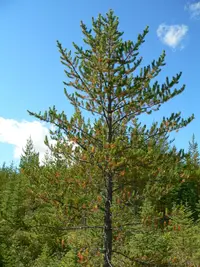
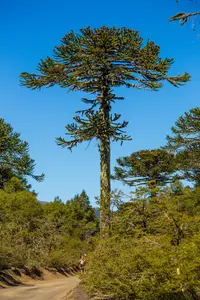
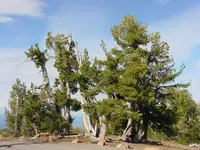
Foxtail pine, Pinus balfouriana, is a slow-growing, long-lived conifer native to high mountains of California. It forms a compact, irregular crown with dense, tufted needles that resemble a fox’s tail. Bark stays relatively thin and scaly, and older trees often develop twisted, sculptural trunks shaped by wind and snow.
In gardens, it is valued for its resilience, distinctive texture, and strong tolerance of cold and exposure. Growth is slow, so it usually remains manageable for many years in cultivation.
This species prefers full sun, well-drained, rocky or sandy soils, and relatively low to moderate moisture, which can make care for Foxtail Pine more straightforward in suitable climates.

Care Difficulty
Hard Care

Light Preference
Full Sun

Water Requirements
Low Water

Temperature Preference
Cold Hardy

Hardiness Zone
4–7

Soil Texture
Sandy, Loamy, Rocky

Soil pH
Strongly acidic (4.5–5.5), Acidic (5.5–6.5)

Soil Drainage
Well-drained

Fertilization
Minimal (feed rarely)
Scan your plant to receive care tips personalized for your specific plant
Available on iOS and Android
This high-elevation conifer thrives in strong sun but adapts to some shade in cooler regions.
This species prefers dry, well-drained conditions once established and is highly drought tolerant.
This mountain pine is adapted to cold, snowy climates and relatively cool summers.
This high-elevation conifer prefers cool, dry air and rarely needs humidity adjustment in cultivation.
Pinus balfouriana grows best in lean, sharply drained, mineral-based soil that mimics its native mountain scree.
This species can be grown in containers for many years if provided with exceptional drainage and root space.
This slow-growing conifer from nutrient-poor mountain soils needs only minimal feeding in cultivation.
Pruning Pinus balfouriana is usually limited to health and safety rather than shaping.
This high-elevation pine is best planted directly in the ground and moved as little as possible.
Propagation of Pinus balfouriana is almost always done from seed and is slow and specialized.
This species is very cold hardy and usually needs little winter care in the ground.

Plant Health Check
Not sure what's wrong with your plant? Check your plant's health inside the app.
This species is native only to a few high-elevation mountain ranges in California, mainly the southern Klamath Mountains and the southern Sierra Nevada, where it forms small, scattered populations instead of continuous forests.
Foxtail pine survives on dry, rocky slopes with shallow soils by developing a deep root system and tough, small needles that reduce water loss, allowing it to persist where many other conifers cannot.
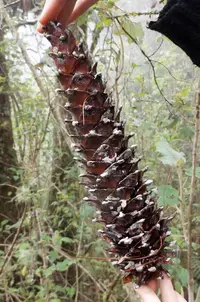
Its cones are relatively small with thick, woody scales, and mature trees often show reddish-brown, blocky bark plates that contrast with the smooth, gray bark seen on many younger individuals.

Individual foxtail pines have been reliably dated to well over 2,000 years old using tree-ring analysis, placing this species among the longest-lived trees on Earth.
This species grows very slowly, typically adding only 5–15 cm per year under good conditions. Growth is even slower in harsh, dry, or exposed sites, so patience is essential when growing Foxtail Pine.
Keep your plants happy and healthy with plant identification, disease detection, and easy care guidance.