Willow-leaved Pear Care (Pyrus salicifolia)

Willow-leaved Pear

About Willow-leaved Pear

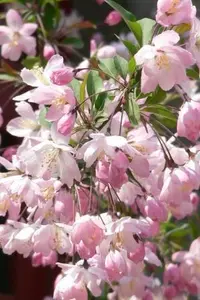
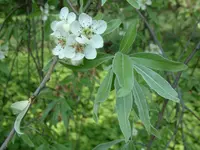
Pyrus salicifolia, commonly called willow-leaved pear, is a small deciduous tree grown mainly for its fine, silvery foliage rather than for eating-quality fruit. It forms a rounded to slightly weeping crown, with narrow, willow-like leaves that give a light, airy texture in the landscape.

This species comes from dry, rocky regions of southeast Europe and western Asia, which explains its good drought tolerance and preference for well-drained soil. It suits sunny, open positions and usually handles urban conditions and moderate pruning well.

For gardeners learning how to care for Willow-leaved Pear, the main considerations are providing enough light, avoiding waterlogged sites, and allowing space for its mature shape.

Main Plant Requirements

Care Difficulty

Easy Care

Light Preference

Full Sun

Water Requirements

Low Water

Temperature Preference

Cold Hardy

Hardiness Zone

4–7

Soil Texture

Sandy, Loamy, Clay

Soil pH

Slightly acidic (6.5–7.0), Slightly alkaline (7.0–7.5)

Soil Drainage

Well-drained

Fertilization

Minimal (feed rarely)

Get Personalized Care Plan

Scan your plant to receive care tips personalized for your specific plant

Available on iOS and Android

How to Care for the Willow-leaved Pear

This small ornamental pear prefers full sun for strongest growth and silvery foliage.

  • Provide 6–8 hours of direct sun daily; open, unshaded positions suit Willow-leaved Pear best in most gardens.
  • Accepts light or dappled shade for part of the day, but dense shade leads to sparse branching, weak flowering, and reduced fruit set.
  • In hot summer regions, prioritize morning sun with light afternoon shade to limit leaf scorch, especially on young trees and newly planted specimens.

This species prefers evenly moist but not saturated soil once established.

  • Allow the top 3–5 cm of soil to dry before deep watering, then soak the root zone so moisture reaches 20–30 cm depth.
  • Reduce watering frequency in autumn and winter, focusing only on preventing complete soil dryness during extended dry spells.
  • Watch for yellowing, soft leaves and persistent wet soil as signs of overwatering, while curled, brittle leaves and dry, cracked soil signal underwatering for Pyrus salicifolia.

This hardy deciduous tree tolerates a wide range of outdoor temperatures in temperate climates.

  • Optimal growing temperatures are around 60–80°F (16–27°C) during the main growing season for steady shoot and root development.
  • Mature trees tolerate winter lows down to about 0°F (−18°C) once established, though young plants benefit from protection in severe cold snaps.
  • In hot climates, temperatures above 90°F (32°C) are tolerated if soil moisture is maintained and roots are mulched to reduce heat stress and evaporation.

This species tolerates a wide humidity range, so indoor air is usually adequate.

This species prefers moderately fertile, well-drained mineral soil.

  • Use a sandy or gravelly loam with low to moderate organic matter to mimic its naturally dry habitat.
  • Aim for slightly alkaline to neutral pH around 7.0–8.0, avoiding very acidic substrates that limit nutrient availability.
  • In heavier ground, incorporate coarse grit or sharp sand at 30–40% by volume to improve drainage and root aeration.
  • Avoid compacted, waterlogged, or peat-heavy mixes, which promote root rot and reduce the resilience of Pyrus salicifolia.

This species can be grown in containers for many years if the pot is chosen carefully for stability and drainage.

  • Select a deep, heavy container to counterbalance its upright, branching crown and reduce wind tipping risk on exposed sites.
  • Use a free-draining mineral-based mix with added grit so water moves quickly away from the root zone after irrigation or rain.
  • Raise the pot slightly on feet or blocks to keep drainage holes clear and prevent saturated conditions at the base after heavy rain.

This drought-tolerant tree needs minimal feeding in average garden soil, but light fertilization improves growth in very poor ground when caring for Willow-leaved Pear.

  • Apply a balanced slow-release fertilizer (for example 8-8-8 or 10-10-10) once in early spring if growth is weak or leaves are pale.
  • Use a thin layer of compost around the root zone instead of heavy chemical feeding on established landscape trees.
  • Keep fertilizer away from the trunk flare, and water it in thoroughly to prevent root burn.
  • Avoid feeding in late summer or winter, and never exceed half the manufacturer’s recommended rate for trees.

Pyrus salicifolia benefits from light structural pruning to maintain a strong framework and clear its elegant, willow-like shape.

  • Carry out pruning in late winter or very early spring before new growth begins.
  • Remove dead, diseased, crossing, or inward-growing branches first to improve airflow and light penetration.
  • Use clean, sharp bypass pruners or a pruning saw, making cuts just outside the branch collar.
  • Shorten overly long shoots selectively to refine shape, avoiding heavy heading cuts that trigger dense, weak regrowth.

This species is usually grown in the ground, so focus on careful transplanting rather than frequent repotting.

  • Transplant young trees in late fall or early spring when soil is workable and the plant is dormant, reducing stress.
  • Look for signs such as circling roots in a container, poor vigor, or frequent wilting as indicators that a larger site is needed.
  • Dig a wide planting hole, gently tease out pot-bound roots, and set the tree at the same soil level as before.
  • Water deeply after planting, then keep soil evenly moist (not saturated) for the first season to support root establishment.

Pyrus salicifolia is usually propagated by seed or grafting, so home propagation tends to be slow and somewhat technical.

  • Sow fresh seed in fall outdoors or provide 2–3 months of cold stratification at 35–40°F before spring sowing.
  • Use a deep, free-draining seed mix, keep it just moist, and expect uneven germination over several weeks to months.
  • Take semi-hardwood cuttings in midsummer, use rooting hormone, and place in a warm, bright, humid environment with bottom heat if possible.
  • Grafted plants on compatible pear rootstocks usually give more predictable growth and ornamental quality than seed-grown trees.

This hardy deciduous tree generally needs little special winter care in most temperate climates.

  • Mature trees tolerate typical frost in USDA zones 5–8 without additional covering.
  • Apply a 5–8 cm mulch layer around the root zone in late fall, keeping it a few cm away from the trunk.
  • For container-grown plants, move pots to a sheltered, unheated but frost-free or slightly protected spot to reduce root freeze risk.

Care Tips

Formative framework pruning

During the first 3–5 years, select 3–5 well-spaced main branches and remove steep, crossing, or weak shoots in late winter to build a sturdy, open framework that resists wind and supports the tree’s natural weeping habit.

Wind and stake management

On exposed sites, install 2 low stakes with a flexible tie set just above the lowest branches and remove the stakes after 2–3 years once the root system has anchored, to prevent rocking and root damage.

Mulch for root protection

Apply a 5–8 cm layer of coarse organic mulch in a wide ring around the tree, keeping it 5–10 cm away from the trunk, to stabilize soil moisture, protect surface roots, and reduce competition from turf.

Targeted pest scouting

From spring to midsummer, check the undersides of leaves and young shoots every 2–3 weeks for aphids, psyllids, or pear leaf blister mite and treat early with a focused method such as a strong water spray or a suitable horticultural oil if populations begin to build.

Canopy lift for access

Once the tree is established, gradually remove or shorten the lowest drooping branches in late winter to raise the canopy, which improves air movement, provides better light penetration, and makes caring for Willow-leaved Pear easier at ground level.

Common Pests and Diseases

Pear rust

This disease causes bright orange leaf spots with powdery spore pustules and can lead to early leaf drop on willow-leaved pear. Symptoms include worse infections where junipers grow nearby, since the fungus alternates between pear and juniper hosts.

Solution

Remove and dispose of infected leaves during the season and after leaf fall, and avoid planting susceptible junipers close to the tree. Improve air circulation through light pruning of crowded branches, and in areas with a history of rust use a labeled copper or myclobutanil fungicide at bud break and again as new leaves expand, following local regulations and label instructions.

Fire blight

This disease causes blackened, wilted shoots that look scorched, with a characteristic shepherd’s crook at the tip, and can kill young branches on susceptible Pyrus salicifolia. Bacterial ooze may appear on cankers in warm, wet conditions.

Solution

Prune out infected shoots at least 20–30 cm below visible damage during dry weather, disinfecting tools between each cut with alcohol or a 10% bleach solution. Avoid high-nitrogen fertilizer that encourages soft, susceptible growth, and in high-risk areas consider a preventative bloom-time spray with a labeled copper or biological product according to local guidelines for Pyrus salicifolia care.

Pear leaf blister mite

This pest creates small raised blisters on leaves that turn from pale green to reddish-brown, which can distort foliage but rarely kill the tree. These mites live inside leaf tissue, so they are not visible to the naked eye.

Solution

Rake and discard fallen leaves to reduce overwintering mites and limit reinfestation. For recurring problems, apply a dormant-season horticultural oil to twigs and branches before bud break to smother overwintering stages, following label rates carefully.

Pear psylla

This pest causes sticky honeydew deposits, leaf yellowing, and reduced vigor, and heavy infestations can lead to sooty mold growth on leaves and fruit. These insects feed on sap and are often found on the undersides of young leaves and shoots.

Solution

Encourage natural predators like lady beetles by minimizing broad-spectrum insecticides, and wash foliage with a strong but controlled stream of water to remove nymphs and honeydew. If populations remain high, use a targeted insecticidal soap or horticultural oil applied thoroughly to leaf undersides, repeating as needed according to the product label.

Pear scab

This disease produces dark, velvety spots on leaves and young fruit, which can crack, deform, or drop early in wet springs. Symptoms include olive-brown lesions that may merge and cause larger dead patches on foliage.

Solution

Collect and dispose of fallen leaves and affected fruit to lower the amount of fungal spores that survive from year to year, and prune to open the canopy and speed drying after rain. In regions with frequent spring rains, consider a preventative fungicide program using labeled products such as sulfur or captan starting at green bud and repeating through early fruit development, within local regulations and label directions.

Interesting Facts

Naturally silvery foliage

This species has narrow, willow-like leaves covered in fine hairs that give the tree a distinct silvery to gray appearance, especially noticeable in dry, bright conditions. The leaf hairs help reduce water loss and protect the tissue from strong sunlight.

Dry-site specialist

It is naturally adapted to dry, rocky slopes in parts of southeastern Europe and western Asia, where soils are often shallow and low in nutrients. This drought tolerance makes it valued in horticulture for poor or alkaline soils where many other fruit trees fail.

Rootstock and ornamental use

Although it produces small, hard, generally inedible fruits, this pear is widely used as an ornamental tree for its form and foliage. In some regions it also serves as a hardy rootstock for grafting related ornamental pears, taking advantage of its strong, tolerant root system.

Botan icon

Did you know?

Historical records and herbarium specimens indicate that this species has been cultivated in European gardens since at least the 18th–19th centuries, primarily for its unusual willow-like appearance rather than for fruit production, which is rare among pear species that are usually grown for edible crops.

FAQs about Willow-leaved Pear

Yellowing foliage often results from waterlogging, poor drainage, or nutrient deficiency, especially lack of iron or nitrogen. Check soil moisture, improve drainage, and consider a balanced fertilizer or chelated iron if soil tests indicate deficiency.

Grow Healthy Plants with Botan Care

Keep your plants happy and healthy with plant identification, disease detection, and easy care guidance.

Botan plant care app — identify plants on mobile

Explore More Plants