Use mycorrhizal inoculant
At planting time, dust the root zone with a native-plant mycorrhizal inoculant to improve drought resilience and nutrient uptake, which is especially useful in low-fertility sandy soils.


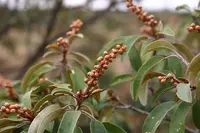
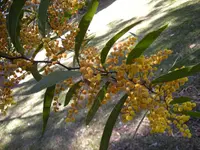
Red-eyed wattle (Acacia cyclops) is a coastal shrub or small tree from southwestern Australia, often used for stabilizing sandy soils and coastal plantings. It forms a dense, bushy habit with narrow, curved phyllodes (leaf-like structures) and small golden flower balls followed by bright red seed arils that give the plant its common name.
This species is adapted to poor, sandy, well-drained soils and windy, salty conditions, which makes it resilient but also somewhat particular about drainage. In mild climates, it can be grown as an ornamental screen or windbreak. Those who want to care for Red-eyed Wattle should note its preference for full sun and relatively dry, low-fertility conditions compared to many common garden shrubs.

Care Difficulty
Easy Care

Light Preference
Full Sun

Water Requirements
Low Water

Temperature Preference
Warm Climate

Hardiness Zone
9–11

Soil Texture
Sandy, Loamy, Rocky

Soil pH
Slightly acidic (6.5–7.0), Slightly alkaline (7.0–7.5)

Soil Drainage
Well-drained

Fertilization
Minimal (feed rarely)
Scan your plant to receive care tips personalized for your specific plant
Available on iOS and Android
This coastal shrub prefers bright, open conditions similar to its native habitat.
This drought-tolerant shrub prefers infrequent, deep watering once established.
This species thrives in mild, Mediterranean-type climates with warm, dry summers and cool, frost-light winters.
This coastal shrub handles low indoor humidity well and rarely needs special humidification.
Acacia cyclops prefers lean, sandy, sharply draining soil that mimics its native coastal habitats.
This species can be grown in containers for a time, especially in mild climates or for young plants.
Acacia cyclops usually thrives in poor soils and needs minimal feeding, but light fertilization can support container or landscape plants in lean sites.
Pruning Acacia cyclops is mainly for maintaining structure and removing problem wood rather than heavy reshaping.
This species is more often planted in the ground than grown long term in containers, so focus on careful transplanting of young Acacia cyclops plants.
Acacia cyclops is most commonly propagated from seed, with some growers also using semi-hardwood cuttings.
Mature Acacia cyclops tolerates light frosts but benefits from some winter attention in colder regions.

Plant Health Check
Not sure what's wrong with your plant? Check your plant's health inside the app.
The common name red-eyed wattle comes from the bright red, fleshy arils that surround its seeds and strongly attract birds, especially in its native southwestern Western Australia. These arils are rich in lipids, encouraging birds to disperse the seeds away from the parent plant.
This species naturally occurs on coastal dunes and limestone-based sands, where it helps stabilize shifting soils with an extensive root system. It tolerates salt-laden winds and poor, alkaline substrates better than many other wattles, making it a key structural shrub in its native coastal scrub.
Like many members of the Fabaceae family, this plant forms symbiotic nodules on its roots that house nitrogen-fixing bacteria. These bacteria convert atmospheric nitrogen into forms usable by the plant and surrounding vegetation, gradually improving nutrient-poor sandy soils.

Acacia cyclops has been widely introduced to South Africa for dune stabilization but is now considered invasive there, where it can outcompete native fynbos vegetation and alter fire regimes, leading to active eradication and management programs.
Yes, this species is commonly raised from seed. Scarify or soak seeds in hot (not boiling) water before sowing to break dormancy. Use a free-draining mix and provide bright light. Germination is usually reliable under warm conditions.
Keep your plants happy and healthy with plant identification, disease detection, and easy care guidance.