Wind-hardening young plants
Stake young trees loosely and gradually reduce support over 1–2 seasons so the trunk and roots strengthen in coastal wind rather than snapping once the stake is removed.

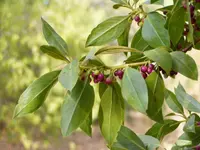
The ngaio tree, Myoporum laetum, is a fast-growing evergreen shrub or small tree often used for coastal shelter belts and informal screens. It typically develops a rounded, dense crown with smooth gray bark and glossy, dotted leaves.
This species is native to New Zealand and adapts well to mild coastal climates in many temperate regions. Small white flowers are followed by reddish to purple berries that add seasonal interest.
Ngaio tolerates salt-laden wind and poor, dry soils, which makes it relatively easy to establish in tough coastal sites. It generally prefers full sun and well-drained soil, and those traits shape how to care for ngaio tree in home landscapes.

Care Difficulty
Easy Care

Light Preference
Full Sun

Water Requirements
Low Water

Temperature Preference
Warm Climate

Hardiness Zone
9–11

Soil Texture
Sandy, Loamy, Rocky

Soil pH
Slightly acidic (6.5–7.0), Slightly alkaline (7.0–7.5)

Soil Drainage
Well-drained

Fertilization
Minimal (feed rarely)
Scan your plant to receive care tips personalized for your specific plant
Available on iOS and Android
This coastal shrub prefers bright, open conditions to support dense, healthy growth.
Myoporum laetum prefers slightly dry, fast-draining conditions once established.
This species thrives in mild, frost-free climates with moderate seasonal variation.
Myoporum laetum handles a wide humidity range and usually does not need special humidity management outdoors.
This species prefers freely draining, moderately fertile soil and dislikes prolonged wet conditions.
This species can be grown in containers, mainly for young plants or in restricted spaces.
Myoporum laetum grows well in average soil and usually needs only light feeding in cultivated landscapes.
Myoporum laetum responds well to thoughtful pruning that maintains structure and controls size.
Ngaio tree is most often grown in the ground, so transplanting young plants correctly is more important than frequent repotting.
This species is commonly propagated from cuttings to maintain desirable forms and reliable growth.
Myoporum laetum is a mild-climate evergreen that tolerates light frost but can be damaged by harder freezes.

Plant Health Check
Not sure what's wrong with your plant? Check your plant's health inside the app.
This coastal shrub naturally grows along windy New Zealand shorelines and tolerates salt-laden air and soils that would damage many other woody plants.
The leaves contain toxic compounds that can poison cattle and sheep if browsed, which has caused problems where the species has been planted or naturalized near grazing land outside its native range.
It has become invasive in parts of coastal California and other Mediterranean-type climates, where it spreads from plantings into natural habitats and outcompetes native shrubs.

This species was widely used as a fast windbreak and shelterbelt tree in New Zealand and overseas during the 20th century because of its rapid growth, dense evergreen canopy, and high tolerance of wind and salty coastal conditions.
This species contains toxic compounds, especially in the leaves and fruits. Livestock, pets, and children should not ingest any part. Symptoms may include digestive upset and, in severe cases, liver damage. Plant in inaccessible locations around animals.
Keep your plants happy and healthy with plant identification, disease detection, and easy care guidance.