Succession Sowing
Sow a small batch of seeds every 2–3 weeks in spring to keep a continuous supply of tender leaves and flowers instead of one flush that ages quickly.

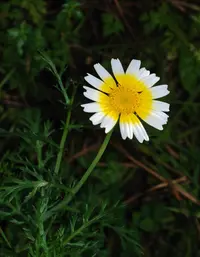
Garland daisy, Glebionis coronaria, is a cool-season annual grown for its bright, daisy-like yellow or bicolored flowers and fresh, aromatic foliage. It forms a soft, upright mound with many branching stems that bloom over a long period.
This species is native to the Mediterranean region and is widely grown in home gardens and vegetable plots, especially in East Asia where the leaves are also used as a leafy vegetable. It is generally easy to grow, as long as it receives good light, regular moisture, and well-drained soil. These traits make it straightforward to care for Garland Daisy in most mild to warm climates.

Care Difficulty
Easy Care

Light Preference
Full Sun

Water Requirements
Regular Water

Temperature Preference
Cool Climate

Hardiness Zone
6–9

Soil Texture
Sandy, Loamy, Organic-rich

Soil pH
Slightly acidic (6.5–7.0), Neutral (7.0)

Soil Drainage
Moist but well-drained

Fertilization
Light (every 4–6 weeks)
Scan your plant to receive care tips personalized for your specific plant
Available on iOS and Android
This annual herb prefers bright, direct light for strong growth and abundant flowering.
This fast-growing annual prefers consistently moist but not waterlogged soil.
This cool-season annual grows best in mild temperatures with protection from extremes.
This species grows well in relatively dry air and usually does not need special humidity management.
This annual prefers light, free-draining soil that never stays waterlogged.
This species suits container growing when the pot supports its fast, bushy seasonal growth.
This annual herb benefits from light feeding in fertile, well-drained soil during its active growth.
Pruning Glebionis coronaria is mainly done to prolong flowering and keep plants compact.
This fast-growing annual is usually transplanted outdoors rather than long-term potted and seldom needs repotting.
This species is most commonly propagated from seed, which suits its quick annual life cycle.
As a cool-season annual, Glebionis coronaria usually completes its life cycle before hard winter and needs little true winter care.

Plant Health Check
Not sure what's wrong with your plant? Check your plant's health inside the app.
This species is widely grown in East Asia as a leafy vegetable, especially in Chinese and Japanese cuisine, where the young leaves and tender stems are eaten cooked or fresh for their distinctive aromatic flavor.
Unlike many ornamental daisies that are perennials, this plant is a fast-growing annual that completes its entire life cycle from seed to seed within a single growing season.
The species is naturally distributed around the Mediterranean Basin, where it grows in disturbed soils, fields, and coastal habitats, and has become naturalized in other mild-climate regions through cultivation and escape from gardens.

In some East Asian food standards and seed catalogs, this species is classified and regulated primarily as a leafy vegetable rather than an ornamental flower, reflecting its long agricultural history as a crop plant rather than only a garden daisy.
Yes, this species is widely used as an edible green and garnish. Young leaves and tender stems are eaten cooked or raw, and flower buds may be pickled. Always avoid plants exposed to pesticides, roadside pollution, or contaminated soil.
Keep your plants happy and healthy with plant identification, disease detection, and easy care guidance.