Provide climbing support
Install a sturdy trellis or horizontal wire system early, then loosely tie new vines with soft ties so stems lignify in the desired direction without kinking.

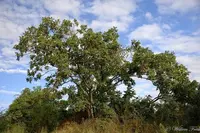
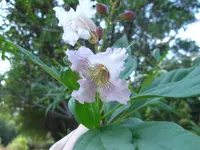
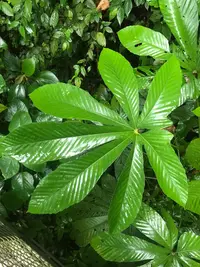
Aganope stuhlmannii is a woody climbing legume native to tropical regions of East Africa. It typically grows as a vigorous liana, scrambling over trees and shrubs in warm, humid habitats. The plant bears compound leaves and produces pea-like flowers, followed by flattened seed pods typical of the Fabaceae family. In cultivation it is mainly of interest for its rapid growth and ability to cover supports. This strong growth habit can make it demanding to manage in small spaces. Limited horticultural information exists, so anyone wanting to care for Aganope stuhlmannii should introduce it cautiously and observe how it responds to local conditions, favoring warm temperatures, consistent moisture, and well-drained soil.

Care Difficulty
Moderate Care

Light Preference
Partial Shade

Water Requirements
Moderate Water

Temperature Preference
Warm Climate

Hardiness Zone
Unknown

Soil Texture
Loamy

Soil pH
Slightly acidic (6.5–7.0)

Soil Drainage
Well-drained

Fertilization
Minimal (feed rarely)
Scan your plant to receive care tips personalized for your specific plant
Available on iOS and Android
This species prefers bright conditions with some protection during the hottest part of the day.
Watering should aim for moist but never stagnant soil around the root zone.
This plant responds best to warm, frost-free conditions with moderate seasonal variation.
This species prefers moderate humidity and benefits from slightly moister air than a typical heated home provides.
This species performs best in a deep, loose, well-drained mix that still retains moderate moisture.
This species can adapt to large containers when given enough root volume and stable support.
This species grows well in modest soils and usually needs only light supplemental feeding in cultivation.
Pruning helps maintain safe structure and healthy growth in this medium to large woody species.
This plant is most often grown in the ground, so guidance focuses on transplanting young trees from nursery containers.
Propagation is possible but more specialized, mainly via seed and sometimes semi-hardwood cuttings under controlled conditions.
This species is suited to warm, frost-free or only lightly frosty climates and may suffer damage in colder conditions.

Plant Health Check
Not sure what's wrong with your plant? Check your plant's health inside the app.
This species is a woody liana native to East African miombo woodlands, where it climbs over trees rather than forming a free-standing trunk.
As a member of the Fabaceae, it forms symbioses with root bacteria that fix atmospheric nitrogen, helping to enrich nutrient-poor tropical soils.
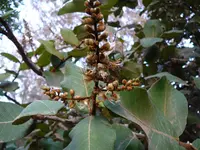
It produces flattened, papery pods that split open to release seeds, a trait that aids wind and gravity dispersal along woodland edges.
This species is a woody climber that twines around nearby supports. It uses flexible stems to scramble up trees, fences, or trellises rather than forming a low ground cover or dense shrub on its own.
Keep your plants happy and healthy with plant identification, disease detection, and easy care guidance.