yellow buckeye Care (Aesculus flava)

yellow buckeye

About yellow buckeye

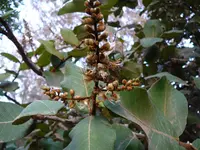
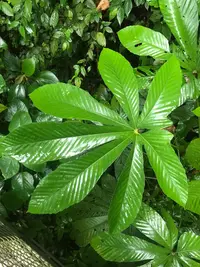
Yellow buckeye, Aesculus flava, is a large deciduous tree valued for its strong form and showy spring flowers. It typically develops a tall, upright crown with palm-shaped leaves that turn attractive shades of yellow to orange in fall.

This species is native to the eastern United States, often found along streams, rich woods, and mountain slopes. Its sizeable mature height and spreading roots make it better suited to large gardens, parks, or naturalized landscapes than small yards.

The tree prefers moist, well-drained, slightly acidic soil and full sun to light shade. Once established, it is relatively sturdy, but gardeners who want to care for yellow buckeye should plan for its eventual size and leaf drop.

Main Plant Requirements

Care Difficulty

Moderate Care

Light Preference

Full Sun

Water Requirements

Moderate Water

Temperature Preference

Cold Hardy

Hardiness Zone

4–8

Soil Texture

Loamy, Clay, Organic-rich

Soil pH

Acidic (5.5–6.5), Slightly acidic (6.5–7.0)

Soil Drainage

Moist but well-drained

Fertilization

Minimal (feed rarely)

Get Personalized Care Plan

Scan your plant to receive care tips personalized for your specific plant

Available on iOS and Android

How to Care for the yellow buckeye

This large deciduous tree thrives in bright conditions but benefits from some protection from intense afternoon sun.

  • Provide 4–6 hours of direct morning sun with light to moderate afternoon shade, especially in hotter climates.
  • Site yellow buckeye in an open area with high, filtered light under taller trees if full sun all day causes leaf scorch.
  • In cooler regions it tolerates full sun, but in late summer watch for browning leaf edges, which suggest too much intense sun exposure.

This species prefers consistently moist, well-drained soil, especially while young and establishing a deep root system.

  • Allow the top 3–5 cm of soil to begin drying between soakings, then water deeply so moisture penetrates 20–30 cm into the root zone.
  • During hot, dry spells, increase watering when leaves start to droop slightly, but avoid standing water or sour, muddy soil around the trunk.
  • In spring and early summer, maintain even moisture for strong growth; reduce frequency in fall as growth slows and in winter when the tree is dormant.

This hardy deciduous tree is adapted to temperate climates with cold winters and warm to hot summers.

  • Optimal growing temperatures during the active season are around 60–80°F (16–27°C), common in many mid-latitude regions.
  • Mature trees tolerate winter lows near -20°F (-29°C) when fully dormant, but young trees benefit from protection from harsh drying winds.
  • In summer, short periods of 90–95°F (32–35°C) are tolerated if soil moisture is maintained; prolonged extreme heat with drought can lead to leaf scorch and earlier leaf drop.

This species is tolerant of a wide humidity range and rarely needs special humidity management outdoors.

This tree prefers deep, moist, well-structured mineral soil that stays evenly moist but not saturated.

  • Use a loamy mix with 40–60% mineral topsoil, 20–30% compost, and 10–20% coarse sand for structure and nutrients.
  • Ensure drainage is moderate to fast so water does not pool around the root zone for more than 24 hours.
  • Aim for slightly acidic to neutral pH, roughly 6.0–7.0, which supports nutrient availability for Aesculus flava.
  • Improve aeration on heavy clay sites by incorporating coarse sand or fine gravel into the top 20–30 cm.

This large tree is generally unsuitable for long-term container growing and is best planted in the ground.

This species grows well in average garden soil and usually needs only light feeding.

  • For landscape trees, apply a thin layer of well-rotted compost over the root zone in early spring to support steady growth.
  • Use a balanced slow-release fertilizer (around 10-10-10) once in early spring for young or nutrient-poor-site yellow buckeye.
  • Keep granular fertilizer off the trunk and foliage, and water it in thoroughly to avoid root burn.
  • Do not feed in late fall or winter, since the tree is dormant and excess nutrients are unused.

Pruning needs for Aesculus flava are modest and focus on safety and structure.

  • Best time for pruning is late winter to very early spring, before bud break, to reduce sap bleed and disease risk.
  • Remove dead, diseased, crossing, or storm-damaged branches with clean, sharp bypass pruners or a pruning saw.
  • Thin crowded interior branches lightly to improve airflow and maintain a strong, open crown structure.
  • Avoid heavy topping cuts; instead, make selective heading or thinning cuts just outside the branch collar.

This tree is usually grown in the ground, so guidance focuses on transplanting young specimens.

  • Transplant in early spring or early fall when temperatures are mild and soil is workable.
  • Look for signs such as roots circling the nursery container, visible root mat at the drainage holes, or stalled top growth.
  • Move up only 1 container size or plant directly into a wide, prepared hole with loosened surrounding soil.
  • Water deeply after planting, keep soil evenly moist, and shade the canopy briefly to limit transplant shock.

Aesculus flava is most often propagated from seeds rather than vegetative methods.

  • Collect fresh seeds (buckeyes) in early fall when capsules split, and sow soon after for best viability.
  • Provide a cold stratification period of about 3 months at 34–41°F in moist medium to break dormancy.
  • Sow seeds 2–5 cm deep in a free-draining, humus-rich mix and keep evenly moist, not waterlogged.
  • Grow seedlings in deep containers to accommodate the taproot and transplant while still small to reduce shock.

Mature yellow buckeye is cold hardy in much of its range and usually needs minimal winter care.

  • In USDA zones 4–8, established trees tolerate typical winter frost without additional wrapping or covers.
  • Apply 5–8 cm of organic mulch over the root zone in late fall, keeping it a few cm away from the trunk.
  • Young or container-grown trees benefit from sheltered sites and consistent soil moisture to reduce freeze–thaw stress.

Care Tips

Rootzone protection

Maintain a wide mulch ring 5–10 cm deep, kept 10–15 cm away from the trunk, to buffer soil temperature, preserve moisture, and reduce mower or string-trimmer damage to surface roots while growing yellow buckeye.

Early structure training

In the first 5–8 years, select a single strong leader and remove competing upright stems or narrow V-shaped crotches during dormant season to build a stable, storm-resistant crown.

Leaf scorch reduction

In hot, exposed sites, underplant with shade-tolerant groundcovers and extend the mulched area beyond the dripline to keep roots cooler and reduce late-summer leaf scorch.

Buckeye and leaf cleanup

Rake and remove fallen leaves and buckeye fruits each autumn to reduce leaf blotch and leaf scorch carryover and to avoid unwanted seedlings or tripping hazards.

Site wind management

If planting in a windy landscape, position the tree where nearby larger trees or buildings break prevailing winds to reduce branch breakage and limb dieback over time.

Common Pests and Diseases

Guignardia leaf blotch

This disease causes irregular reddish-brown spots with yellow margins on leaves, often leading to premature leaf drop in midsummer.

Solution

Remove and dispose of heavily spotted fallen leaves in autumn to reduce overwintering spores, and avoid overhead watering to keep foliage dry. For established landscape trees, improve air circulation around the canopy; fungicide sprays are usually reserved for high-value specimens and must be applied preventively in spring according to local extension guidance.

Powdery mildew

This disease produces a white, powdery coating on leaves, especially in shaded or crowded sites with poor air movement.

Solution

Increase light and air circulation by thinning nearby vegetation and avoid frequent late-day overhead watering. In recurring cases on young trees, apply a labeled sulfur or horticultural oil product early in the season, covering both upper and lower leaf surfaces according to instructions for Aesculus flava care.

Leaf scorch

Symptoms include browning and drying of leaf edges and tips, often during hot, dry, or windy weather, while leaf veins remain greener.

Solution

Provide consistent soil moisture during dry spells with deep, infrequent watering and maintain a 5–8 cm mulch layer over the root zone, keeping mulch away from the trunk. Avoid planting in highly exposed, reflective sites and prevent additional stress such as soil compaction or heavy pruning in summer.

Japanese beetles

These insects skeletonize leaves, eating the soft tissue between veins and sometimes congregating in large numbers on sunny canopy sections.

Solution

Hand-pick beetles in early morning and drop them into soapy water to reduce adult populations on small trees. For significant, repeated damage, consider using targeted systemic or contact insect controls labeled for ornamental trees, applying them according to local regulations and timing recommendations to protect pollinators.

Scale insects

This pest appears as small, immobile bumps on twigs or branches, feeding on sap and sometimes producing sticky honeydew that can lead to sooty mold growth.

Solution

Prune out and dispose of heavily infested twigs when practical and encourage natural predators by avoiding broad-spectrum insecticides during their active periods. On manageable trees, treat crawlers (the mobile young stage) with horticultural oil or insecticidal soap at the recommended timing based on local extension or product guidance.

Interesting Facts

Distinct sulfur-yellow flowers

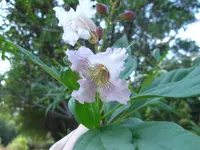
This species produces upright clusters of pale to bright sulfur-yellow flowers in spring, a key trait that helps distinguish it from the more commonly planted red and Ohio buckeyes, which have red or creamy flowers.

Tall Appalachian native

Yellow buckeye is one of the tallest buckeye species in North America, naturally occurring in rich, moist forests of the central and southern Appalachian region and often forming part of the high canopy layer.

Smooth husks and seeds

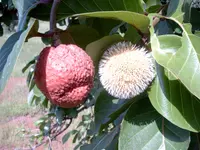
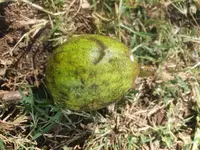
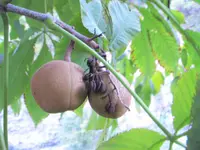
Its nuts are enclosed in relatively smooth, thin-walled husks with few or no spines, and the shiny brown seeds often show a larger, lighter-colored eye spot compared with several other buckeye species.

Botan icon

Did you know?

In many parts of its native range, yellow buckeye is considered one of the more urban-tolerant buckeyes and has been used as a street and park tree where soils are slightly alkaline and air pollution levels are moderate.

FAQs about yellow buckeye

This tree generally shows moderate growth, averaging 30–60 cm per year once established. Growth is faster in deep, moist, well-drained soils and full light, and slower in compacted, dry, or nutrient-poor conditions. Aesculus flava care focuses on supporting strong root development.

Grow Healthy Plants with Botan Care

Keep your plants happy and healthy with plant identification, disease detection, and easy care guidance.

Botan plant care app — identify plants on mobile

Explore More Plants