


Mounting technique
Mount plants on cork or hardwood with a thin layer of sphagnum only around the roots, then secure gently with soft wire or fishing line so roots can dry quickly while still maintaining good contact with the mount.

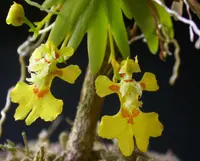
Erycina glossomystax is a miniature epiphytic orchid, meaning it naturally grows attached to trees rather than in soil. It forms small clumps of thin, arching pseudobulbs with fine roots and narrow leaves. The plant is valued for its relatively large, often yellow to orange flowers that appear on delicate, branching spikes, giving it a showy display despite its compact size. It is native to tropical regions of Central and South America, where it enjoys warm, humid forest conditions with moving air. These natural habits make it somewhat demanding, but manageable for growers who can provide stable warmth, good humidity, and bright filtered light, and understand how to care for Erycina glossomystax.

Care Difficulty
Hard Care

Light Preference
Bright Indirect Light

Water Requirements
Keep Soil Moist

Temperature Preference
Tropical / Frost Sensitive

Hardiness Zone
11–13

Soil Texture
Peaty, Organic-rich, Loamy

Soil pH
Acidic (5.5–6.5)

Soil Drainage
Moist but well-drained

Fertilization
Light (every 4–6 weeks)
Scan your plant to receive care tips personalized for your specific plant
Available on iOS and Android
This miniature orchid prefers bright, filtered light that mimics dappled forest conditions.
Watering should keep this orchid lightly moist but never saturated for long periods.
This species prefers intermediate to warm conditions with stable temperatures across the year.
This miniature orchid needs moderate to high humidity to thrive indoors.
This epiphytic orchid prefers a very airy, fast-draining substrate rather than conventional potting soil.
This species is well suited to container or small basket culture.
This small epiphytic orchid benefits from light, consistent feeding during active growth.
Pruning needs for this miniature orchid are minimal and focus on hygiene rather than shaping.
This orchid prefers to stay slightly tight in its pot or mounted and should be disturbed infrequently.
Propagation of this orchid is usually done by careful division of mature clumps.
This warmth-loving orchid is not frost hardy and needs sheltered winter conditions.

Plant Health Check
Not sure what's wrong with your plant? Check your plant's health inside the app.
This species is native to moist, mid-elevation tropical forests from southern Mexico through Central America, where it grows as a tiny epiphyte on tree branches in bright, filtered light and constant high humidity.
It forms very small, laterally compressed pseudobulbs that store water and nutrients, with a single narrow leaf and a delicate, fine-root system adapted to cling to bark and quickly absorb passing moisture and dissolved minerals.
Despite the plant’s miniature size, it produces relatively large, bright yellow and brown patterned flowers on wiry stems, an adaptation that helps attract small insect pollinators in dense forest canopies.

This species was formerly placed in the large genus Oncidium, and its transfer to the smaller genus Erycina reflects modern DNA-based research that revealed a distinct evolutionary lineage within this group of miniature, epiphytic orchids.
This miniature orchid usually blooms once or twice a year, often in cooler, drier seasons after a slight rest. Under stable indoor conditions with consistent care, it may produce several successive flushes from the same clump.
Keep your plants happy and healthy with plant identification, disease detection, and easy care guidance.

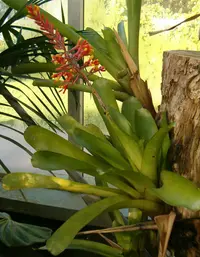
Aechmea caudata
Aechmea caudata
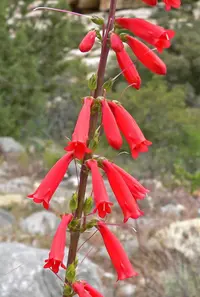
firecracker penstemon
Penstemon eatonii
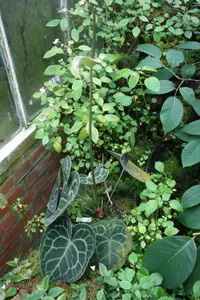 POPULAR
Anthurium clarinervium
Anthurium clarinervium
 POPULAR
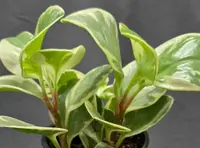
Baby Rubberplant
Peperomia obtusifolia

Goeppertia picturata 'Argentea'
Goeppertia picturata 'Argentea'
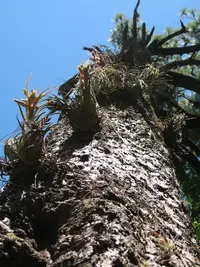
Tillandsia seleriana
Tillandsia seleriana
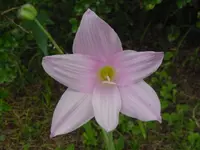
pink rain lily
Zephyranthes robusta
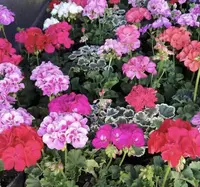
garden geranium
Pelargonium × hybridum