Windbreak establishment
In open or exposed sites, plant a temporary windbreak of shrubs or shade cloth on the windward side for the first 3–5 years to reduce winter desiccation and leader dieback.

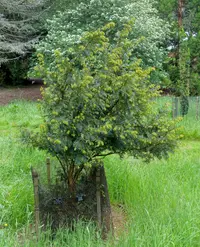
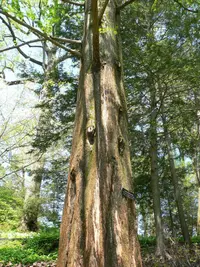
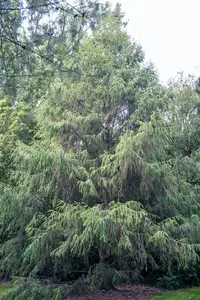
Himalayan yew (Taxus wallichiana) is an evergreen coniferous tree or large shrub, valued for its dense, dark green needle-like foliage and slow, tidy growth. It often forms narrow, upright to broadly conical shapes that respond well to pruning, so it is used for hedging, screens, and structural accents in gardens.
This species is native to the Himalayan region, where it grows in cool, mountainous forests. It is generally long-lived and quite tough once established, but its slow growth and sensitivity to poor drainage can make it less forgiving for impatient gardeners.
To care for Himalayan Yew, provide cool to mild conditions, well-drained soil, and protection from extreme heat or drying winds.

Care Difficulty
Moderate Care

Light Preference
Partial Shade

Water Requirements
Moderate Water

Temperature Preference
Cold Hardy

Hardiness Zone
6–8

Soil Texture
Loamy, Sandy, Clay

Soil pH
Acidic (5.5–6.5), Slightly acidic (6.5–7.0)

Soil Drainage
Moist but well-drained

Fertilization
Minimal (feed rarely)
Scan your plant to receive care tips personalized for your specific plant
Available on iOS and Android
Taxus wallichiana grows best with steady, moderate light that avoids harsh extremes.
This species prefers evenly moist, well-drained soil rather than frequent, shallow watering.
This yew is cold hardy but grows best within a moderate temperature range across the year.
Taxus wallichiana handles a wide humidity range and usually does not need special humidity management outdoors.
Taxus wallichiana prefers cool, moist, well-structured soil that drains freely yet retains some consistent moisture.
This species can be grown in containers for many years if the pot provides stable, cool root conditions.
This conifer grows slowly and needs only modest feeding in cultivation.
Pruning supports dense structure and long-term health in Taxus wallichiana.
This species is usually grown in the ground, so focus on careful transplanting rather than frequent repotting.
Taxus wallichiana is most commonly propagated from semi-hardwood cuttings or seeds, though both methods are slow.
Mature plants are quite cold hardy and usually need minimal winter care in the ground.

Plant Health Check
Not sure what's wrong with your plant? Check your plant's health inside the app.
Taxus wallichiana is one of the yew species studied as a natural source of taxanes, the complex compounds used to synthesize chemotherapy drugs such as paclitaxel, leading to heavy scientific interest in its bark and needles for semi-synthetic drug production.
This species is native to the central and eastern Himalayas, where it typically grows in cool, moist montane forests at higher elevations, often forming an understorey or mixed layer beneath taller conifers and broadleaf trees.
Due to historical overharvesting for timber and medicinal extraction, combined with slow growth and poor regeneration, Taxus wallichiana has been assessed as endangered or threatened in parts of its native range, prompting legal protection and cultivation programs.

In some Himalayan regions, large, old Taxus wallichiana trees are treated as culturally significant or sacred, and traditional community rules have helped protect individual specimens for many generations, preserving local genetic lineages even where surrounding forests have been heavily logged.
Brown foliage usually results from drought stress, winter burn, or root damage. Check soil moisture, avoid waterlogging, and protect from harsh winter wind and salt spray. Prune only dead tissue and monitor for gradual green regrowth over several months.
Keep your plants happy and healthy with plant identification, disease detection, and easy care guidance.