gumhar Care (Gmelina arborea)

Also known as: Kashmir tree
gumhar

About gumhar

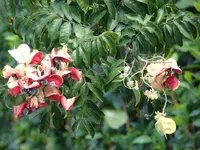
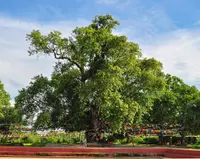
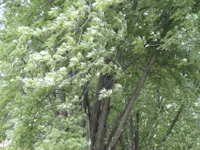
Gmelina arborea, commonly called gumhar, is a fast-growing deciduous tree valued for its light, durable timber. It forms a broad, rounded crown with large, soft leaves and pale yellow funnel-shaped flowers.

This species is native to South and Southeast Asia, where it grows in warm, monsoon-influenced forests and open woodlands. It adapts well to a range of tropical and subtropical climates.

Gumhar is generally considered easy to establish in suitable climates because of its rapid growth and tolerance of different soil types, as long as drainage is good. Those who want to learn how to care for gumhar should note its preference for full sun, moderate moisture, and non-waterlogged soil.

Main Plant Requirements

Care Difficulty

Moderate Care

Light Preference

Full Sun

Water Requirements

Regular Water

Temperature Preference

Tropical / Frost Sensitive

Hardiness Zone

10–11

Soil Texture

Sandy, Loamy, Organic-rich

Soil pH

Acidic (5.5–6.5), Slightly acidic (6.5–7.0)

Soil Drainage

Moist but well-drained

Fertilization

Minimal (feed rarely)

Get Personalized Care Plan

Scan your plant to receive care tips personalized for your specific plant

Available on iOS and Android

How to Care for the gumhar

Gmelina arborea thrives in strong light and performs best in open, sun-exposed sites.

  • Provide 6–8 hours of direct sun daily; full sun is ideal, but it tolerates light partial shade, especially in hotter regions.
  • Favor morning and mid-day sun with some relief from intense late-afternoon sun in very hot, dry climates to reduce leaf scorch risk.
  • In young trees, avoid deep shade, which leads to weak, elongated growth; ensure surrounding vegetation does not overtop and fully shade the canopy.

This fast-growing tree prefers evenly moist, well-drained soil rather than constant saturation.

  • Irrigate when the top 3–5 cm of soil feel dry, providing a deep soak that reaches the full root zone, especially in the first 2–3 years.
  • Use soil that drains freely; standing water or sour, foul-smelling soil indicates poor drainage and raises risk of root rot in Gmelina arborea.
  • In hot, dry seasons, watch for dull, folding, or shedding leaves as a sign of drought stress, and reduce watering in cool or rainy periods to avoid waterlogging.

This tropical tree is adapted to warm climates and has limited cold tolerance.

  • Optimal growth occurs around 77–95°F (25–35°C), with best performance in consistently warm, humid conditions.
  • Protect from frost; damage often appears below 40°F (4°C), and young trees may be killed if exposed near or below 32°F (0°C).
  • Mature trees handle brief heat up to about 104°F (40°C) if soil moisture is adequate; during cooler, dry seasons, growth slows but usually resumes once temperatures rise.

This species handles a wide humidity range but grows best with moderate ambient moisture.

  • Aim for 40–60% humidity; values much lower can slow growth in young container plants.
  • Dry indoor air may cause marginal leaf scorch and increased leaf drop, especially in hot conditions.
  • Increase humidity locally with grouped plants, a wide pebble tray under the pot, or by placing containers in more sheltered, less windy spots outdoors.

This tree prefers deep, well-structured, free-draining soil that still holds moderate moisture.

  • Use a loamy mix with 40–60% mineral fraction (sand/silt) plus organic matter such as compost or well-rotted manure for stable structure.
  • Ensure drainage is rapid; in containers, combine roughly 2 parts loam, 1 part coarse sand, and 1 part compost to prevent waterlogging.
  • Maintain slightly acidic to neutral pH around 6.0–7.5; avoid very acidic or saline soils that can stunt Gmelina arborea growth.
  • Improve aeration on heavy sites by incorporating coarse sand or fine gravel and avoiding areas prone to standing water after rain.

This species can be grown in containers for short to medium periods, especially as a juvenile tree.

  • Select a deep, wide, and heavy container to counteract the fast, top-heavy growth and reduce tipping risk in wind.
  • Choose a thick-walled clay or concrete pot if possible, as these materials balance moisture loss with added stability for the developing trunk.
  • Raise the pot on feet or bricks so drainage holes stay clear and excess water escapes quickly after irrigation or heavy rain.

This fast-growing timber tree benefits from moderate feeding in cultivation, especially when young gumhar plants are grown in nutrient-poor soils.

  • Apply a balanced slow-release fertilizer (around 10-10-10) at the start of the warm growing season.
  • Supplement with well-rotted compost or manure as a surface mulch to improve soil structure and nutrient availability.
  • Feed container or nursery plants every 6–8 weeks at half-strength, avoiding contact with the trunk.
  • Stop or greatly reduce fertilization in cooler months when growth slows, to prevent weak, elongated shoots.

Gmelina arborea responds well to structured pruning, which helps develop a strong framework and manage height in plantations or large gardens.

  • Carry out main pruning in late dry season or just before active growth, so cuts heal quickly.
  • Remove dead, diseased, crossing, or storm-damaged branches first to maintain plant health.
  • Thin crowded interior branches to improve light penetration and airflow, encouraging straighter, stronger stems.
  • Use clean, sharp loppers or a pruning saw, making smooth cuts just outside the branch collar without leaving stubs.

Young Gmelina arborea is often started in containers or nursery beds, then transplanted once roots and shoots are well established.

  • Look for crowded roots circling the pot drainage holes, slow top growth, or plants toppling easily as cues for shifting to a larger container or field site.
  • Transplant at the start of the rainy or warm growing season to support rapid root re-establishment and reduce water stress.
  • Move up only 1–2 pot sizes, loosen circling roots gently, and plant at the same depth in well-drained, moderately fertile soil.
  • Water thoroughly after transplanting, provide temporary shade if sun is intense, and keep soil evenly moist until vigorous new growth appears.

Gmelina arborea is commonly propagated from both seeds and cuttings in forestry and ornamental production.

  • Collect ripe seeds at the end of the fruiting season, clean the pulp, and sow fresh in a free-draining nursery mix.
  • Provide warm conditions (70–85°F), consistent moisture, and light shade for germination and early seedling growth.
  • Take semi-hardwood cuttings in warm months, 10–15 cm long, from healthy, vigorous shoots.
  • Dip cuttings in rooting hormone, insert into a sterile, moist, well-aerated medium, and maintain high humidity with bright, indirect light.

This tropical to subtropical tree is frost-sensitive and needs protection in regions with cold winters, especially when young or container-grown.

  • In mild climates, add a 5–8 cm organic mulch layer around the root zone to buffer soil temperature and conserve moisture.
  • In areas with light frost, wrap young trunks with breathable frost cloth or burlap during cold nights to limit bark damage.
  • Grow container specimens in large pots and move them indoors or into a heated greenhouse before temperatures drop below 40°F.

Care Tips

Early form training

In the first 2–3 years, select a single strong leader stem and remove competing side shoots gradually to develop a straight trunk and stable framework for future timber-quality growth.

Wind and stake management

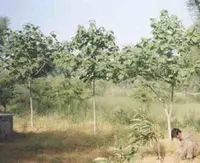
In windy sites, use 2–3 low, flexible stakes and soft ties for young trees, then remove all staking after 1–2 seasons to encourage a sturdy, self-supporting trunk.

Mulch root zone

Maintain a 5–8 cm layer of coarse organic mulch in a wide circle around the base, keeping it 5–10 cm away from the trunk, to moderate soil temperature, reduce weeds, and protect surface feeder roots.

Branch spacing control

Prune or shorten closely spaced lateral branches on the lower trunk during dormancy or slow-growth periods to maintain 20–40 cm vertical spacing, improving light penetration and long-term crown stability when growing gumhar.

Monitor for borers

Inspect stems and larger branches several times per year for small exit holes, frass (sawdust-like material), or dieback, and remove and destroy affected wood promptly to limit borer and stem-boring insect infestations.

Common Pests and Diseases

defoliator caterpillars

This pest feeds on young and mature leaves, often causing rapid and heavy defoliation in plantations and farm-boundary trees. Symptoms include scalloped leaf edges, skeletonized leaves, and large amounts of frass (insect droppings) under the canopy.

Solution

For small trees or limited infestations, hand-pick caterpillars and prune heavily infested twigs, then destroy the larvae. In larger blocks, encourage natural predators (birds, parasitic wasps) by maintaining mixed vegetation, and if needed use a targeted biological insecticide based on Bacillus thuringiensis (Bt) during early larval stages to reduce leaf damage while protecting beneficial insects.

bark borers

These insects tunnel into stems and branches, disrupting water flow and weakening the tree. Symptoms include entry holes on the bark, frass or sawdust-like material on the trunk, and occasional branch dieback.

Solution

Cut out and destroy heavily infested branches and scrape away loose bark where galleries are shallow, then burn or remove debris from the site. Improve tree vigor through proper watering and fertilization, avoid wounding the bark, and where feasible inject or paint a systemic insecticide on affected stems during early attack to protect remaining healthy tissue.

sap-sucking bugs

These insects feed on sap from tender shoots and leaves, leading to curling, yellowing, and stunted growth in young trees. Symptoms include clusters of small insects on new growth and sticky honeydew that can support sooty mold on leaves and stems.

Solution

Spray affected foliage with a strong stream of water to dislodge insects, and remove heavily infested shoots to limit spread. For ongoing problems, introduce or conserve natural enemies like lady beetles and lacewings, and apply insecticidal soap or neem oil thoroughly to young shoots in the early morning, repeating as needed while monitoring tree recovery.

leaf spot

This disease produces small brown to black spots on leaves that may enlarge, merge, and cause premature leaf drop, especially in humid conditions. Symptoms include scattered lesions with yellow halos and thinning foliage on lower branches.

Solution

Collect and destroy fallen leaves and prune crowded lower branches to reduce humidity and inoculum levels around the tree. Improve airflow by avoiding dense planting, irrigate at soil level rather than overhead, and if the problem is severe in nurseries or young trees, use a registered copper-based or other broad-spectrum fungicide according to label directions to protect new flushes of leaves.

powdery mildew

This disease forms a white to gray powdery coating on young leaves, shoots, and sometimes inflorescences, which can reduce photosynthesis and distort growth. Symptoms include dull, mottled foliage that may become curled or stunted in heavy infections.

Solution

Prune and remove diseased shoots and heavily coated leaves, disposing of them away from the planting area to reduce spore load. Reduce shade and improve air movement around young trees, avoid excess nitrogen fertilizer that encourages tender growth, and if conditions stay favorable for the disease, apply a sulfur-based or potassium bicarbonate fungicide as a preventive treatment on new foliage, following local Gmelina arborea care instructions and product labels.

Interesting Facts

Fast tropical timber

This species is one of the faster-growing tropical hardwoods, reaching harvestable timber size in suitable plantations in roughly 10–15 years, which is unusually rapid for a tree used in furniture and construction.

Light but durable wood

Its wood is relatively light and easy to work yet dimensionally stable and naturally termite-resistant, so it is widely used in Asia for furniture, doors, carvings, and even small boat building.

Nectar-rich floral display

The tree produces showy yellow to orange tubular flowers in large clusters that supply abundant nectar, attracting bees and other pollinators and supporting local honey production in parts of its range.

Botan icon

Did you know?

In parts of South and Southeast Asia, the species has been extensively planted in mixed agroforestry systems, where it can be pruned for timber while still allowing enough sunlight for crops below, making it a model tree for studying how to take care of gumhar in sustainable land-use projects.

FAQs about gumhar

This species is very fast-growing under warm, moist conditions, often adding 2–3 m in height per year in plantations. Growth slows in poorer soils, dry climates, or where temperatures regularly drop below about 60°F.

Grow Healthy Plants with Botan Care

Keep your plants happy and healthy with plant identification, disease detection, and easy care guidance.

Botan plant care app — identify plants on mobile

Explore More Plants