Encourage Multi-Stems
After establishment, selectively head back the central leader in late winter to promote several strong scaffold stems, which improves wind resistance and makes nut harvest easier when growing chinquapin.

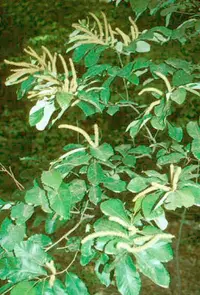
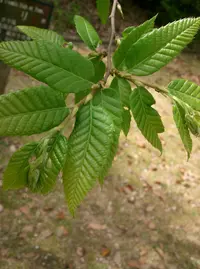
Chinquapin, Castanea pumila, is a small nut-bearing shrub or tree in the beech family, related to chestnuts. It typically has a rounded, bushy form with toothed, glossy leaves and spiny burs that enclose single small nuts.
This species is native to the southeastern United States, often found on dry, rocky slopes, open woodlands, and sandy soils. It is generally hardy and adaptable but grows best in full sun, well-drained, slightly acidic soil, and with moderate moisture.
Because it tolerates poor soils and some drought once established, it is considered relatively easy to manage in suitable climates. Understanding how to care for chinquapin helps ensure healthy growth and reliable nut production over many years.

Care Difficulty
Moderate Care

Light Preference
Full Sun

Water Requirements
Moderate Water

Temperature Preference
Cold Hardy

Hardiness Zone
5–9

Soil Texture
Sandy, Loamy, Organic-rich

Soil pH
Strongly acidic (4.5–5.5), Acidic (5.5–6.5)

Soil Drainage
Well-drained

Fertilization
Minimal (feed rarely)
Scan your plant to receive care tips personalized for your specific plant
Available on iOS and Android
This shrub-sized chestnut species performs best in bright outdoor conditions with full sun exposure.
Castanea pumila prefers evenly moist, well-drained soil rather than constantly wet conditions.
This hardy shrub tolerates a wide temperature range but grows best in moderate climates.
Castanea pumila tolerates a wide range of outdoor humidity and usually does not need special humidity management.
Castanea pumila prefers well-aerated, sandy to loamy soil that drains freely yet holds moderate, even moisture.
This species can be grown in containers for a limited time, mainly as a juvenile or patio specimen.
Castanea pumila benefits from light, balanced feeding but often performs well in reasonably fertile native soil.
Pruning Castanea pumila is mainly needed to maintain structure, health, and safe access around the tree or shrub.
Transplanting Castanea pumila focuses on moving young plants from nursery containers into a permanent, well-chosen site.
Castanea pumila is most commonly propagated by seed, with some growers also using layering for clonal plants.
Castanea pumila is generally cold hardy in much of its native range and needs only modest winter care in the ground.

Plant Health Check
Not sure what's wrong with your plant? Check your plant's health inside the app.
Unlike most chestnuts that bear several nuts in each burr, this species usually produces burrs containing only a single small nut, which is a key feature used to distinguish it from related Castanea species.
Although highly susceptible to chestnut blight, many populations persist as stump sprouts that resprout repeatedly after infection, so mature trees are rare but genetically the species still survives across much of its native range.
The small, sweet nuts are an important seasonal food for wildlife such as wild turkeys, quail, deer, and small mammals, and the flowers provide nectar and pollen for native bees and other insects in dry, open oak–pine habitats.

This species often forms natural hybrids with the American chestnut (Castanea dentata) where their ranges overlap, and these hybrids have been studied as a potential genetic bridge for transferring blight tolerance and other traits between chinquapin and American chestnut in restoration research.
The nuts are edible when fully ripe and cooked or roasted. They are smaller than commercial chestnuts but have a pleasant, sweet flavor. Only harvest from correctly identified plants, and avoid eating raw nuts in large quantities.
Keep your plants happy and healthy with plant identification, disease detection, and easy care guidance.