Solitary Virgin's-bower Care (Clematis integrifolia)

Solitary Virgin's-bower

About Solitary Virgin's-bower

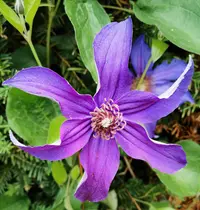
Solitary Virgin's-bower (Clematis integrifolia) is a compact, clump-forming perennial vine relative, usually growing as an upright, bushy plant rather than a true climber. It produces nodding, bell-shaped blue to violet flowers with slightly twisting petals, followed by silky seed heads that add interest after blooming.

This species is native to central and eastern Europe and parts of Asia, where it grows in open meadows, woodland edges, and light scrub. It is considered relatively easy to grow when planted in well-drained soil with sun on the foliage and cooler roots, which helps explain how to care for Solitary Virgin's-bower in garden settings.

Main Plant Requirements

Care Difficulty

Moderate Care

Light Preference

Full Sun

Water Requirements

Moderate Water

Temperature Preference

Cold Hardy

Hardiness Zone

3–8

Soil Texture

Sandy, Loamy, Organic-rich

Soil pH

Acidic (5.5–6.5), Slightly acidic (6.5–7.0)

Soil Drainage

Moist but well-drained

Fertilization

Light (every 4–6 weeks)

Get Personalized Care Plan

Scan your plant to receive care tips personalized for your specific plant

Available on iOS and Android

How to Care for the Solitary Virgin's-bower

This herbaceous clematis prefers bright conditions with several hours of direct sun for strong flowering.

  • Provide 4–6 hours of direct sun daily, ideally morning sun with light afternoon shade to protect blooms and foliage of Solitary Virgin's-bower.
  • In hot summer climates, give filtered light or dappled shade after 1–2 pm to reduce leaf scorch and faded flowers.
  • In cooler regions, full sun all day is suitable, but weak stems, few flowers, and pale leaves indicate insufficient light and the need for a brighter spot.

This perennial prefers evenly moist but not saturated soil throughout the growing season.

  • Water when the top 3–5 cm of soil feels dry, applying a slow, deep soak so moisture reaches 15–20 cm into the root zone.
  • During hot, windy periods, check soil every 1–2 days; in cool or rainy weather, extend intervals to avoid soggy conditions and root rot.
  • Drooping but dry soil suggests underwatering, while yellowing lower leaves, soft stems, and a sour soil smell suggest overwatering and poor drainage for Clematis integrifolia.

This hardy clematis tolerates a wide temperature range but flowers best in moderate conditions.

  • Active growth and flowering are strongest at 65–80°F (18–27°C), with consistent spring and early summer warmth promoting sturdy shoots.
  • Mature plants tolerate winter lows near -20°F (-29°C) in the ground, though new growth in spring can be damaged by late frosts below 30°F (-1°C).
  • In summer heat above 90°F (32°C), mulch the root zone and provide afternoon shade to limit stress, reduced flowering, and scorched leaves.

Clematis integrifolia handles typical outdoor humidity well and rarely needs special humidity management.

This species prefers deep, moisture-retentive yet free-draining soil to support strong root and shoot growth.

  • Use a loamy soil rich in organic matter, such as garden loam mixed with compost, to provide structure and nutrients.
  • Ensure very good drainage by incorporating coarse sand or fine grit, especially in heavier clay-based sites.
  • Aim for a slightly acidic to neutral pH around 6.0–7.0, avoiding highly alkaline or compacted ground that restricts roots.
  • Improve aeration by loosening the top 10–15 cm before planting and avoid sites where water stands after rain.

This species grows reliably in containers if the pot is large, deep, and drains efficiently.

  • Choose a heavy, stable pot to prevent tipping as stems lengthen and supports or nearby plants add top weight.
  • Use a deep container of at least 30–40 cm to allow its root system to extend downward rather than circling tightly near the surface.
  • Line the bottom with a coarse drainage layer only if side drainage holes are limited, to reduce perched water near the root zone.

Clematis integrifolia responds well to moderate feeding during the growing season but does not need heavy fertilizer.

  • Apply a balanced slow-release fertilizer (e.g., 10-10-10) at half strength once in early spring as new growth emerges.
  • Supplement with a light top-dressing of compost around the root zone in late spring to support flowering.
  • During summer, use a diluted balanced liquid feed every 4–6 weeks if growth is weak, avoiding contact with stems.
  • Stop feeding Solitary Virgin's-bower in late summer and do not fertilize in winter dormancy to prevent soft, frost-prone growth.

Clematis integrifolia benefits from annual pruning to maintain a compact shape and strong flowering.

  • Cut back all previous season’s stems to 10–20 cm above ground in late winter or very early spring before new buds swell.
  • Remove dead, damaged, or crossing shoots during this cutback to improve air flow and reduce disease risk.
  • Use clean, sharp bypass pruners and make angled cuts just above a pair of healthy buds.
  • Lightly tidy spent stems after flowering if desired, but avoid heavy summer cutting that removes developing buds.

This clematis is usually grown in the ground, so focus on thoughtful transplanting rather than frequent repotting.

  • Plan transplanting or potting-on in early spring or early fall, when temperatures are mild and soil is workable.
  • Look for roots circling the pot, quick drying soil, or slowed growth as signs a container plant needs more space.
  • Move into a container only 1–2 sizes larger using well-drained soil, handling the root ball gently to limit damage.
  • Water thoroughly after transplanting, shade the plant for 3–5 days, and keep soil evenly moist to reduce transplant stress.

Clematis integrifolia is commonly propagated by division, softwood cuttings, or layering for reliable cloning of desired plants.

  • Divide established clumps in early spring, keeping several shoots and healthy roots on each section, then replant promptly.
  • Take softwood cuttings in late spring to early summer, using 7–10 cm non-flowering shoots with 2–3 nodes.
  • Insert cuttings into a moist, well-drained mix, keep at 65–75°F with high humidity, and use rooting hormone to improve success.
  • For simple layering, bend a flexible stem to the ground, pin it into loose soil, keep moist, and separate once well rooted.

This clematis is generally cold hardy in temperate climates and needs only modest winter preparation in the ground.

  • After hard frost, cut back stems close to ground level in late fall or late winter, depending on local practice.
  • Apply a 5–8 cm layer of organic mulch over the root zone, keeping it slightly away from the crown to prevent rot.
  • Container-grown plants are more exposed; place pots in a sheltered spot, wrap containers if needed, or overwinter in an unheated garage.

Care Tips

Stems off soil

Lay a thin mulch layer and gently prop basal stems on small stones or low edging so foliage does not rest directly on wet soil, which helps prevent rot and slug damage when growing Solitary Virgin's-bower.

Low support grid

Install a low, wide mesh or peony ring around emerging shoots in spring so the semi-erect stems can lean and knit through it, creating a stable mound that resists wind damage and flopping.

Seasonal root cooling

Plant shallow, low-growing perennials or place flat stones at the plant’s base to shade the root zone in summer while keeping the upper growth in full sun, which reduces stress during hot spells.

Targeted deadheading

Remove spent flowers just above a strong pair of leaves but leave some later-season seedheads if ornamental interest is desired, balancing repeat bloom with attractive winter structure.

Spring pest scouting

In early spring, check young shoots and leaf undersides weekly for aphids or caterpillars and wash off light infestations with a firm water spray before they can distort new growth.

Common Pests and Diseases

Clematis wilt

This disease causes sudden blackening and collapse of stems, often just as flower buds are forming. Symptoms include sharply defined dark lesions at stem nodes and rapid wilting of all growth above the affected point.

Solution

Cut affected stems back to healthy green tissue at or near soil level and remove all wilted material from the area. Keep the crown well mulched to encourage new shoots from the base, avoid injuring stems, and maintain steady soil moisture to reduce stress that predisposes plants to infection.

Powdery mildew

This disease appears as white or gray powdery patches on leaves and young stems, sometimes leading to yellowing and distortion. Symptoms include reduced vigor and premature leaf drop in warm, dry conditions with poor air movement.

Solution

Remove and dispose of heavily infected leaves, then improve spacing and airflow around the plant. Water at the base, avoid overhead watering in the evening, and use a sulfur or potassium bicarbonate-based fungicide if the problem recurs or becomes severe.

Aphids

These insects cluster on young stems, leaves, and flower buds, sucking sap and excreting sticky honeydew that can attract sooty mold. This pest can cause curled or distorted growth and reduced flowering.

Solution

Spray colonies off with a strong stream of water, focusing on shoot tips and the undersides of leaves. For persistent infestations, apply insecticidal soap or a horticultural oil, and encourage natural predators such as ladybird beetles by avoiding broad-spectrum insecticides nearby.

Slugs and snails

These pests chew irregular holes in young leaves and can damage new shoots emerging from the crown, especially in spring and in damp, shaded sites. Symptoms include shredded foliage and slime trails on or near the plant.

Solution

Hand-pick slugs and snails in the evening, use barriers such as copper tape around vulnerable young plants, and reduce hiding places like dense mulch directly against the stems. Where damage is severe, use iron phosphate-based slug pellets around but not touching the plant crown.

Clematis leaf spot

This disease causes small brown or purplish spots on leaves that may enlarge and merge, leading to tattered or prematurely dropped foliage. Symptoms include more pronounced spotting on older leaves in humid or wet conditions.

Solution

Prune out and discard badly affected leaves and stems, and avoid overhead watering that keeps foliage wet for long periods. Improve air circulation, clean up fallen leaves around the plant, and use a labeled ornamental fungicide if spotting continues from year to year as part of broader Clematis integrifolia care.

Interesting Facts

Herbaceous, not climbing

Unlike most clematis, this species is a non-climbing, herbaceous perennial that dies back to the ground each winter and resprouts from the base in spring, forming upright clumps instead of twining vines.

Distinct bell-shaped flowers

Its nodding, bell-shaped blue to violet flowers have thick, slightly twisted petals (technically sepals) that often recurve at the tips, a trait used by botanists to distinguish it from many other clematis species.

Steppe and meadow specialist

In the wild, this species naturally occurs in dry, open steppe grasslands and meadows of central and eastern Europe into western Asia, where it tolerates continental climates with cold winters and relatively dry summers.

Botan icon

Did you know?

Clematis integrifolia has been widely used in breeding compact, non-climbing hybrid clematis cultivars, contributing its bushy habit and distinctive bell-like flowers to many modern garden varieties.

FAQs about Solitary Virgin's-bower

This species does not climb like typical clematis vines. It forms upright, bushy stems that may arch and sprawl slightly as they lengthen. Staking or low support can help keep the plant tidy and well-shaped.

Grow Healthy Plants with Botan Care

Keep your plants happy and healthy with plant identification, disease detection, and easy care guidance.

Botan plant care app — identify plants on mobile

Explore More Plants