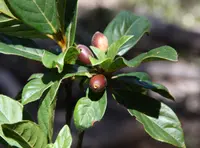
Allow Wind Exposure
Plant in a spot with some open exposure to wind so branches build strong wood, which reduces breakage under nut load and heavy snow when growing Siberian hazelnut.


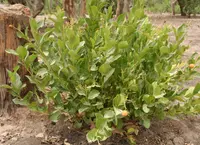
Siberian hazelnut, Corylus heterophylla, is a hardy deciduous shrub grown for its edible nuts and dense, twiggy structure. It usually forms a multi-stemmed clump with rounded, serrated leaves that turn yellow in autumn.
This species is native to northern and eastern Asia, where it grows in cool temperate forests and woodland edges. It adapts well to cold climates and is often used in windbreaks and naturalistic plantings.
The shrub is generally easy to grow, as it tolerates low winter temperatures and a range of soils, provided drainage is good. Light shade to full sun and moderate, even moisture suit it best, and these traits make it relatively straightforward to care for Siberian hazelnut.

Care Difficulty
Easy Care

Light Preference
Full Sun

Water Requirements
Moderate Water

Temperature Preference
Cold Hardy

Hardiness Zone
3–7

Soil Texture
Sandy, Loamy, Clay

Soil pH
Acidic (5.5–6.5), Slightly acidic (6.5–7.0)

Soil Drainage
Moist but well-drained

Fertilization
Minimal (feed rarely)
Scan your plant to receive care tips personalized for your specific plant
Available on iOS and Android
This hardy shrub prefers bright outdoor conditions with a balance of sun and shade for strong growth.
This species prefers evenly moist, well-drained soil rather than extremes of drought or saturation.
This cold-hardy shrub thrives in temperate outdoor climates with distinct seasonal changes.
This shrub handles a wide humidity range and usually does not need special humidity management outdoors.
Corylus heterophylla prefers deep, well-drained, moderately fertile soil that holds moisture without staying waterlogged.
This species can be grown in large containers, mainly for young plants or patio specimens rather than long-term full-size shrubs.
This shrub grows well in average soil, but light feeding supports nut production and overall vigor when growing Siberian hazelnut.
Pruning Corylus heterophylla is mainly done to maintain structure, remove problem wood, and support light penetration.
Corylus heterophylla is usually grown in the ground, so focus on careful transplanting of young shrubs.
Corylus heterophylla is most often propagated by seed or simple layering rather than by soft cuttings.
This species is cold hardy and usually needs minimal winter care once established in the landscape.

Plant Health Check
Not sure what's wrong with your plant? Check your plant's health inside the app.
This species is naturally distributed across northern China, Korea, southeastern Russia, and parts of Mongolia, where it tolerates long, cold winters that are too harsh for many other hazelnut species.
Its nuts are enclosed in long, tubular bracts that extend well beyond the shell, forming a narrow funnel shape that differs from the shorter, more open husks of the European hazel.
Plant breeders use this species in hybridization to improve cold tolerance and disease resistance in cultivated hazelnuts, making Corylus heterophylla care an important subject for nut production research.

In its native range, this species often forms dense thickets on forest edges and slopes, providing important cover and a consistent late-summer food source for wildlife such as birds and small mammals, which in turn help disperse its seeds over wide areas.
This shrub expands slowly through a combination of multi-stem clump growth and short root suckers. It usually forms a loose thicket over time, not an aggressive colony, but unwanted shoots can be pruned or spaded out.
Keep your plants happy and healthy with plant identification, disease detection, and easy care guidance.