redneck rhody Care (Daphniphyllum macropodum)

Also known as: yuzuri-ha tree
redneck rhody

About redneck rhody

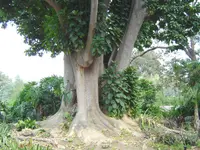
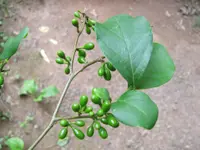
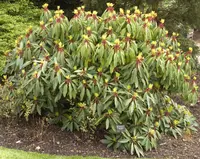
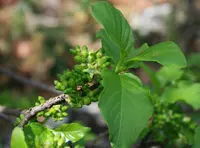
Daphniphyllum macropodum, often called redneck rhody, is an evergreen shrub or small tree grown mainly for its bold, glossy foliage. It forms a dense, rounded shape with broad leaves that often show reddish petioles and young stems, giving the plant its common name.

This species is native to woodland areas of East Asia, where it grows in dappled light and consistently moist, well-drained soils. It is usually grown for structure and foliage rather than for showy flowers.

Redneck rhody is generally considered a low-maintenance landscape plant once established, provided it is protected from harsh sun and drying winds. Learning how to care for redneck rhody focuses mainly on choosing the right site and maintaining even moisture in suitable soil.

Main Plant Requirements

Care Difficulty

Moderate Care

Light Preference

Partial Shade

Water Requirements

Moderate Water

Temperature Preference

Cool Climate

Hardiness Zone

6–9

Soil Texture

Loamy, Silty, Organic-rich

Soil pH

Acidic (5.5–6.5), Slightly acidic (6.5–7.0)

Soil Drainage

Moist but well-drained

Fertilization

Minimal (feed rarely)

Get Personalized Care Plan

Scan your plant to receive care tips personalized for your specific plant

Available on iOS and Android

How to Care for the redneck rhody

This evergreen shrub prefers bright, indirect conditions with some protection from harsh midday sun.

  • Provide 3–5 hours of gentle morning sun with dappled or bright filtered light the rest of the day, especially in warmer climates.
  • Tolerates partial shade, but in very deep shade foliage becomes sparse and new growth is weak, so choose a site with shifting light under high tree canopy when possible.
  • In hot summers, protect redneck rhody from strong afternoon sun to prevent leaf scorch, especially on newly planted or drought-stressed shrubs.

This shrub prefers consistently moist but not saturated soil with good drainage.

  • Water when the top 3–5 cm of soil feels dry, aiming for evenly damp soil around the root zone rather than soaking and drying cycles.
  • During spring and summer growth, increase watering in dry spells; in fall and winter, reduce frequency but prevent the root area from fully drying out.
  • If Daphniphyllum macropodum leaves droop or curl and the soil is dry, it signals thirst; yellowing leaves and soggy soil point to overwatering or poor drainage.

This broadleaf evergreen handles cool climates but needs protection from severe cold and intense heat.

  • Optimal growth occurs around 50–75°F (10–24°C), with steady, moderate conditions supporting dense foliage and healthy new shoots.
  • Mature plants usually tolerate brief drops to about 0–5°F (-18 to -15°C) once established, but young shrubs need shelter from hard freezes and drying winter winds.
  • In summer, plants cope with 80–90°F (27–32°C) if soil stays moist and roots are mulched; above this, heat stress increases and shade plus extra water become important.

This species prefers moderately moist air but usually copes with typical home and garden humidity.

  • Aim for 40–60% humidity to keep foliage turgid and reduce edge browning on redneck rhody leaves.
  • It tolerates short dry spells in the air, but prolonged very dry indoor heating can cause leaf tip scorch or curling.
  • Increase humidity locally with grouped plants, a wide pebble tray kept just moist, or by moving the plant away from strong hot drafts.

This shrub prefers deep, moisture-retentive yet free-draining soil with steady structure.

  • Use a loamy, organic-rich base, such as garden loam blended with compost and fine bark, to support steady moisture and root development.
  • Ensure drainage by incorporating coarse sand or 10–20% perlite so water moves through the profile without waterlogging.
  • Target slightly acidic to neutral conditions, around pH 5.5–7.0, as Daphniphyllum macropodum can lose vigor in strongly alkaline ground.
  • Avoid heavy, compacted clay or spots that stay saturated; improve such sites by raising the planting area and mixing in coarse mineral material.

This shrub can be grown in containers for many years if the pot is chosen and managed carefully.

  • Choose a large, deep container to accommodate its strong, woody root system and maintain even moisture between waterings.
  • Select a heavy, frost-resistant pot material to stabilize the top-heavy canopy against wind and accidental bumps.
  • Raise the container slightly on feet or blocks so drainage holes stay clear and excess water can exit quickly after rain or irrigation.

Daphniphyllum macropodum grows steadily with modest feeding rather than heavy fertilization.

  • Apply a balanced slow-release fertilizer (around 10-10-10) or well-rotted compost once in early spring to support new growth.
  • In mid-summer, give a light top-dressing of compost if growth appears weak or leaves pale.
  • During winter dormancy, avoid feeding; excess nutrients can stress roots and reduce cold tolerance.
  • For container-grown redneck rhody, use a half-strength balanced liquid feed every 4–6 weeks in the growing season only.

Daphniphyllum macropodum needs minimal pruning, mainly to maintain health and a clean outline.

  • Prune in late winter or very early spring before active growth, when structure is easy to see.
  • Remove dead, diseased, crossing, or storm-damaged branches back to healthy wood with sharp bypass pruners or loppers.
  • Thin congested interior branches lightly to improve airflow and light, preserving the plant’s natural form.
  • Limit heading cuts; instead, use selective thinning cuts to control size while keeping a graceful outline.

This species is usually landscape-grown, so focus on careful transplanting rather than frequent repotting.

  • Transplant young plants in early spring or early fall when weather is cool and soil moisture is stable.
  • Look for slowed top growth, roots circling the container, or quick drying soil as cues a container plant needs a larger pot or planting out.
  • Move up only 1–2 pot sizes, disturbing roots as little as possible and setting the root flare at soil level.
  • Water deeply after planting, mulch 5–8 cm around (not against) the stem, and keep soil evenly moist to reduce transplant shock.

Daphniphyllum macropodum is slow to root and is usually propagated by specialists rather than casual gardeners, so home propagation is uncommon.

Mature plants are fairly cold hardy in many temperate regions and usually need only light winter care once established.

  • In zones near the plant’s hardiness limit, apply a 5–8 cm mulch layer over the root zone in late fall, keeping it off the trunk.
  • Shelter young plants from drying winter winds using a windbreak fabric or by siting near a wall or hedge.
  • For container specimens in colder areas, move pots into an unheated garage, shed, or cold frame to avoid deep freezing of the root ball.

Care Tips

Wind acclimation

In the first 1–2 years after planting, use temporary windbreaks such as shade cloth or mesh fencing on the windward side to reduce leaf scorch and tearing while the shrub establishes a stronger root system.

Root zone mulching

Maintain a 5–8 cm layer of shredded bark or leaf mold over the root zone, keeping it 5 cm away from the stems, to stabilize soil moisture and temperature and to protect the shallow feeder roots from heat and cold.

Canopy shaping

On young plants, selectively shorten a few overly upright shoots in late winter to encourage a broader, more wind-firm framework and better display of the colored petioles and new foliage.

Storm and snow support

In regions with heavy snow or wet winter storms, loosely tie flexible outer branches toward sturdier interior stems with soft ties in late fall to prevent splaying and breakage, removing the ties in early spring.

Underplanting for roots

Use low, shade-tolerant groundcovers rather than cultivating bare soil beneath the shrub to reduce root disturbance, improve soil structure, and create a more stable microclimate when caring for redneck rhody.

Common Pests and Diseases

Scale insects

These insects feed on sap and often settle along stems and leaf undersides, causing dull foliage and occasional leaf drop in stressed plants.

Solution

Prune heavily infested twigs, then wipe or gently scrub remaining scale with a cloth or soft brush dipped in insecticidal soap or a light horticultural oil, repeating every 7–10 days until new growth is clean. Encourage good vigor through proper watering and mulching, since healthy Daphniphyllum macropodum plants tolerate low to moderate scale pressure well.

Leaf spot

This disease produces scattered brown or purplish spots on leaves, sometimes with a pale center, most often in prolonged wet or humid conditions.

Solution

Remove and discard affected leaves and any fallen debris, then improve air circulation by thinning crowded interior branches and avoiding overhead watering. In gardens with repeated issues, a copper-based or other labeled ornamental broadleaf fungicide can be applied preventively at the start of wet periods.

Root-knot nematodes

These pests attack roots in light, sandy soils, leading to reduced vigor, mild chlorosis, and stunted growth in established shrubs.

Solution

Symptoms include swollen, knotted roots; remove and destroy severely affected plants and avoid replanting in the same spot with susceptible species. In problem sites, improve soil organic matter, use resistant or non-host groundcovers, and consider soil solarization in warm climates before replanting to reduce nematode populations.

Aphids

These insects cluster on young shoots and leaf undersides, excreting sticky honeydew that can attract sooty mold on shaded foliage.

Solution

Spray young growth with a strong stream of water to dislodge colonies, then use insecticidal soap or a light horticultural oil on persistent populations, ensuring thorough coverage of shoot tips and leaf undersides. Promoting beneficial insects such as lady beetles by minimizing broad-spectrum insecticides helps keep aphids at low, tolerated levels.

Interesting Facts

Evergreen pseudo-whorl leaves

Its leaves cluster toward branch tips in tight spirals, creating a pseudo-whorl arrangement that gives the shrub a subtropical, almost magnolia-like appearance even though it belongs to its own distinct family, Daphniphyllaceae.

Distinct blue-black drupes

After female flowers are pollinated, the plant produces small blue to blue-black drupes (fleshy fruits with a single seed) that are attractive to birds and help disperse the species in its native East Asian forests.

Cold-hardy broadleaf evergreen

Despite its lush, almost tropical foliage, this species tolerates surprisingly low winter temperatures and is grown as a hardy broadleaf evergreen shrub or small tree in temperate gardens in parts of Japan, Korea, China, and suitable regions of Europe and North America.

Botan icon

Did you know?

The genus Daphniphyllum, including D. macropodum, is well known in plant chemistry for producing a large group of complex alkaloids, and this species has been widely used in phytochemical research exploring those unusual nitrogen-containing compounds.

FAQs about redneck rhody

This species usually forms a large, multi-stemmed shrub or small tree, often 10–20 ft tall and similarly wide in suitable climates. Growth habit is upright and rounded rather than compact or dwarf-like.

Grow Healthy Plants with Botan Care

Keep your plants happy and healthy with plant identification, disease detection, and easy care guidance.

Botan plant care app — identify plants on mobile

Explore More Plants