Microgramma percussa Care

Microgramma percussa

About Microgramma percussa

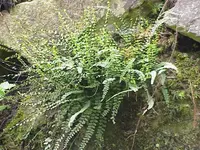
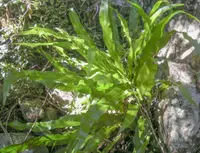
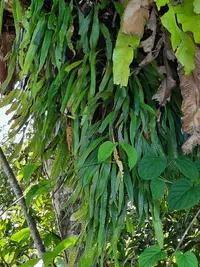
Microgramma percussa is a small, epiphytic fern that often grows on tree trunks or rocks, forming spreading mats of delicate foliage. Its narrow, leathery fronds emerge from thin creeping rhizomes, giving it a fine, textural look rather than a dense, bushy shape.

This species is native to tropical regions of the Americas, where it thrives in warm, humid forests with filtered light. In cultivation, it prefers steady moisture, good air movement, and a loose, well-drained medium similar to orchid or epiphytic mixes. With stable humidity and gentle light, it is moderately easy to care for Microgramma percussa indoors or in sheltered shadehouses.

Main Plant Requirements

Care Difficulty

Moderate Care

Light Preference

Partial Shade

Water Requirements

Moderate Water

Temperature Preference

Tropical / Frost Sensitive

Hardiness Zone

11–12

Soil Texture

Loamy, Peaty, Organic-rich

Soil pH

Acidic (5.5–6.5), Slightly acidic (6.5–7.0)

Soil Drainage

Moist but well-drained

Fertilization

Minimal (feed rarely)

Get Personalized Care Plan

Scan your plant to receive care tips personalized for your specific plant

Available on iOS and Android

How to Care for the Microgramma percussa

This epiphytic fern prefers bright, filtered light that mimics forest understory conditions.

  • Provide 4–6 hours of bright, indirect light daily, such as dappled shade under taller plants or 1–2 hours of soft morning sun only.
  • Protect Microgramma percussa from harsh midday or afternoon sun, which can scorch fronds, cause yellow patches, and dry out rhizomes too quickly.
  • In deeper shade, fronds may lengthen and lose vigor; increase light by moving closer to an east-facing exposure or thinning overhead shade, especially in winter.

This fern favors consistently lightly moist conditions without staying waterlogged.

  • Water when the top 2–3 cm of the substrate feel just barely dry, using thorough soakings that allow excess to drain away fully.
  • Use a loose, well-draining mix over bark or rock so roots and rhizomes receive moisture yet still have ample air; avoid compacted, heavy soils that stay soggy.
  • Reduce frequency in cooler months when growth slows, and watch for limp, crisping fronds as a sign of underwatering, or blackened, mushy rhizomes as a sign of overwatering.

This species prefers stable, warm, frost-free conditions similar to a humid subtropical forest.

  • Aim for 65–80°F (18–27°C) for best growth, avoiding sudden swings of more than 10°F (6°C) within a day.
  • Protect the plant from cold; growth slows below 60°F (16°C) and tissue damage may occur if exposed near 40°F (4°C), especially with wind or wet fronds.
  • It tolerates brief heat up to about 90°F (32°C) if shaded and well hydrated, but prolonged heat above this can stress fronds and dry rhizomes, so increase humidity and airflow.

This epiphytic fern prefers moderate to high humidity and reacts quickly to dry indoor air.

  • Aim for 50–70% humidity to keep fronds firm and prevent brown edges.
  • Tolerates brief dips to 40%, but prolonged dry air leads to crisping tips and slowed growth.
  • Increase humidity with a pebble tray, grouping plants, or a small humidifier rather than frequent misting.

This species prefers a loose, airy, organic-rich medium similar to an epiphytic orchid mix.

  • Use a mix of fine orchid bark, perlite, and peat or coco coir to create a fibrous, moisture-retentive but fast-draining substrate.
  • Aim for slightly acidic to neutral pH around 5.5–7.0, which supports nutrient availability for Microgramma percussa.
  • Ensure the mix never compacts; chunky bark and perlite improve aeration around the shallow, creeping rhizomes.
  • Avoid heavy garden soil or pure peat that stays waterlogged, as this promotes rhizome and root rot.

This fern adapts well to container culture, including shallow pots and mounted displays.

  • Choose a wide, shallow container that allows the creeping rhizomes to spread horizontally without crowding.
  • Use a potting setup that lets excess water drain away within minutes, such as side slits or mesh-style orchid pots.
  • Select lighter plastic or composite pots for hanging or mounted arrangements to reduce weight and mechanical stress on supports.

This epiphytic fern grows modestly and needs only light feeding to stay healthy in cultivation.

  • Use a balanced liquid fertilizer at 1⁄4–1⁄2 strength for Microgramma percussa during active growth in spring–summer.
  • Apply every 4–6 weeks if growth is steady, skipping feedings when light or temperature is low.
  • Choose formulations suited to foliage plants or use dilute fish emulsion or compost tea.
  • Stop fertilizing in fall–winter, resuming only when new fronds start to emerge.

This fern requires minimal pruning, mainly to keep the plant tidy and prevent overcrowding on its mount or pot surface.

  • Trim dead, yellowing, or damaged fronds at the base at any time using clean, sharp scissors.
  • In late winter or early spring, thin congested fronds to improve air flow and light penetration.
  • Remove overly long, straggling rhizome sections to control spread without cutting into firm, green tissue.
  • Avoid heavy cutting of healthy rhizomes, as this can slow recovery and reduce overall vigor in Microgramma percussa.

This fern is usually grown mounted or in small, shallow containers and prefers slightly snug root conditions.

  • Repot or remount every 2–3 years, or when roots circle tightly, media decomposes, or growth slows despite proper care.
  • Plan the work for spring, when warmer temperatures and increasing light support recovery and new root growth.
  • Gently loosen and spread the creeping rhizomes, keeping as much attached medium and healthy root as possible intact.
  • Move to only a slightly larger mount or pot with airy, orchid-style or fern mix to limit stress and waterlogging.

This species is most often propagated by division of its creeping rhizomes rather than by spores in home settings.

  • Divide established clumps in spring, when conditions support active root and frond growth.
  • Select firm, healthy rhizome sections carrying several fronds and fine feeder roots for each division.
  • Lay divisions on moist, well-drained fern or epiphyte mix and secure gently so rhizomes contact the surface.
  • Maintain high humidity, bright filtered light, and stable warmth to support Microgramma percussa care instructions during establishment.

This tropical fern lacks frost tolerance and needs protection anywhere temperatures drop near freezing.

  • Keep temperatures above 50°F, as fronds and rhizomes can be damaged by frost and prolonged cold.
  • Move container or mounted plants indoors to a bright, humid spot before outdoor lows reach 45–50°F.
  • Reduce watering in winter, keeping the medium just lightly moist to avoid root rot in cooler conditions.

Care Tips

Mounting on slabs

Attach rhizomes to cork bark or tree fern slabs with soft ties and a thin layer of sphagnum, which allows the plant to form a natural creeping mat and improves airflow around the roots.

Rhizome grooming

Inspect and gently clean the creeping rhizomes every 1–2 months, removing dead fronds and loose debris so new fronds can emerge freely and fungal problems are less likely to develop.

Portioning and renewal

Every 2–3 years, divide the creeping rhizome into several sections with at least 2–3 healthy fronds each, which both rejuvenates the original clump and creates backup plants in case one mounting or pot fails.

Targeted pest checks

Run fingertips lightly along the rhizomes and frond undersides during watering to feel for scale or mealybugs, then spot-treat early infestations with cotton swabs dipped in isopropyl alcohol before they spread.

Gradual environment shifts

When moving the plant between locations or seasons, adjust light, humidity, and airflow over 7–10 days so the rhizomes and fronds can acclimate slowly, which greatly reduces stress when growing Microgramma percussa.

Common Pests and Diseases

Scale insects

These insects feed on fronds and rhizomes, drawing out sap and causing yellowing, stunting, and gradual decline. Symptoms include small, dome-shaped bumps that feel hard or waxy on stems and leaf midribs.

Solution

Physically remove visible scale with a cotton swab dipped in isopropyl alcohol, then rinse fronds gently with lukewarm water. For ongoing Microgramma percussa care, repeat alcohol swabs weekly and apply a light horticultural oil spray, ensuring good air circulation but avoiding direct hot sun while leaves are coated.

Mealybugs

This pest gathers in leaf bases and along creeping rhizomes, producing white, cotton-like tufts and sticky honeydew that can encourage sooty mold. Infested plants may show slowed growth and distorted new fronds.

Solution

Isolate the plant, then dab visible clusters with isopropyl alcohol and rinse gently to remove residue. Follow with 2–3 applications of insecticidal soap at 7–10 day intervals, making sure to reach the underside of fronds and all rhizome crevices, and reduce excess fertilizer that can encourage soft, attractive growth.

Rhizoctonia blight

This disease often starts where fronds or rhizomes stay wet and crowded, leading to brown, sunken lesions and collapse of affected sections. Symptoms include irregular patches of dead tissue and possible webby fungal growth at the soil or substrate surface.

Solution

Cut out and discard all affected fronds and rhizome segments, then improve airflow and avoid overhead watering so foliage dries quickly. Repot into a fresh, well-drained but moisture-retentive mix, disinfect containers and tools, and keep the plant on the dry side of its normal moisture range until new, healthy growth is stable.

Bacterial leaf spot

This disease causes water-soaked, translucent spots on fronds that later turn brown with a yellow halo, often starting where water sits on the leaf surface. Severe infections can lead to patchy necrosis and premature frond drop.

Solution

Remove and discard affected fronds, avoid misting directly onto the foliage, and water at the substrate level so leaves stay dry. Increase spacing and airflow around the plant, and in persistent cases sterilize tools, reduce overhead humidity spikes, and consider starting fresh divisions from completely symptom-free rhizome sections.

Interesting Facts

Epiphytic rock specialist

This species commonly grows as an epiphyte on tree trunks or as a lithophyte on rocks, anchoring itself with a creeping rhizome that allows it to exploit thin soil pockets and mossy surfaces in humid forests.

Button-like fertile fronds

Its fertile fronds are small, rounded, and bead-like, arranged along a wiry creeping stem, which creates a distinctive dotted appearance compared with the flatter sterile fronds.

Distinct spore patterning

The sori (spore-producing structures) are typically arranged in neat rows on the underside of the fertile fronds, a pattern that helps distinguish it from similar Microgramma species in the field.

FAQs about Microgramma percussa

This species spreads by creeping rhizomes that run along bark, rock, or soil, forming a loose mat. It is more of a scrambling, spreading fern than a true climber that twines or clings with tendrils.

Grow Healthy Plants with Botan Care

Keep your plants happy and healthy with plant identification, disease detection, and easy care guidance.

Botan plant care app — identify plants on mobile

Explore More Plants