Mexican Sage Care (Salvia mexicana)

Mexican Sage

About Mexican Sage

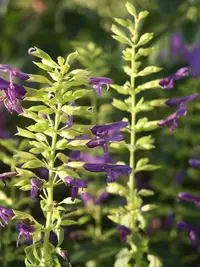
Mexican sage, Salvia mexicana, is a shrubby perennial from Mexico and Central America, valued for its upright growth and showy flower spikes. It typically forms dense clumps with soft, green foliage and tall stems topped by vivid blue to purple blooms that attract hummingbirds and pollinators.

In mild climates it is often grown as a landscape shrub, while in cooler areas it may be treated as a tender perennial. Gardeners looking to learn how to care for Mexican Sage will find it generally forgiving if given sun, good drainage, and moderate moisture.

Its fast growth and strong seasonal flowering make it a good choice for borders and wildlife gardens where a bold, vertical accent is needed.

Main Plant Requirements

Care Difficulty

Moderate Care

Light Preference

Full Sun

Water Requirements

Moderate Water

Temperature Preference

Tropical / Frost Sensitive

Hardiness Zone

9–11

Soil Texture

Sandy, Loamy, Organic-rich

Soil pH

Acidic (5.5–6.5), Slightly acidic (6.5–7.0)

Soil Drainage

Well-drained

Fertilization

Light (every 4–6 weeks)

Get Personalized Care Plan

Scan your plant to receive care tips personalized for your specific plant

Available on iOS and Android

How to Care for the Mexican Sage

This species thrives in bright outdoor conditions with a balance of sun and light shade.

  • Provide 4–6 hours of direct sun daily, ideally morning sun with light afternoon shade to protect foliage from scorching.
  • Allow dappled or partial shade in hotter climates; flowering may decrease if light drops below roughly 3–4 hours of direct sun.
  • Site Mexican Sage in an open, south or west-facing bed, adjusting in summer with nearby taller plants or structures to filter harsh midday sun.

This plant prefers evenly moist but never saturated soil, especially during active growth.

  • Water when the top 3–5 cm of soil feels dry, applying a deep soak at the base rather than frequent light splashes.
  • Use well-drained soil; persistent wetness, wilting with dark, mushy stems, or a sour smell indicate overwatering, while crisp, drooping leaves signal underwatering.
  • Reduce watering in cool seasons as growth slows, but do not let Salvia mexicana remain bone-dry for long, particularly in sandy or windy sites.

This shrub performs best in mild, frost-free climates with warm growing seasons.

  • Aim for 65–80°F (18–27°C) during the main growing season for strong vegetative growth and flowering.
  • Protect from temperatures below 25–28°F (-4 to -2°C); repeated hard frosts can kill top growth, though roots may resprout in milder regions.
  • It tolerates summer heat up to about 95°F (35°C) if soil moisture is maintained and roots are mulched to buffer extreme temperature swings.

This species adapts well to typical outdoor humidity but performs best with moderately dry air.

  • Aim for 30–50% humidity; Mexican Sage tolerates slightly drier air better than very humid, stagnant conditions.
  • Crisp leaf edges, rolling, or dull, grayish foliage can indicate combined heat and low-humidity stress, especially in containers.
  • Improve comfort in hot, arid sites by mulching the soil surface and sheltering plants from intense, drying winds.

Salvia mexicana prefers airy, well-drained, moderately fertile soil that never stays waterlogged.

  • Use a loose loam or sandy loam with 30–40% compost for organic matter and moisture retention without heaviness.
  • Ensure very sharp drainage by adding coarse sand or perlite, especially in clay-rich or compacted garden beds.
  • Target a slightly acidic to neutral pH around 6.0–7.2, avoiding strongly acidic or alkaline soils that limit nutrient availability.
  • Improve aeration by raising beds, breaking up clods, and avoiding sites where water pools after rain.

This species is well-suited to container growing when the pot supports its vigorous, often top-heavy growth.

  • Choose a wide, heavy container to stabilize tall flowering stems against wind and prevent tipping.
  • Use a fast-draining mix of potting soil with 30–50% perlite or coarse bark to keep roots oxygenated after watering.
  • Leave a 3–5 cm gap below the rim to prevent runoff and allow deep, controlled watering that reaches the full root zone.

Nutrient inputs support strong flowering and foliage in Mexican Sage, especially in containers or poor soil.

  • Use a balanced, slow-release fertilizer (for example 10-10-10) in spring, scratched lightly into the topsoil.
  • Feed outdoor plants every 6–8 weeks during the active growing season; containers may need slightly more frequent feeding.
  • Dilute liquid feeds to 1/2 strength and apply to moist soil to reduce root burn risk.
  • Stop feeding in late summer or early fall so growth can harden before cool weather.

Targeted pruning helps Salvia mexicana stay compact, healthy, and floriferous.

  • In late winter or early spring, cut back old stems to 15–30 cm to encourage dense new growth.
  • During the growing season, remove dead, damaged, or crossing stems with clean, sharp pruners.
  • Deadhead spent flower spikes to extend blooming and keep the plant tidy.
  • Thin crowded shoots from the base to improve air flow and reduce disease risk.

Established plants are usually grown in the ground, but container-grown Salvia mexicana may need periodic repotting.

  • Check for roots circling the pot, slow growth, or frequent wilting as signs it has outgrown its container.
  • Plan repotting or transplanting for early spring or early fall, avoiding extreme heat or cold spells.
  • Move up only 1 pot size, using a free-draining mix; handle the root ball gently and loosen circling roots slightly.
  • Water thoroughly after moving, then keep soil evenly moist and shaded for a few days to limit transplant shock.

New plants of Salvia mexicana are most reliable from stem cuttings, with seeds used less often.

  • Take 7–10 cm softwood or semi-ripe cuttings in late spring to summer from non-flowering shoots.
  • Remove lower leaves, dip the base in rooting hormone, and insert into a moist, free-draining mix.
  • Provide bright, indirect light, high humidity, and temperatures around 65–75°F until roots form.
  • Sow seeds in spring on the surface of a light seed mix, keeping it just moist and warm for steady germination.

Salvia mexicana is tender to moderate frost and benefits from basic winter protection in cooler regions.

  • In climates colder than USDA zone 9, treat as a tender perennial or lift plants before hard freezes.
  • Apply a 5–8 cm mulch layer over the root zone in late fall, keeping it slightly away from stems.
  • Cut back frost-damaged top growth in late winter once the worst cold has passed.
  • Move container plants into a bright, cool, frost-free spot and water sparingly through winter.

Care Tips

Pinch Early Shoots

Pinch out the soft tips of young stems when plants are 15–20 cm tall to encourage a bushier framework and more flowering shoots later in the season.

Use Discreet Staking

Install slender stakes or a low ring support early in the season and tie stems loosely with soft ties to prevent wind damage and stem breakage on tall growth.

Mulch For Root Stability

Apply a 5–8 cm layer of coarse organic mulch around, but not touching, the stems to buffer soil temperature, reduce heaving in winter, and conserve moisture during hot spells.

Renew Clumps Regularly

Every 3–4 years, lift and divide overcrowded clumps in late winter or early spring, replanting only the most vigorous outer sections to maintain strong, floriferous plants.

Monitor For Spider Mites

Inspect the undersides of leaves during hot, dry weather and, at the first sign of fine webbing or stippling, use a strong water spray to dislodge mites and improve air movement around the plant when growing Mexican Sage.

Common Pests and Diseases

Whiteflies

This pest commonly infests the soft new growth and leaf undersides, feeding on sap and causing yellowing, leaf drop, and sticky honeydew that can lead to sooty mold. Symptoms include clouds of tiny white insects flying up when the plant is disturbed.

Solution

Reduce populations by regularly hosing down the foliage, especially the undersides of leaves, and removing heavily infested shoots. For persistent problems, use insecticidal soap or neem oil applied in the early morning or evening, and encourage natural predators such as lady beetles and lacewings in outdoor plantings.

Spider mites

These insects prefer hot, dry conditions on Mexican sage, causing fine speckling, dulling of the leaves, and fine webbing between stems and leaves. Symptoms include stunted growth and premature leaf drop when infestations are heavy.

Solution

Increase humidity around the plant, rinse foliage thoroughly with a strong but gentle stream of water, and remove badly affected leaves. If needed, apply horticultural oil or insecticidal soap to leaf undersides at 5–7 day intervals until new growth appears healthy, making sure the plant is not water-stressed before treatment.

Botrytis blight

This disease develops in cool, damp, and crowded conditions, leading to soft, brown, water-soaked spots on leaves, stems, and flowers that can become covered in gray fuzzy mold. Symptoms include collapse of young shoots and premature browning of flower spikes.

Solution

Improve air circulation by thinning stems, avoid overhead watering, and remove and discard all affected plant parts promptly. In very wet climates or during prolonged rainy periods, a preventative fungicide labeled for ornamental plants can be used, focusing on keeping foliage as dry as possible.

Powdery mildew

This disease appears as white, powdery patches on leaves and stems, especially in late summer and fall when days are warm and nights are cool. Symptoms include distorted new growth, reduced flowering, and early leaf drop if not managed.

Solution

Increase airflow by spacing plants correctly and pruning excess or crossing stems, and water at soil level rather than wetting leaves. Remove the most affected foliage, and if necessary apply a sulfur-based or potassium bicarbonate fungicide at the first sign of disease, following label instructions closely as part of broader Salvia mexicana care instructions.

Interesting Facts

Velvet purple bracts

This species is known for its dense spikes of velvety purple bracts that often outlast the true flowers, giving the plant a long ornamental display in late summer and autumn.

High-altitude origins

It is native to montane regions of central and southern Mexico, where it grows on slopes and forest edges at relatively high elevations with mild, seasonally dry climates.

Hummingbird specialist flowers

The long tubular flowers are adapted for pollination by hummingbirds, which can easily reach the nectar while dusting their heads with pollen as they visit multiple blooms.

Botan icon

Did you know?

Some forms of Salvia mexicana, such as the well-known cultivar 'Limelight', have become popular in ornamental horticulture because of their striking contrast between bright chartreuse bracts and deep purple flowers, which is unusual even within the diverse Salvia genus.

FAQs about Mexican Sage

Lack of blooms often comes from too much shade, excess nitrogen fertilizer, or pruning at the wrong time. Trim lightly after flowering, avoid high-nitrogen feeds, and ensure a long, warm growing season for strong flowering.

Grow Healthy Plants with Botan Care

Keep your plants happy and healthy with plant identification, disease detection, and easy care guidance.

Botan plant care app — identify plants on mobile

Explore More Plants