Tank water hygiene
Every 1–2 weeks, empty the central cup completely, rinse it with lukewarm water, and then refill it with fresh water to prevent bacterial buildup and mosquito larvae.

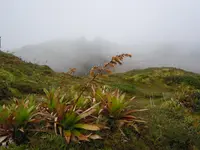
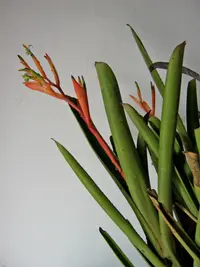
Guzmania plumieri is a tropical bromeliad valued for its rosette of glossy, arching leaves and colorful central bracts that can last for many weeks. It typically grows as an epiphyte, anchoring onto trees rather than rooting deeply in soil. Native to humid forests of the Caribbean and parts of tropical South America, it is adapted to warm, stable conditions with good air movement. This species is considered relatively easy indoors when its need for consistent moisture, soft indirect light, and free-draining, airy substrate is respected. Understanding how to care for Guzmania plumieri helps prevent common issues such as rot from overwatering or leaf damage from harsh sun.

Care Difficulty
Moderate Care

Light Preference
Bright Indirect Light

Water Requirements
Keep Soil Moist

Temperature Preference
Tropical / Frost Sensitive

Hardiness Zone
10–12

Soil Texture
Loamy, Peaty, Organic-rich

Soil pH
Strongly acidic (4.5–5.5), Acidic (5.5–6.5)

Soil Drainage
Moist but well-drained

Fertilization
Light (every 4–6 weeks)
Scan your plant to receive care tips personalized for your specific plant
Available on iOS and Android
This bromeliad prefers bright, indirect light that mimics filtered tropical forest conditions.
Watering should keep the plant moist but never waterlogged, with attention to both soil and central rosette.
Stable, warm temperatures support healthy growth and flowering in this tropical bromeliad.
This bromeliad prefers consistently moist air and reacts quickly to dry indoor conditions.
This species grows best in a very airy, organic, fast-draining mix that mimics its natural epiphytic conditions.
This species is well suited to container growing due to its compact root system and rosette growth.
Light feeding supports healthy foliage and flowering in Guzmania plumieri without overwhelming its modest root system.
Pruning Guzmania plumieri is minimal and focuses on hygiene rather than reshaping the plant.
Container-grown Guzmania plumieri needs infrequent repotting because of its small, shallow root system.
Propagation of Guzmania plumieri is most reliable through division of offsets rather than seed.
Guzmania plumieri is frost-sensitive and needs warm, stable conditions in winter, especially in temperate climates.

Plant Health Check
Not sure what's wrong with your plant? Check your plant's health inside the app.
Guzmania plumieri naturally grows as an epiphyte on trees in humid tropical forests, forming a rosette that traps water and organic debris between its leaves.
In its native range, the bright bracts and tubular flowers of this species are adapted to attract hummingbirds, which act as its primary pollinators.
The individual rosette flowers only once and then slowly dies, but offsets produced at the base allow the plant to persist as a clonal cluster over time.
Lack of flowering usually results from low light, insufficient maturity, or stress such as cold drafts or very dry air. Stable warmth, bright indirect light, and consistent moisture in the central cup encourage blooming and offset production.
Keep your plants happy and healthy with plant identification, disease detection, and easy care guidance.